
Hey, there friend and welcome to yet another draft guide. While Ninja Turtles set is controversial among Magic community, at least we’re getting a fresh Limited environment out of it, which is always exciting.
The goal of this TMNT Draft Guide is to help you get up to speed with all relevant things in this format. We’ll check what’s special about this set, then we take a look at the mechanics and how they affect the format. The overview continues with best commons and archetype breakdown.
There’s a lot to cover, so let’s get right to it.
Table of Contents
What’s Different From the Regular Draft?
The key difference is that this is a small set, akin to the Spider-Man. This means there are just 190 cards, which is significantly fewer compared to a regular set. (Lorwyn Eclipsed, for example, featured 273 cards.)
This also results in just 5 supported archetypes. While there might be some “hidden” ones, this is still a 50% reduction.
By itself, this isn’t problematic, but if one or two are significantly weaker, that creates a miserable draft environment. Hopefully, that won’t be the case, and we can expect some fun
Last thing, before we move to the mechanics. This format supports both Pick-Two draft, and the regular, 8-player version.
Ninja Turtles Draft Mechanics
There are five mechanics in TMNT draft. (One is technically more of a theme, than a mechanic.) Each is centered within two colors, which correspond to the supported archetypes:
- Mutagen Tokens (blue, green)
- Sneak (black, white)
- Disappear (black, green)
- Alliance (red, white)
- Artifacts (blue, red)
In this section, we’ll explore how exactly these work. (The in-depth )
Sneak
Sneak is an alternate cost. You can cast a card for its sneak cost only during the declare blockers step on your turn — if you also return your unblocked attacker to hand. If the sneaked card is a creature it enters tapped and attacking.

For example, let’s say you attack with Squirrelanoids, and your opponent says: “No blocks.” You can now cast Foot Ninjas by paying four mana and returning the one drop to your hand. Now you’re attacking with a 5/5 out of nowhere.
Of course, you can also cast sneak cards for their regular costs, but you really want to try and enable them. That rewards you with a cheaper casting cost or with an additional effect. (See Leonardo, Leader in Blue.)
This is a mechanic that you want to keep in mind when declaring blockers. For example, if you’re deciding which of the two creatures to block, pick the one that you don’t want your opponent to return.
While sneak cards can be found in all five colors, they’re mostly centered in white and black.
Mutagen Token
Some cards in blue and green create Mutagen tokens. That’s an artifact, which allows you to put a +1/+1 counter on a creature. You need to pay one mana, tap and sacrifice the token token to do so. (You can only do so at sorcery speed.)
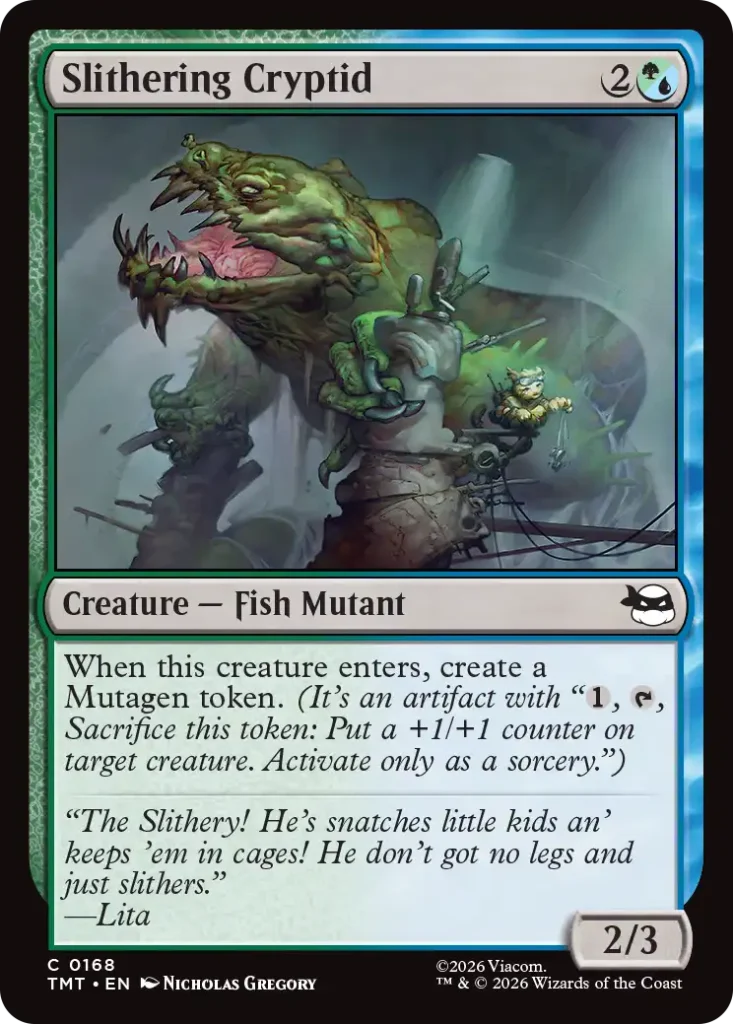
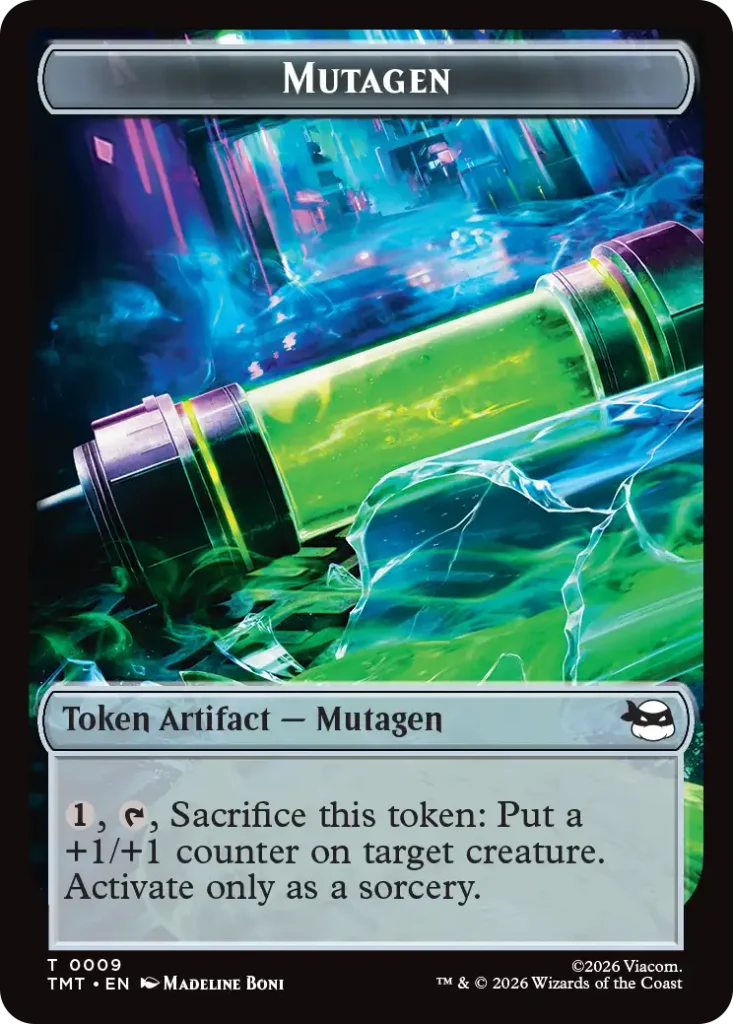
When Slithering Cryptid comes into play, you create a Mutagen token. You can use it to put a counter on Cryptid itself, making it a 3/4, or on something else if you prefer.
This can allow you to make some profitable attacks or blocks that you might not be able to make without them. Typically, cards that create Mutagen tokens, can be quite useful. Besides their own synergies, they also support two other themes: artifacts and disappear.
Speaking of which, let’s take a look at those.
Disappear
The disappear ability appears on 9 creature cards in black and green. It gives you a bonus, as long as a permanent left the battlefield under your control this turn.
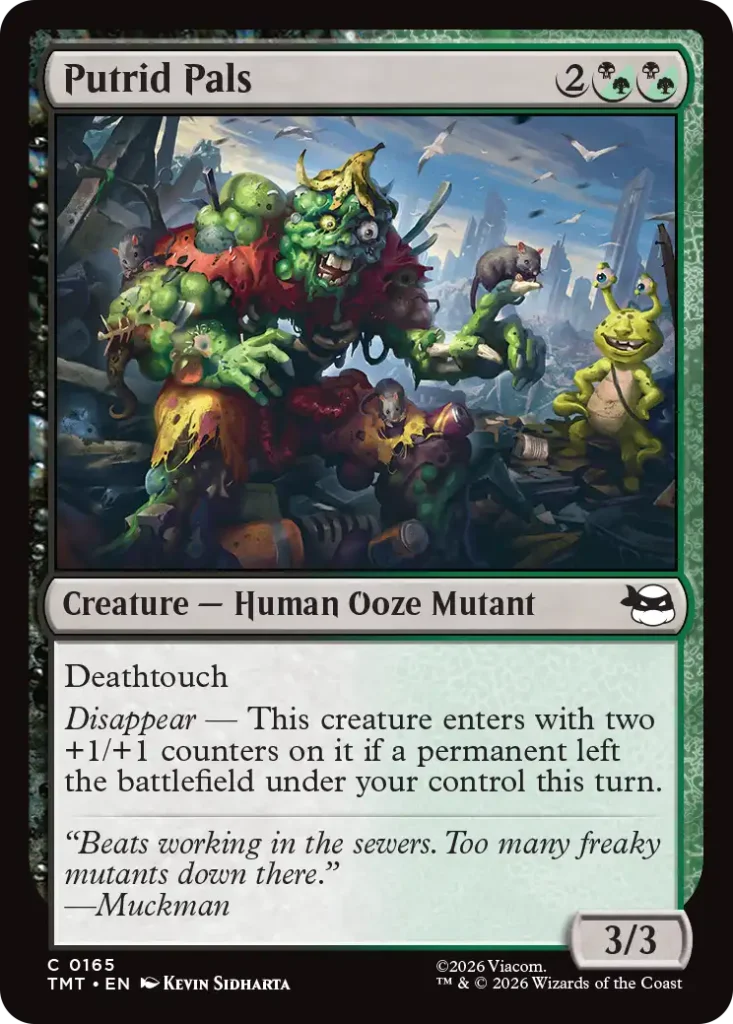
So, in order to get the most out of Putrid Pals you’ll want something to leave the battlefield on your side.
One way to enable this is by attacking and trading creatures in combat. Tokens, such as the aforementioned Mutagen or various Foods, can also make sure you trigger those effects.
These two are both artifacts, which count for the next not-technically-a-mechanic.
Artifacts
Although, there is no specific artifact mechanic, there are a bunch of cards in blue and red, that care about artifacts.
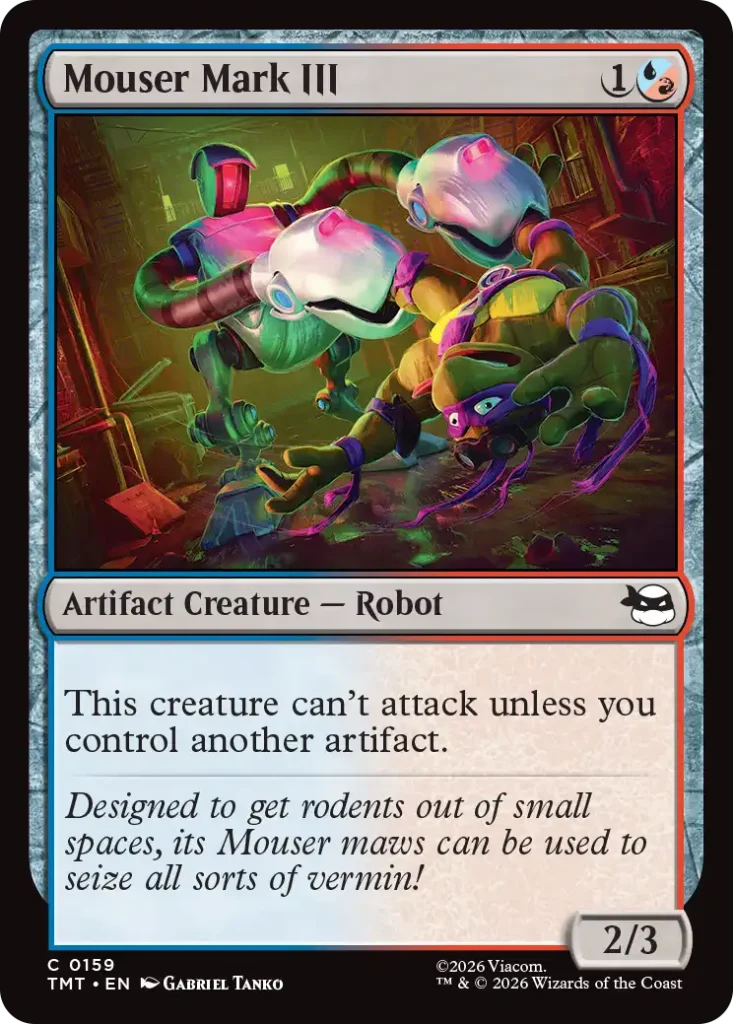
For example, Mouser Mark III is an artifact itself, but can attack unless you control another one. These artifact-matters cards work in various ways. Some need just a single artifact in play, some want a lot of them in play, others want high density in your library.
There’s one thing they all have in common — the more artifacts you put in your deck, the more consistent they become.
The final mechanic is kinda similar, except it wants a lot of creatures instead of artifacts.
Alliance
Alliance keyword makes a return. Cards that feature it will trigger whenever another creature you control enters. There are plenty of different effects, but most of them are somewhat aggressively slanted.
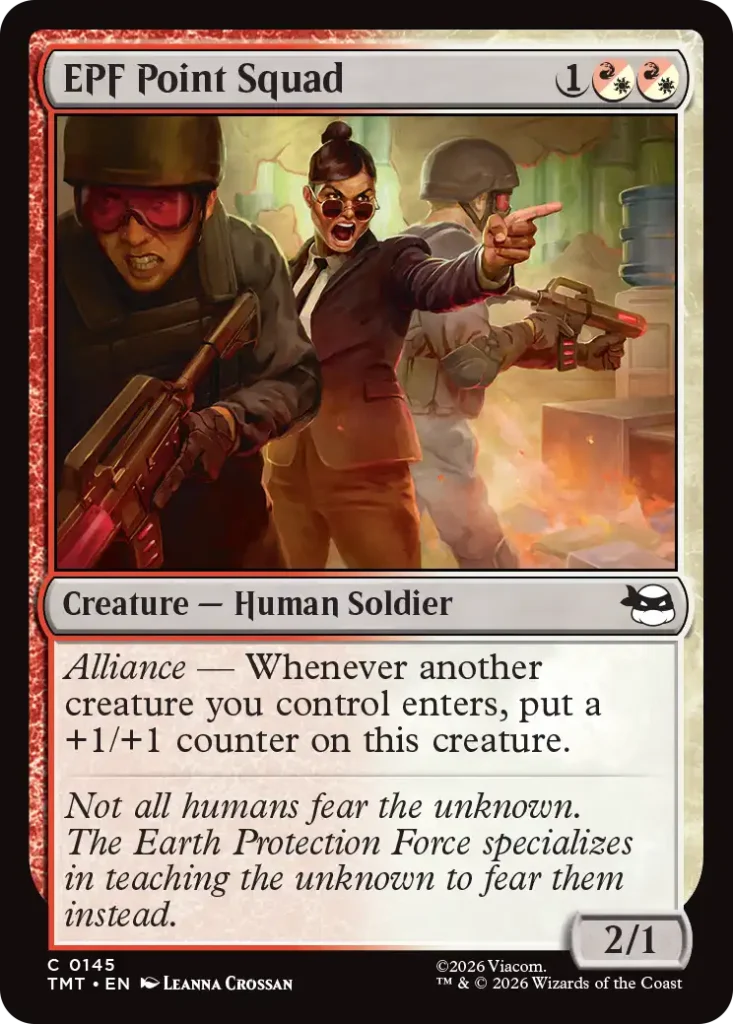
EPF Point Guard enters as a mere 2/1, but it gets a +1/+1 counter whenever another one of your creatures enters.
This mechanic might seem pretty straightforward, and it is. How to enable it? Just play a lot of creatures.
And that’s it for the mechanics! Next stop — best commons.
Best Commons for TMNT Draft
Commons are the ones you’ll see the most often. It’s nice to be able to quickly skip through them in your first couple of drafts, and know exactly what your uncommons are “competing” with. So, let’s see which are the ones that actually matter.
White
1. Uneasy Alliance
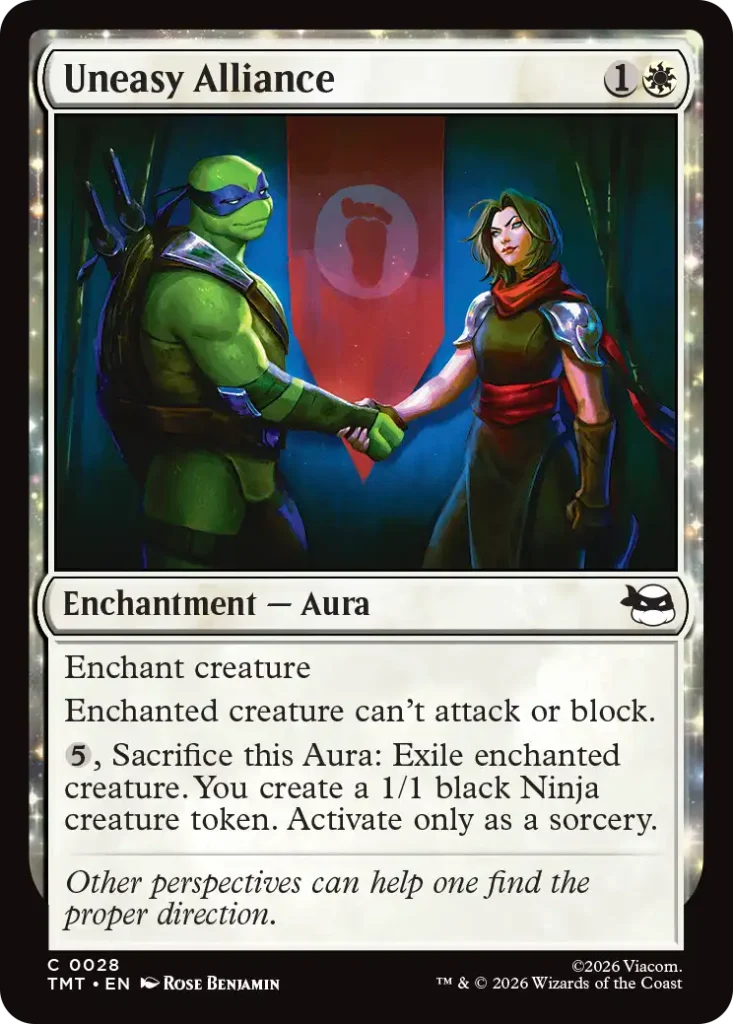
It’s cool how Pacifism has been around for 30 years, and it’s still a great white common in a draft nowadays. A couple of mana to stop a creature from participating in combat is just that good.
This one comes with a relevant upside, allowing you to remove the creature for good, and get a 1/1 Ninja out of it. Thus, you’ll happily play this card in multiples.
2. April O’Neil, Kunoichi Trainee
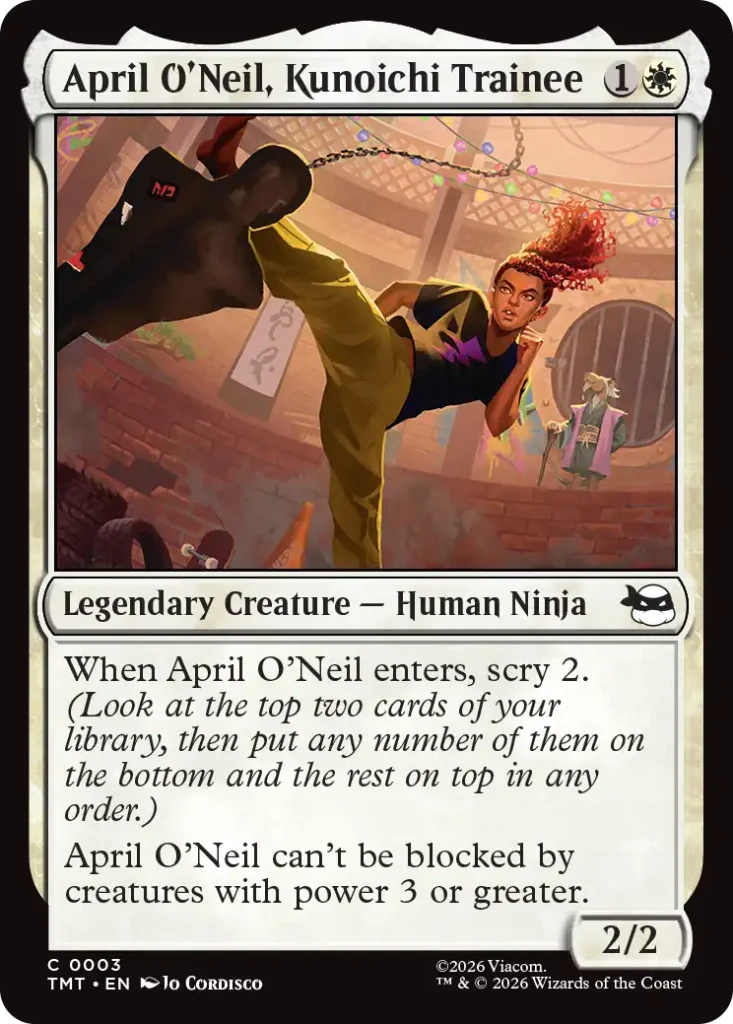
Here’s another card that does a lot for just a couple of mana. Scry 2 can smooth out your early turns, as well as dig you towards meaningful cards in the late game.
Furthermore, the fact that she can’t be blocked by larger creatures is also relevant, making April into a great enabler for your sneak cards. Speaking of which, here’s one card that fits the bill.
One thing to keep in mind is that it is a legendary creature, even though it’s a common. There are quite a few common legendaries, so make sure you don’t play the second copy, unless you’re willing to lose one.
3. Leonardo, Big Brother
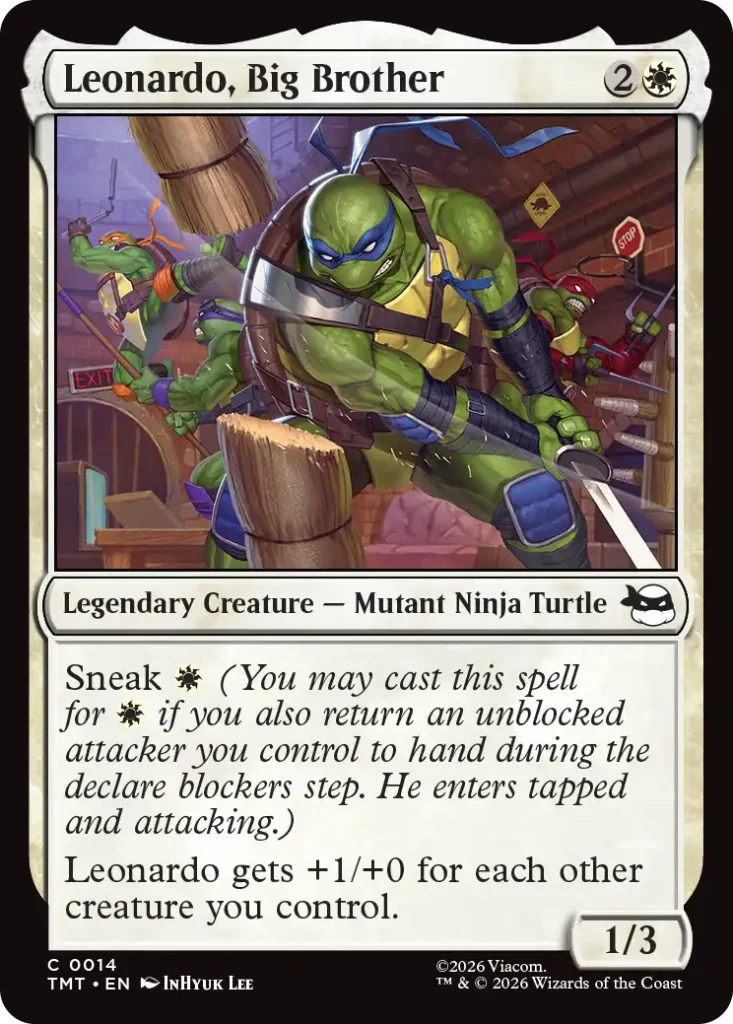
If you’re paying the full cost for Leonardo, you aren’t getting a particularly great deal. However, if you can consistently cast it for its sneak cost, it becomes quite a desirable common. (Particularly if you return something with a good enters effect.)
Blue
1. Buzz Bots

This little creature might not seem like much, but it’s probably one of the best commons in the set. You play it early, and chip in for a few damage. Eventually, you chump block something, and get your card back.
On top of that, it also supports your artifact synergies, which are quite present in blue.
2. Return to the Sewers
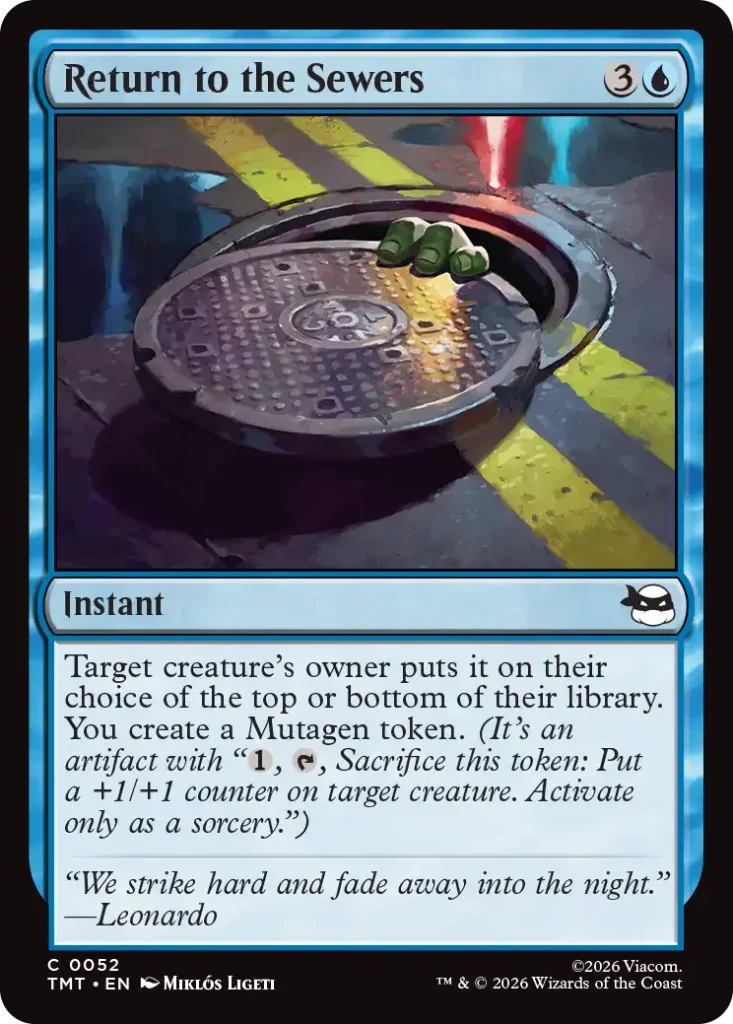
As we’ve seen with many sets lately, this kind of an effect is a really solid way to remove a creature, albeit temporarily.
Once you add only a small bonus to it, this card becomes a potent play. In this case the Mutagen token might just be what the card needed to push it among the best commons.
3. Donatello, Turtle Techie
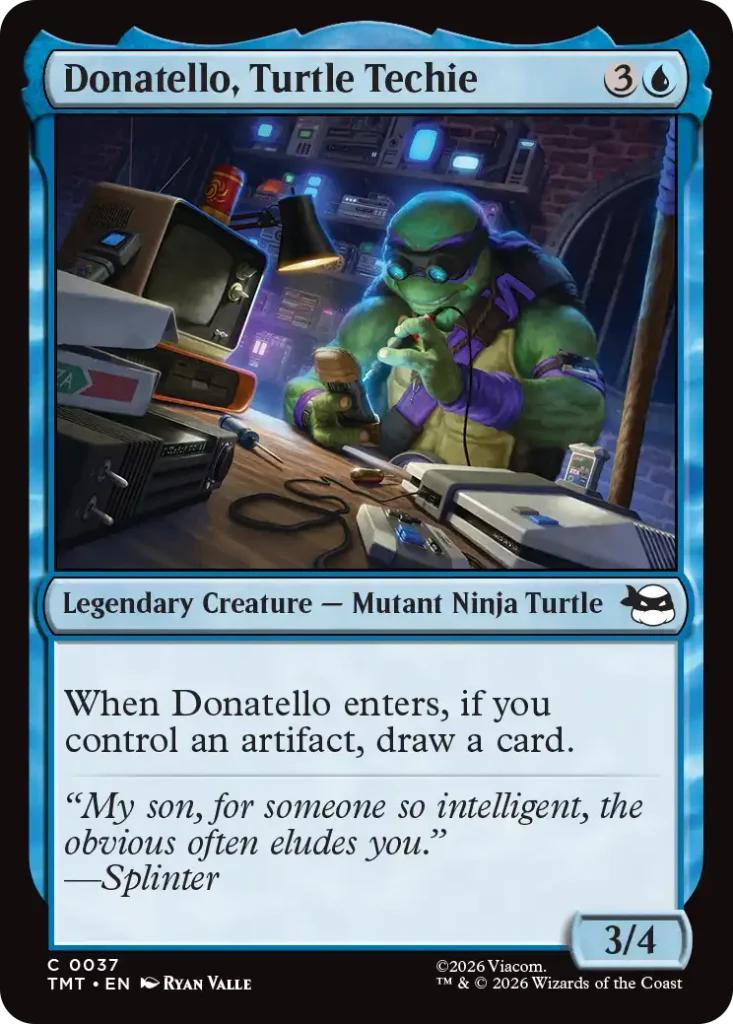
We’ve talked about cards that play well with artifacts, and Donatello is a perfect example of a such card. Creatures that draw cards on enters are always good, provided they have somewhat passable stats for their mana cost.
You need to do some work to make this card draw consistent, but it’s well worth it and not particularly hard to do.
Black
1. Anchovy & Banana Pizza
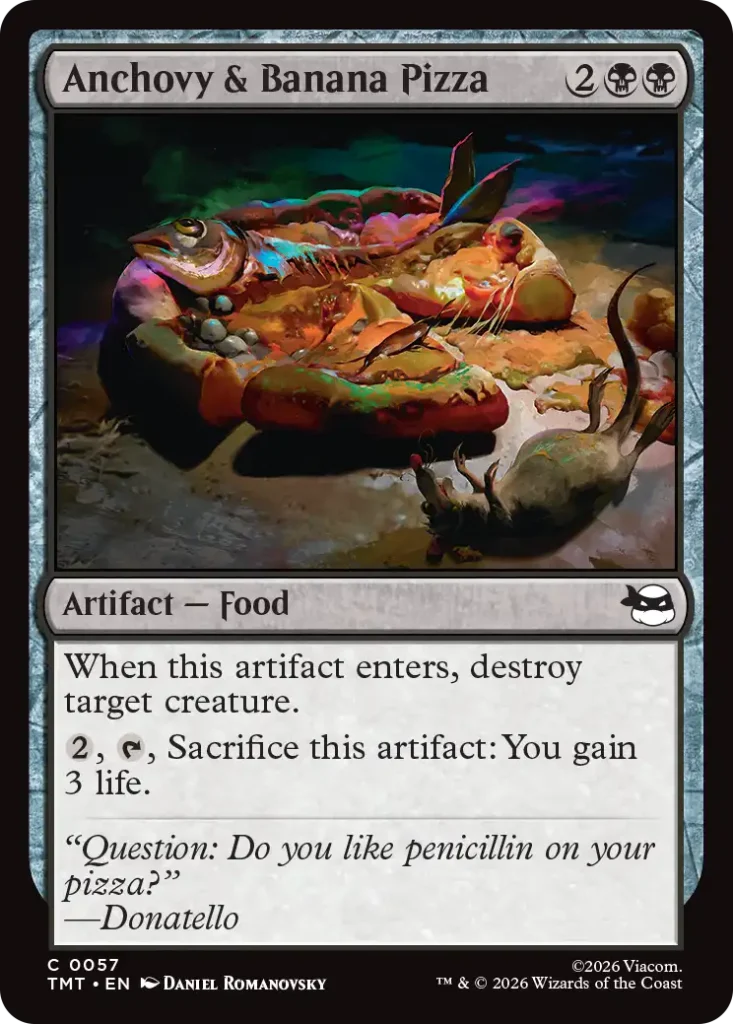
Apart from the horrendous name for a Magic card, this is a pretty good effect. Four mana to kill a creature at sorcery speed is just a bit clunky, but you are getting a Food for your troubles.
Pizza will eventually gain you 3 life, and it also supports other cards (disappear, artifact-matters). This makes it the best black common, although the next one is also pretty useful.
2. Stomped by the Foot

Here’s another removal spell, but this one is a cheaper instant. It only deals with smaller creatures, but can be upgraded by sacrificing an artifact or a creature. Removing your creature is a real cost, so you’ll want to sac an artifact.
Something like the Pizza you’ve seen above, perhaps? Depending on how the format plays out, this might be the better of the two black common removals, but either way, they’ll play nicely together.
Next up, another foot-themed card.
3. Foot Mystic
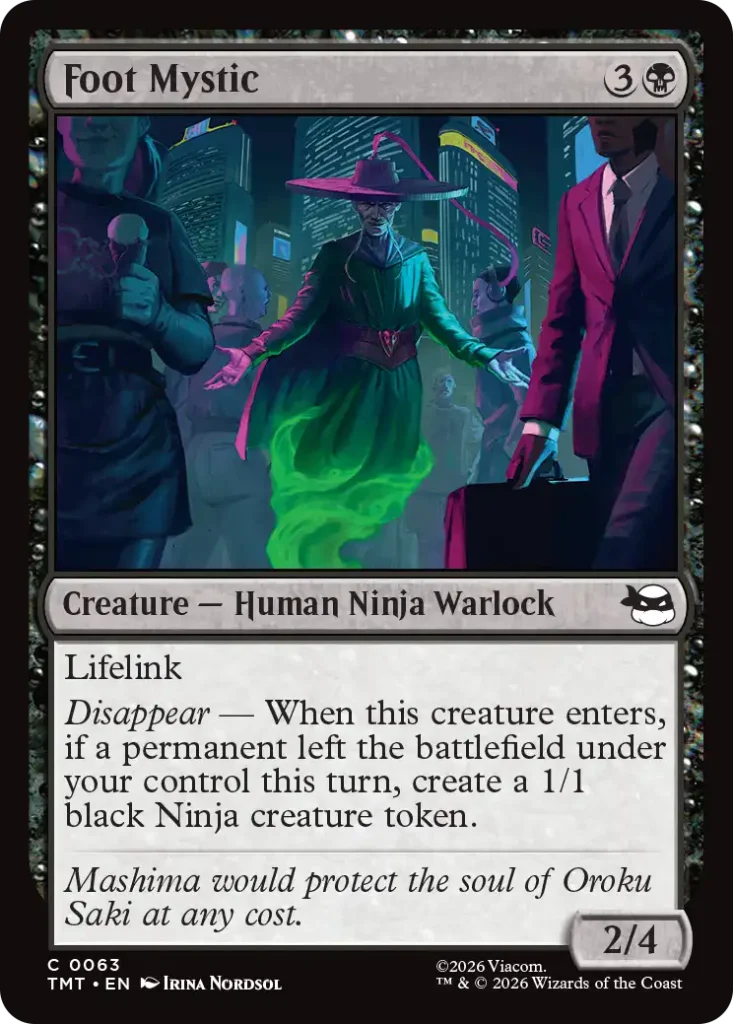
A 2/4 lifelinker for four mana is below rate nowadays. However, if you can consistently trigger it on the turn you play it, the card significantly improves. Any token you get afterwards, is just another cherry on the top of an already playable common.
Red
1. Manhole Missile
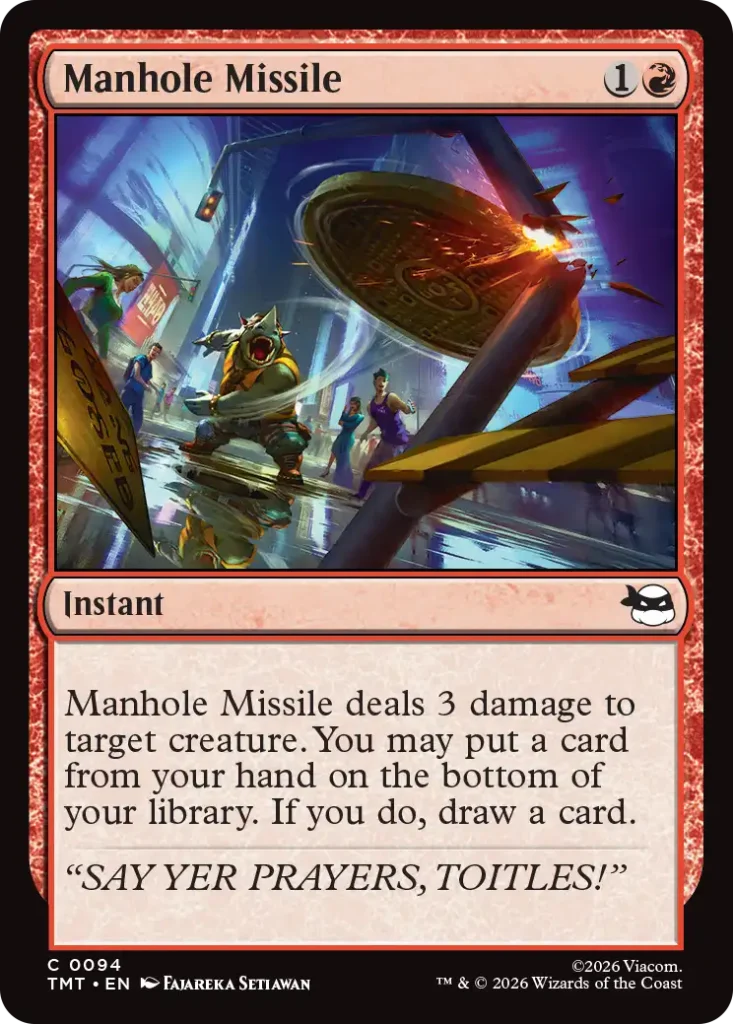
If this card only dealt three damage to a creature at instant speed, that would’ve been pretty good already. Once you add some card filtering to it, you get one of the best commons in the TMNT draft.
It’s good early and late in the game, and such cards are always a real treat.
2. Mouser Foundry
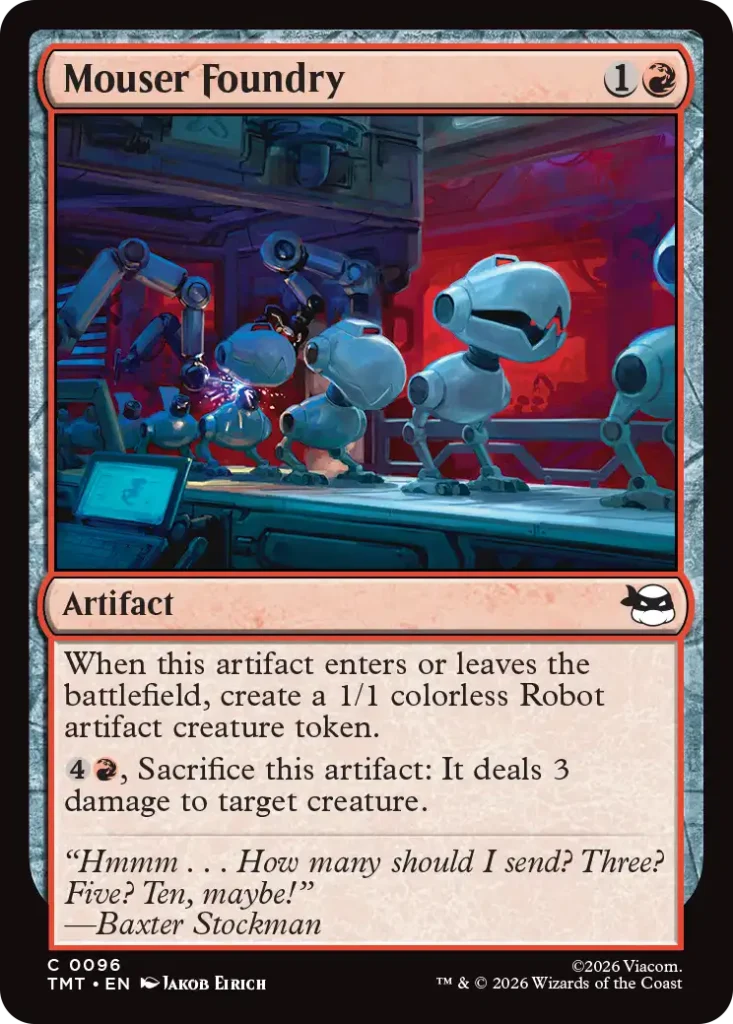
Foundry creates two artifacts right away, which works nicely with various artifact synergies. Later in the game it turns into a removal spell, which gives you yet another 1/1 artifact.
On the other hand, you could also sacrifice this artifact to another effect, and still get some value out of it. So, not particularly powerful on its own, but it plays well enough with other cards, that it deserves an inclusion.
3. Bot Bashing Time
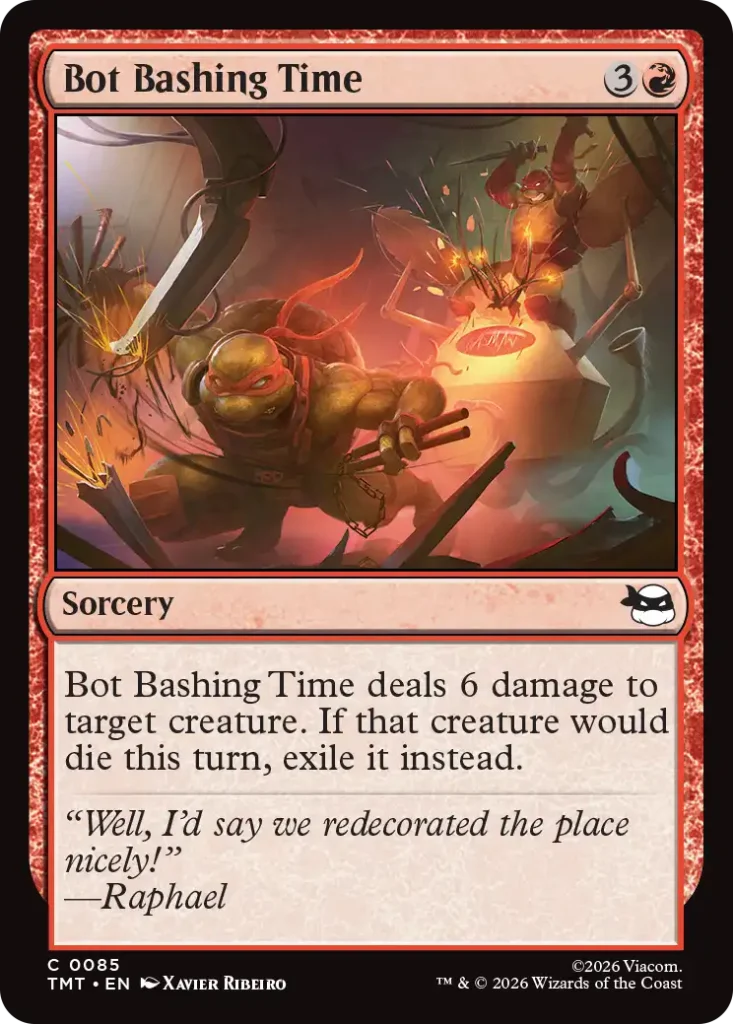
The third best red common is yet another removal spell. It is a bit clunky at four mana and sorcery speed, but it will kill and exile pretty much any creature your opponent plays. That’s always a useful effect to have in your deck.
Green
1. Primordial Pachyderm
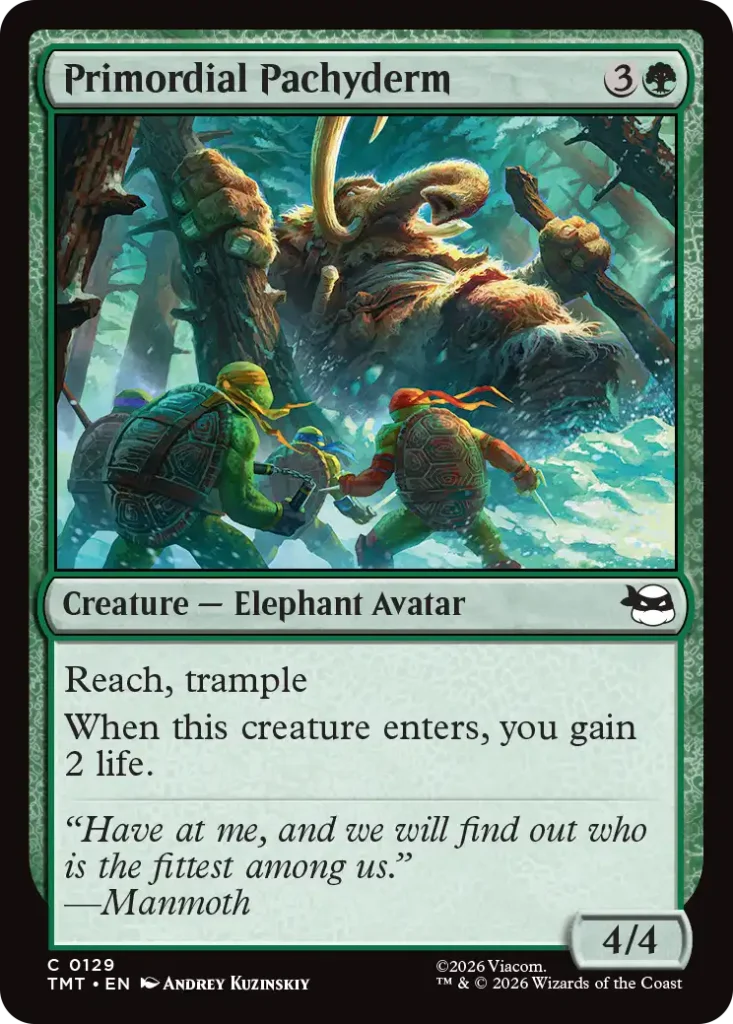
Four mana 4/4 isn’t what it used to be. But once you tack reach, trample, and a couple of life to it, you’re suddenly left with a potent creature, both on defense and offence.
2. Tenderize
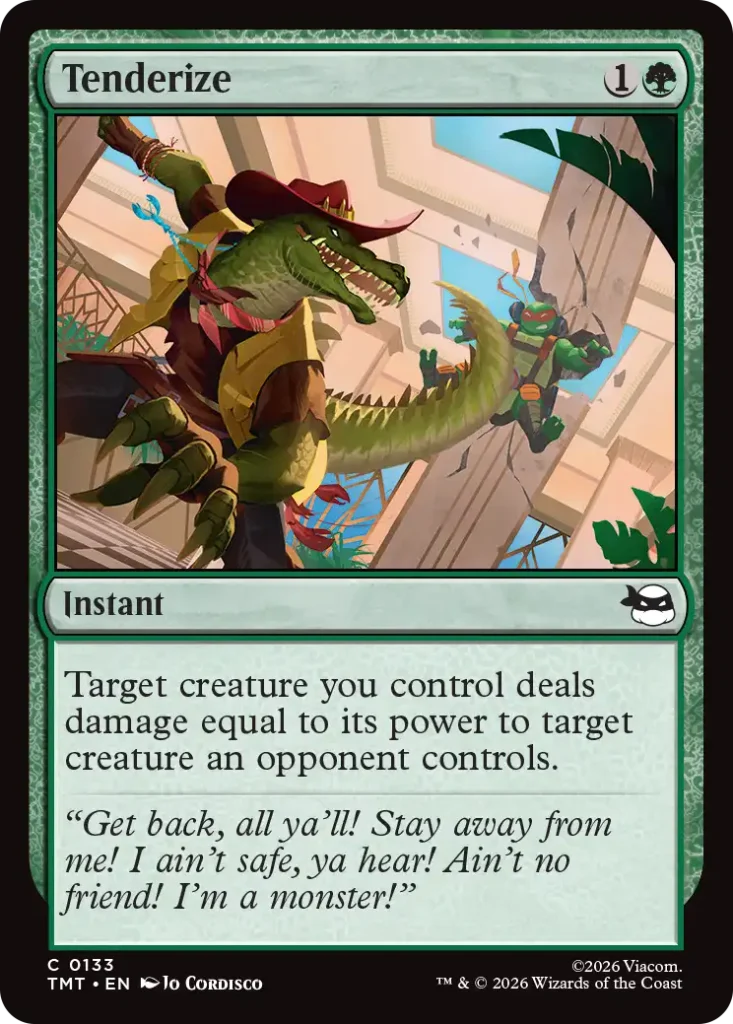
A green removal that we’ve seen time and time again. In most sets it ranges from fine to really good, and there’s no reason for that to change in Ninja Turtles draft.
It’s also a pretty cool card to pair with deathtouchers, such as this next little guy.
3. Frog Butler
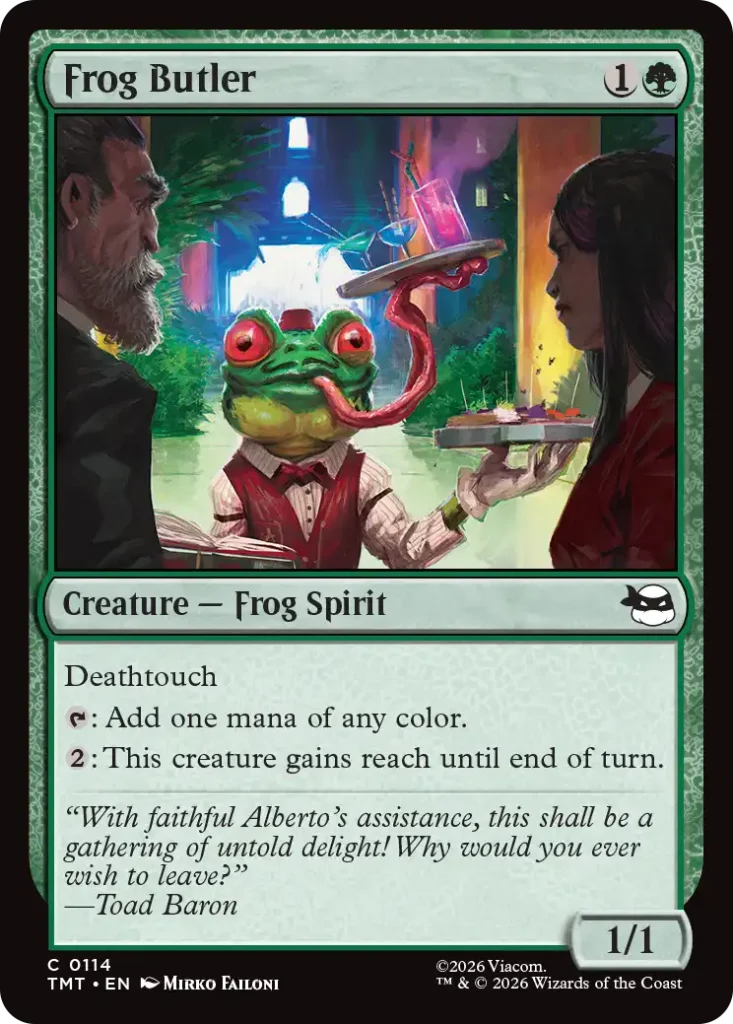
As you’d expect from a Butler, this card does a lot of work. It ramps you and fixes your mana. It has deathtouch so it can take out pretty much anything out on blocks. Even flyers, if you’ve for the two mana to pay for it.
Honorable Mentions
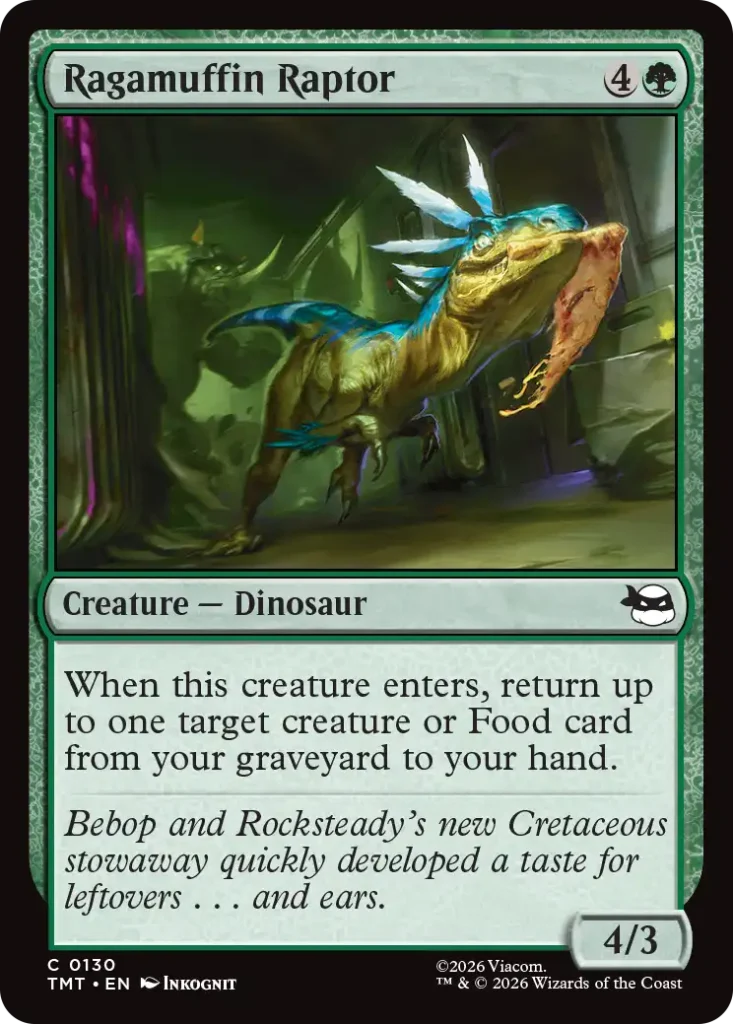
Green seems to be the color with the most useful commons, as there are a couple more that we’ve wanted to shout out. Ragamuffin Raptor is a powerful card for your
Guac & Marshmallow Pizza is a cheap combat trick, that leaves a Food behind. For a single mana, that’s above rate.
TMNT Draft Archetypes
So, that was it for the commons, and now to the archetype overview. As you’ll see, there’s some overlap between the ones that share a color.
Black-White: Sneak Ninjas

Black-White color combo wants to play cheap evasive attackers in order to take advantage of powerful sneak cards.
The two best enablers are Featherbrained Filcher and Dream Beavers. Both are one mana flyers, so they are able to safely attack most of the time, and also cheap to replay after you return them. One triggers when it leaves and the other when it enters, so you are getting additional value from them too.
As for the sneak cards, there’s quite a lot of them, and they are at least playable, if not actively strong. The best non-rare ones are:
- Karai’s Technique is a perfectly strong card with its regular cost. However, it can be an even larger blowout mid combat.
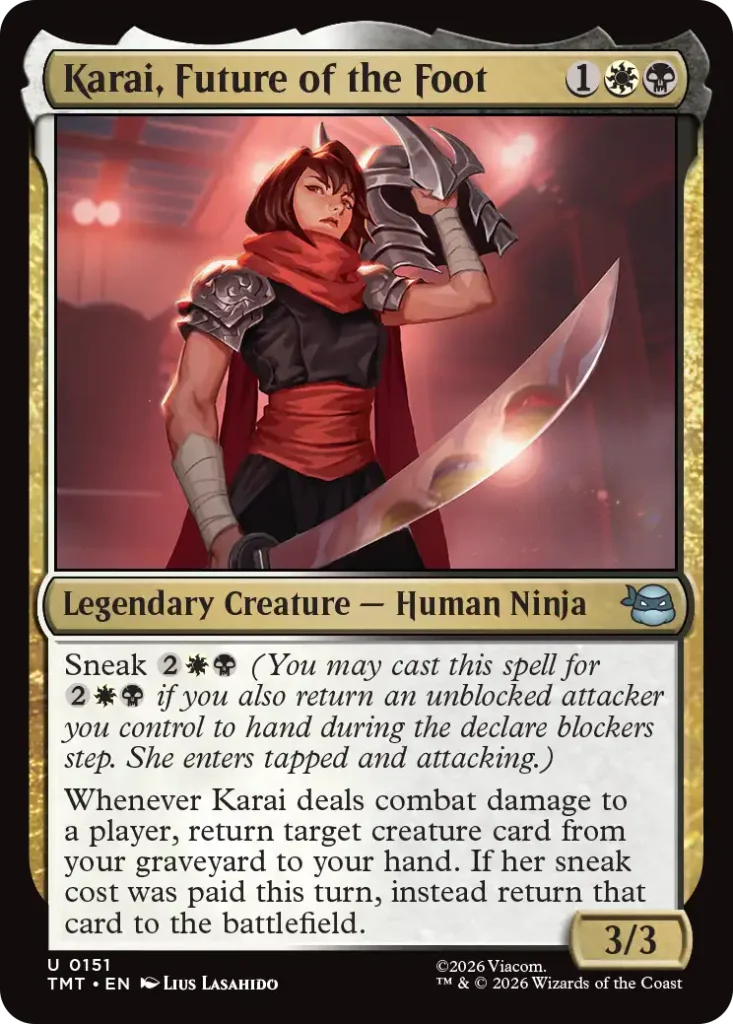
- The sneak cost of Karai, Future of the Foot is actually more expensive, but it makes it easier to deal combat damage to a player with her. If that happens you get to reanimate one of your creatures, which is an insanely powerful effect.
- Leonardo, Leader in Blue can make combat a nightmare for your opponent.
- Splinter, Hamato Yoshi is another good one, provided you’ve drafted a lot of Ninjas. (Fairly likely in this color pair.)
As usual, with decks like these, you’ll want a nice mix of payoffs and enablers. You want to pick the best payoffs first (as most of them are good cards even when cast for their regular costs), followed by enablers, and then the rest of the payoffs and general good cards for the deck.
Red-White: Go-Wide Alliance Aggro
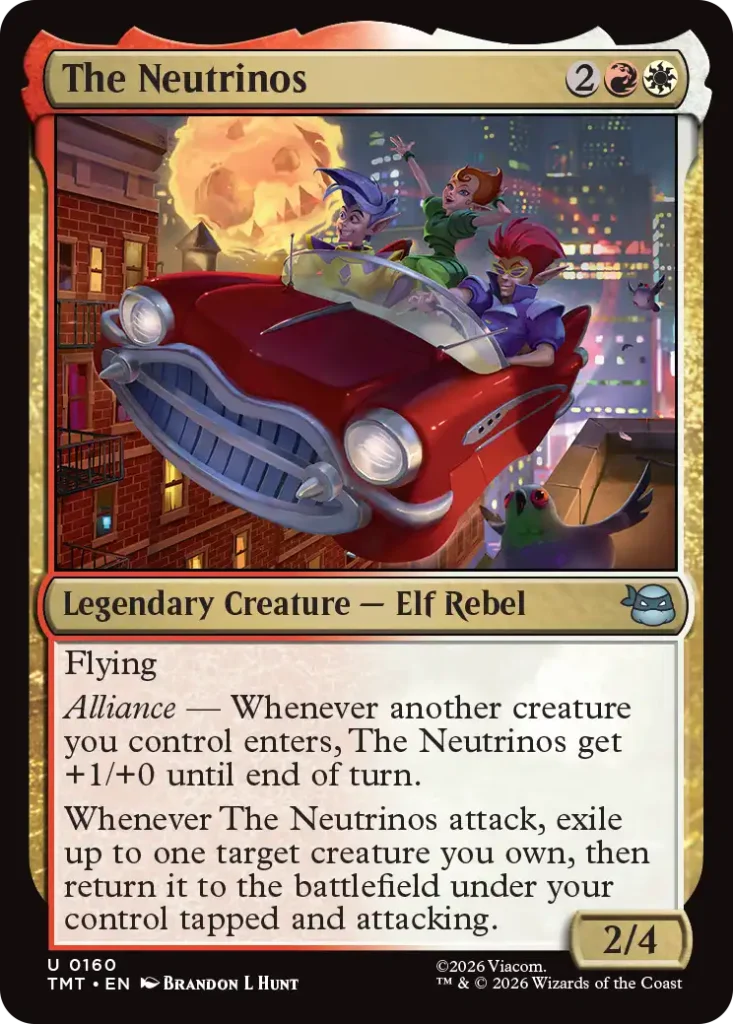
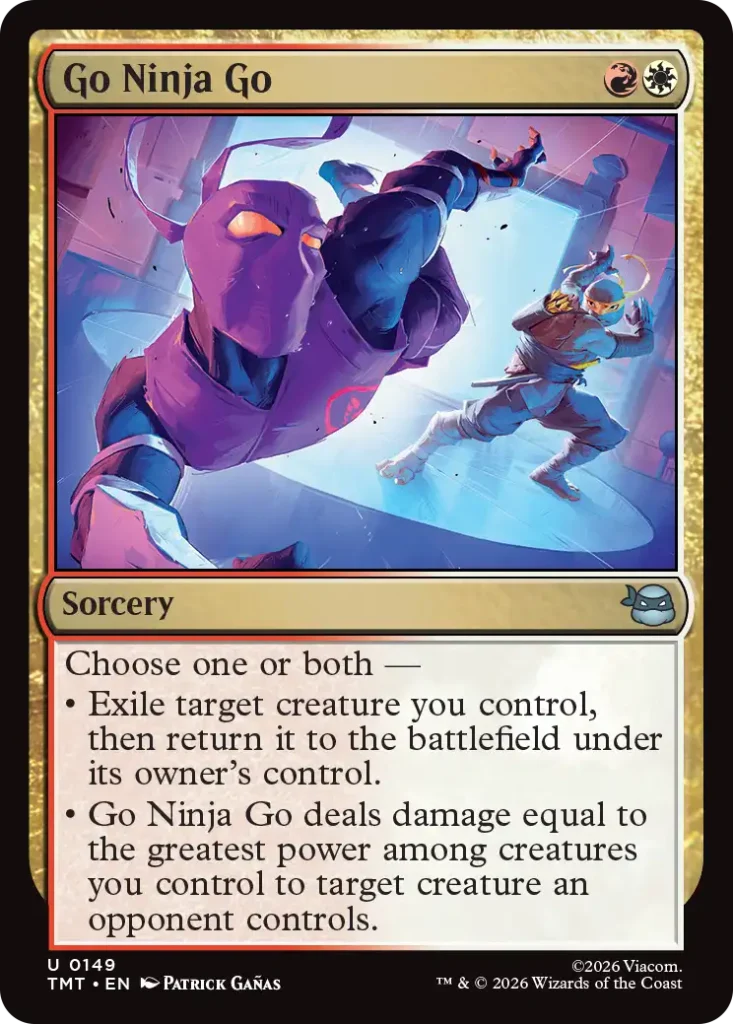
If you’ve played aggressive decks in past draft formats, you know what to expect from red-white. Play lots of creatures and turn them sideways. That’s already a solid plan, but now you get alliance cards to further reward you for enacting your game plan.
You can borrow some cards from the previous archetype. For example, both Leonardo, Leader in Blue and The Last Ronin’s Technique will work just as nicely here, even though they feature the sneak mechanic.
Additional effects that allow you to put multiple creatures in play would be Jennika, Bad Apple Big Sister, Old Hob, Alleycat Blues, Mechanized Ninja Cavalry and Mighty Mutanimals. The latter is also a solid payoff for alliance.
Don’t think that you need to play every card featuring this keyword, though. EPF Point Squad is clunky and bad. Instead you want to get stronger payoffs, Wingnut, Bat on the Belfry and Lita, Little Orphan Amphibian fit that role much better.
Finally, keep in mind that you’re drafting an aggressive deck. You want your curve to be lean, with lots of two mana cards and only the best cards that cost 4 or more mana. If you can manage to put the opponent on the back foot from the get go, you’ll increase your chances of winning with this archetype.
Blue-Red: Artifacts
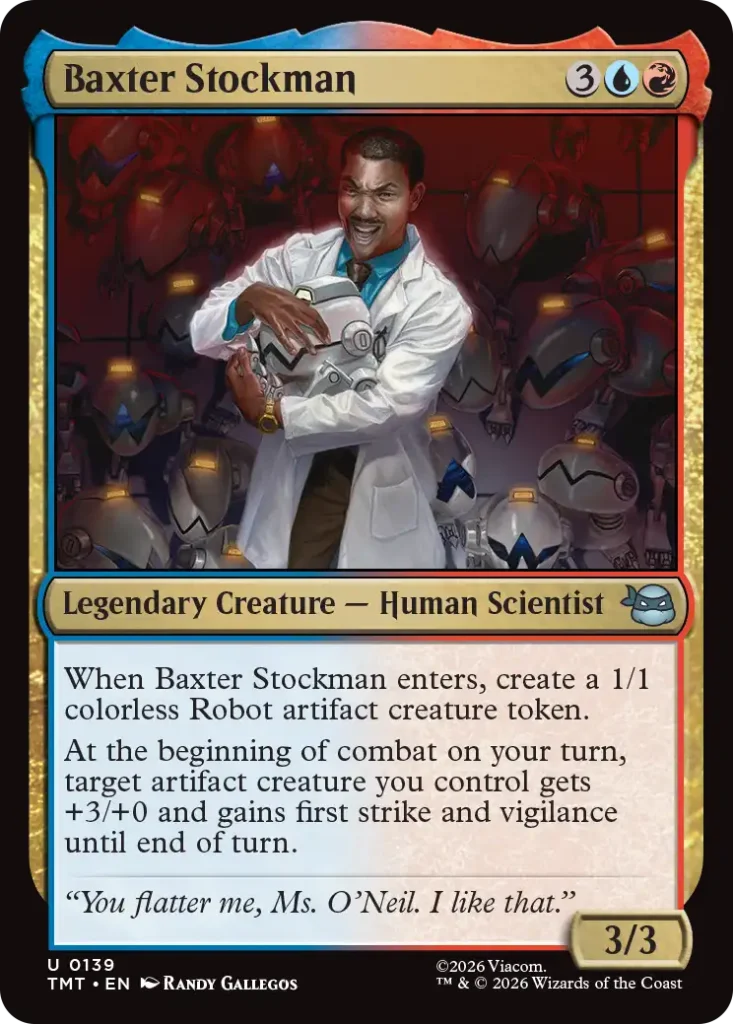
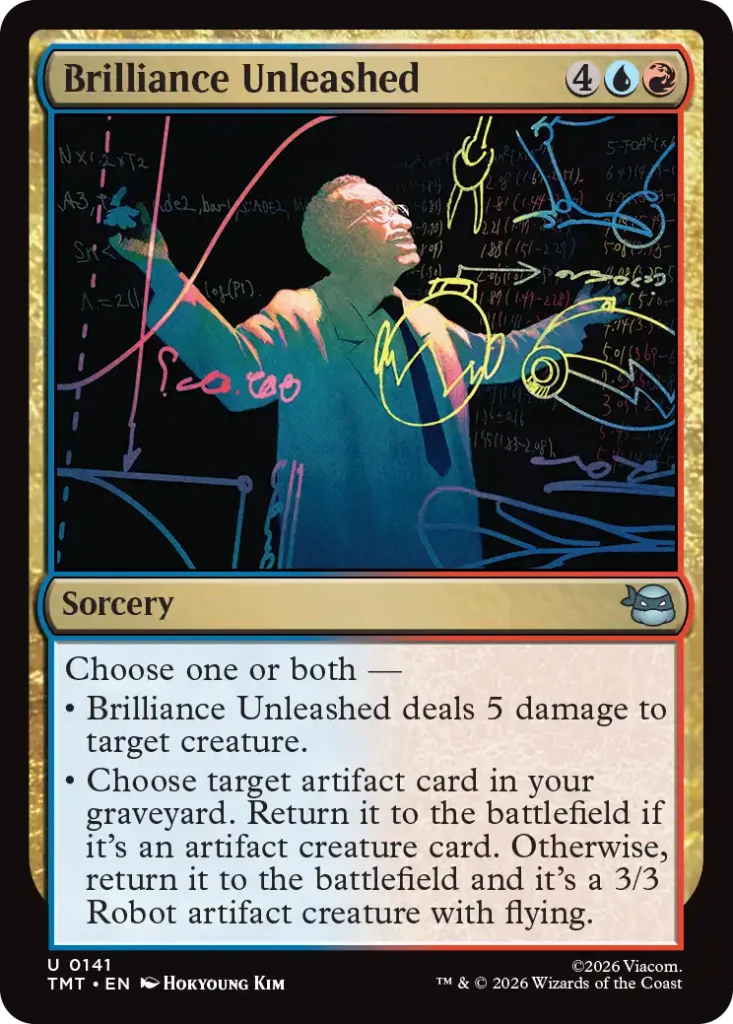
We’ve mentioned artifact synergies plenty of times, and this deck takes the best advantage of them, with cards such as:
- Baxter Stockman, which brings an artifact, and can pump your random artifact creatures into a massive attackers.
- Brilliance Unleashed is essentially a removal-on-a-stick with some additional value.
- General Traag works similar, but requires slightly more setup.
- Donatello, Turtle Techie draws you a card.
Of course, your best payoffs are rares like Krang, Master Mind and Does Machines.
What all of these have in common are that they reward you for playing lots of artifacts. Thankfully, there’s no shortage of them. (You’ve got Fugitive Droid, Sewer-veillance Cam, and Spicy Oatmeal Pizza just to name a few.)
Oh, and you’ve also got access to the Mutagen tokens, even though they are most frequent in the next archetype.
Blue-Green: Mutagen Tokens Midrange
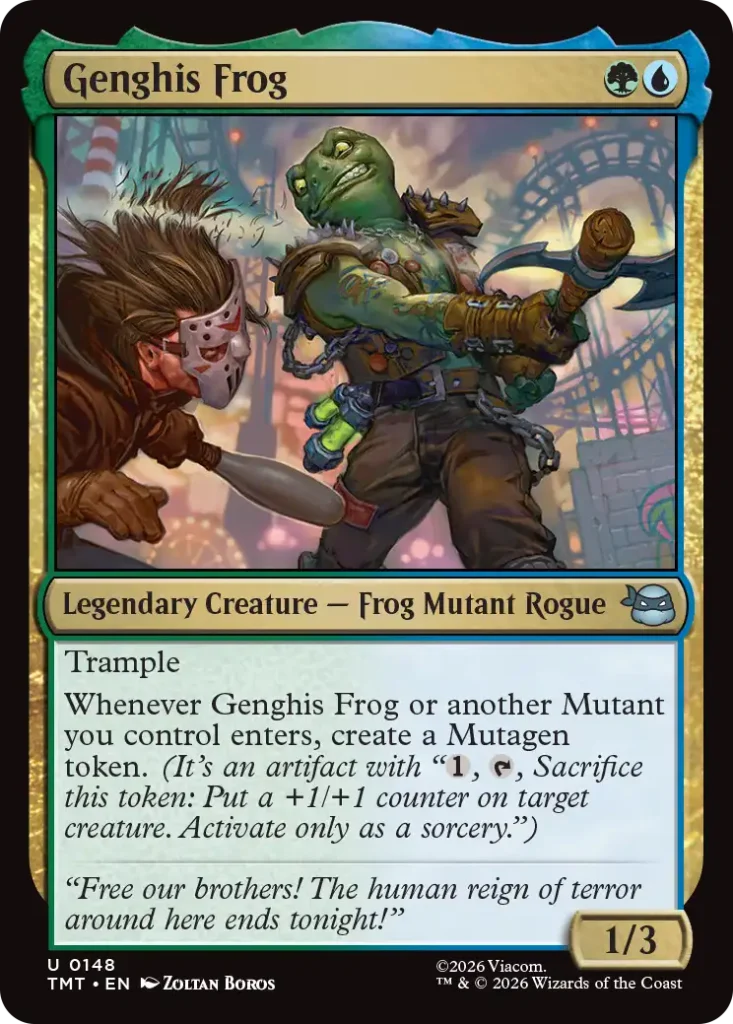
Blue-green features Mutagen tokens, but the synergies aren’t particularly deep here. There are no cards that specifically rewards you for controlling a ton of Mutagen tokens.
Instead you’ll use those to simply grow your creatures and to support two adjacent themes. Blue gives you artifact-matters cards, and green gives you disappear cards. Mutagen tokens support both of these.
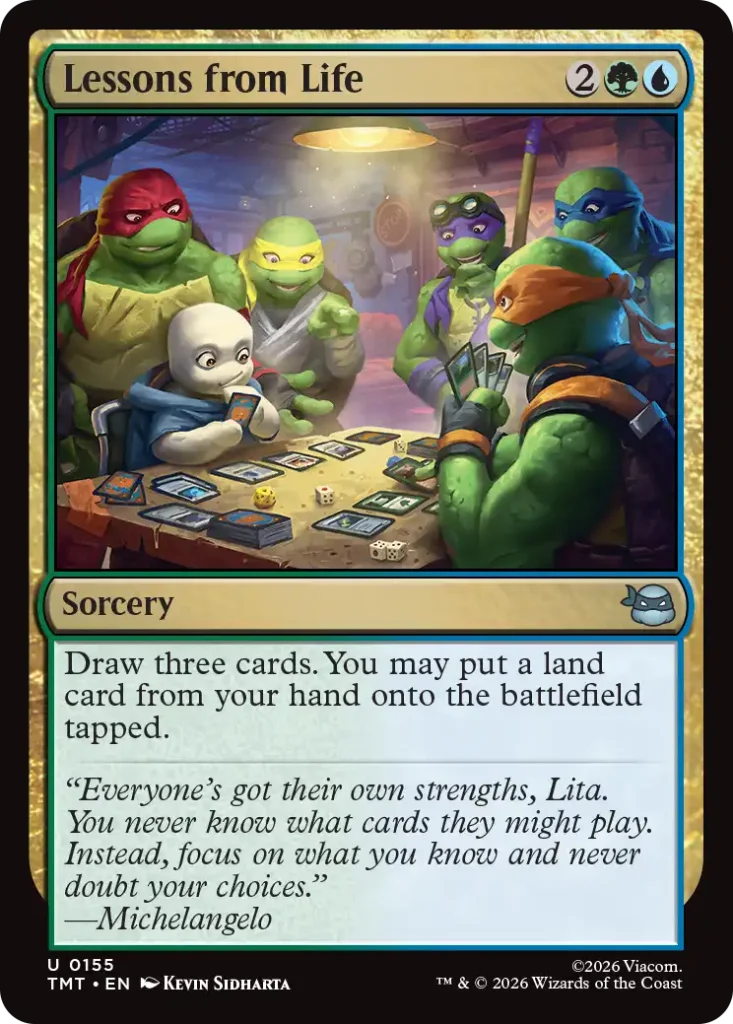
So, most likely you’ll have a mix of the two strategies, or you’ll lean more heavily into one of them, depending on how your draft goes. Of course, you could just play good cards in blue and green, without caring about synergies. The golden card Lessons from Life shows that this might be the case. No particular synergies, just a strong card on its own.
To be fair, there are some minor use cases for +1/+1 counters. A couple of cards with Ray Fillet, Man Ray and Michelangelo, Mutant BFF at uncommon. There’s also the rare Michelangelo, Weirdness to 11, which might be the best payoff for going hard on Mutagen tokens. Furthermore, The Ooze is also useful, but it doesn’t need other Mutagen cards to be good.
Finally, one more Mutagen creators worth mentioning is Genghis Frog. But keep in mind that it’s the only card in the set, which rewards you for drafting lots of Mutants. So no need to try and draft a deck full of Mutant creatures. (This isn’t Lorwyn.)
Black-Green: Disappear (Food)
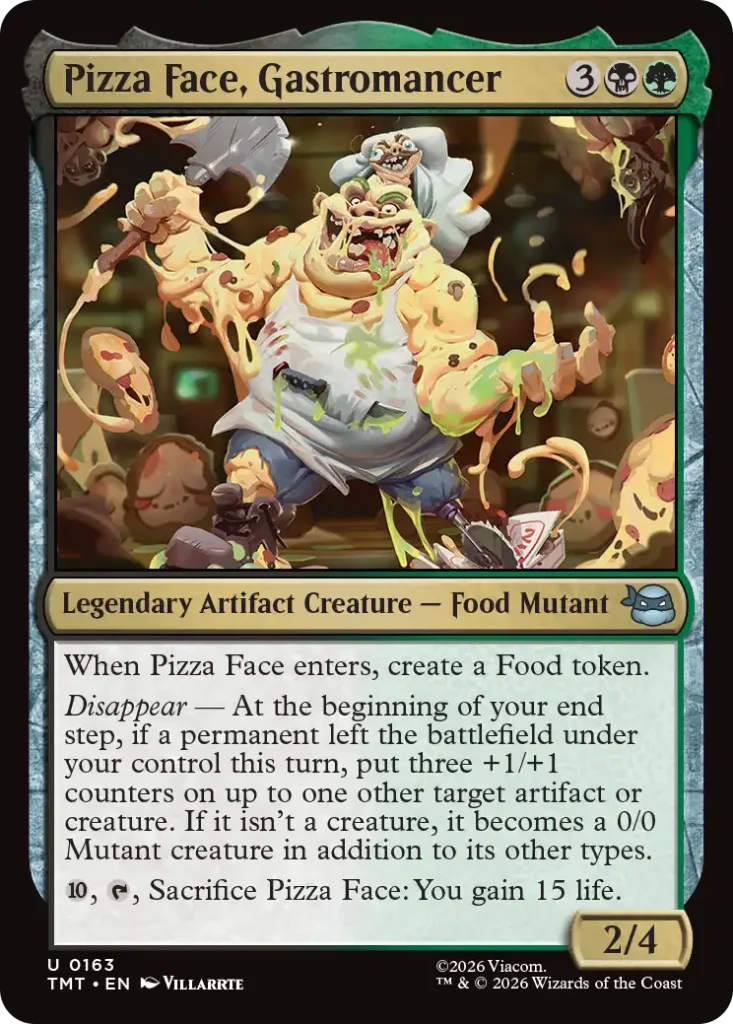
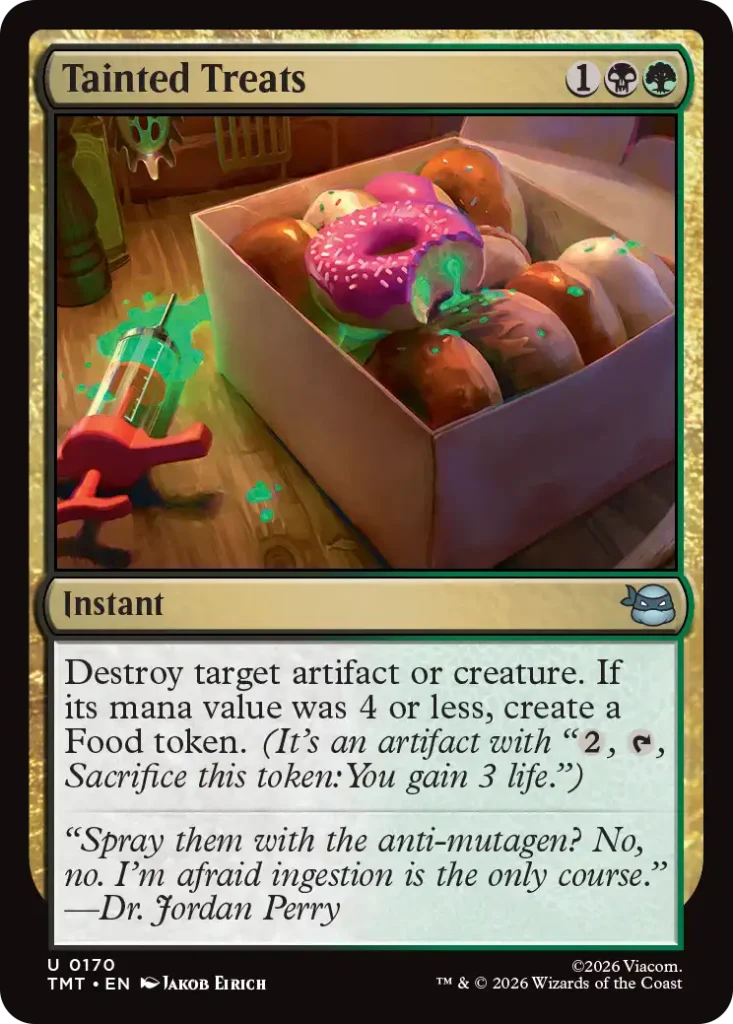
The fifth and final archetype rewards you if permanents leave your battlefield. Here are some of the better cards that push you into this direction:
- Pizza Face, Gastronmancer turns your artifacts into larger and larger creatures.
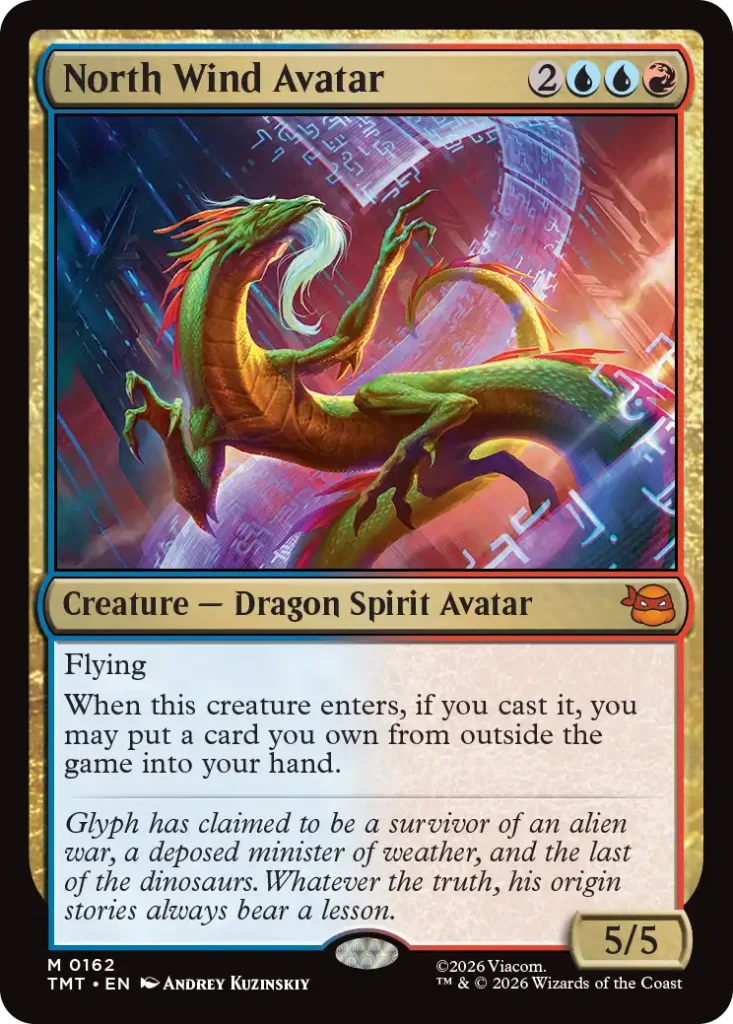
- West Wind Avatar draws you cards, enables this whole shtick and is a massive creature.
- Lord Dregg, Insect Invader provides you with an army of flyers.
As for the enablers, we’ve mentioned a lot of them already. Mutagen tokens, Food, trading creatures in combat. Of course, black sneak cards work as well, as well as some specific cards, such as Stomped by the Foot.
Food Synergies
There’s also a small Food subtheme present in this archetype. Besides the aforementioned Pizza Face, Gastronmancer, there are two more green cards that care about them: Courier of Comestibles and Ragamuffin Raptor.
While these two can be used in basically any green shell, they are at their best here, as you can use them to get an actual removal spell with Anchovy & Banana Pizza.
It’s easy to imagine a scenario, where you find it with Courier, use it to destroy a creature, then buy it back with Raptor. So, this is definitely something to keep in mind when drafting black-green.
Additional Tips
Before we wrap up, here are some final tips about the TMNT draft format.
Power Rankings
As always, these power rankings are simply predictions. So far, it doesn’t look like anything is unplayable, so only use this when deciding between two cards of a similar power level. No need to force a specific color or archetype.
Best Colors
- Blue
- Green
- Black
- Red
- White
All the colors seem pretty close in power level, but blue and green slightly better with a high quality commons. White seems a tad bit lacking, but not by much, as it features a few insanely strong rares.
Best Archetypes
- Blue-Red: Artifacts
- Blue-Green: Mutagen Tokens Midrange
- Black-Green: Disappear (Food)
- Black-White: Sneak Ninjas
- Red-White: Go-Wide Alliance Aggro
All archetypes have some powerful stuff to do, so hopefully they are in similar power level. The synergies between the artifacts seem the strongest and well supported, that why they’re at the top. However, it doesn’t look like any deck is bad.
Hidden Archetypes
Can you draft something else than the 5 supported color pairs. Probably yes, but it won’t be that common. If you’re only doing a single draft or two, it’s best to stick to featured archetypes. However, if you plan to draft a lot, and want to try something else, you’ve got some options.
The Other Five 2-Color Pairs
Let’s say you picked a strong black rare, then you’ve got passed a bunch of solid blue uncommons, so you picked those. Afterwards, you grab a few good black commons, and at the end of the pack 1, you’ve got a bunch of blue and black cards. Is that a problem?
Not necessarily, you can certainly win games by playing strong cards in two colors. And perhaps even use some of the synergies. Blue will provide artifact support, while black gives you Anchovy & Banana Pizza and Stomped by the Foot, which can play nicely in this shell.
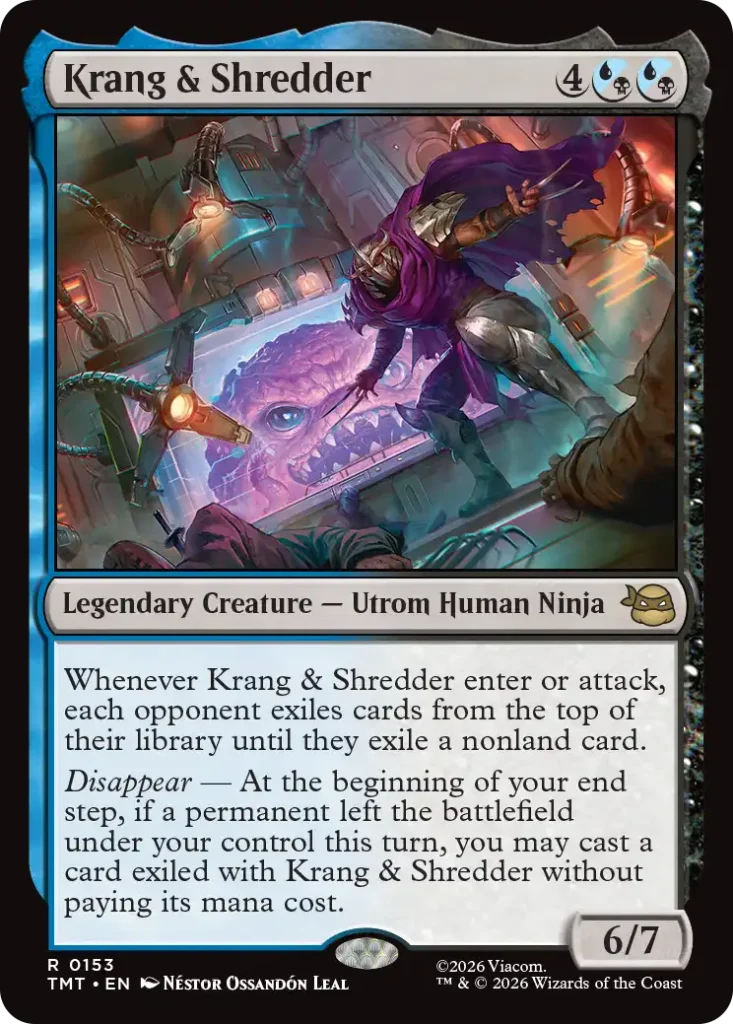
Yes, you will be missing on gold cards, as the only blue-black card with Krang & Shredder isn’t an exclusive card to this color pair due to the hybrid costs. But if good cards in both colors are being passed to you, feel free to go for the deck. (Plus, you can still splash a gold card if it fits in your deck really well.)
Here’s the list of these not supported archetypes, along with the themes they might use:
- Blue-White (go-wide or artifacts)
- Green-White (go-wide)
- Black-Red (artifacts)
- Red-Green (Mutagen tokens)
- Blue-Black (artifacts, disappear)
The 5-Color Special
For the fans of unorthodox strategies, you can give yourself a real challenge and try to draft a deck containing all five colors. You need to pick a lot of mana fixing, so you’re mana base is at least somewhat passable.
The reward for doing so is that you get to play every powerful rare that you open or get passed. There are a lot of them that don’t require specific setup, so that’s good for a 5-color pile.
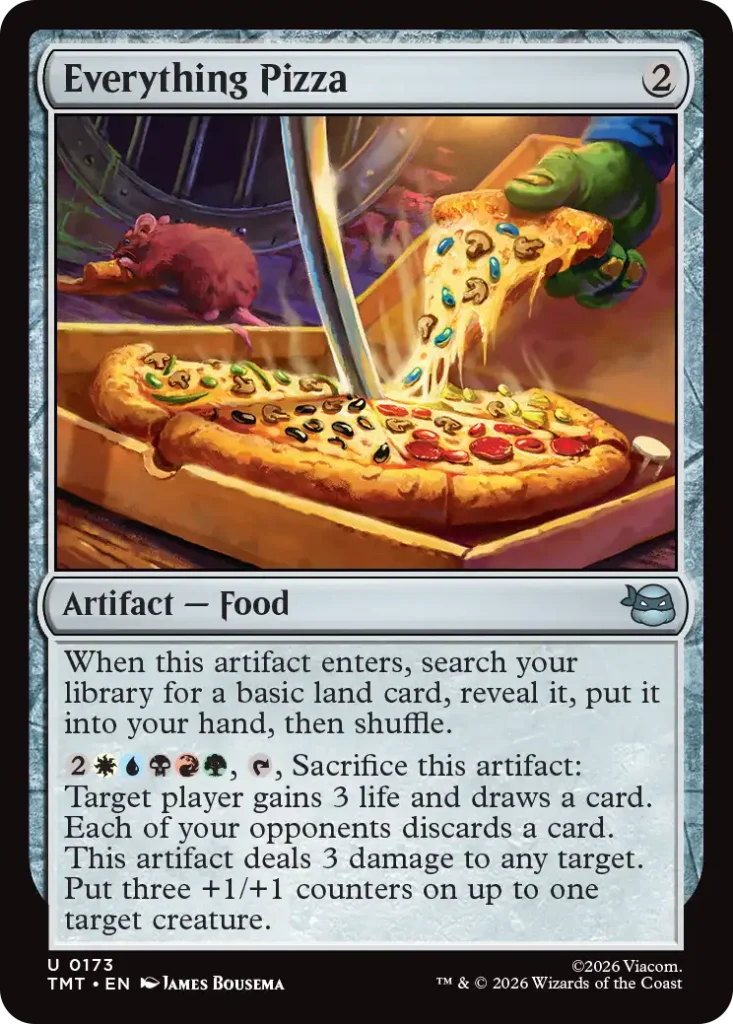
Additionally, there’s a uncommon reward for doing all this work two. This two mana artifact will fix your mana in the early game, which is neat. But in the late game you can cash it in for an extremely powerful effect.
That can certainly turn a game around, particularly since you can just buy it back with Ragamuffin Raptor and do it all over again.
Based on all this, the 5-color deck might not be just a meme, but something that’s possible to do occasionally.
TMNT Draft Tier List
This guide showed you the big picture stuff, without discussing every single card. If you need help with evaluating cards, you should check the accompanying article — TMNT Draft Tier List. In it, you’ll find grades for each card in the set, so you’ll know which cards to pick first.
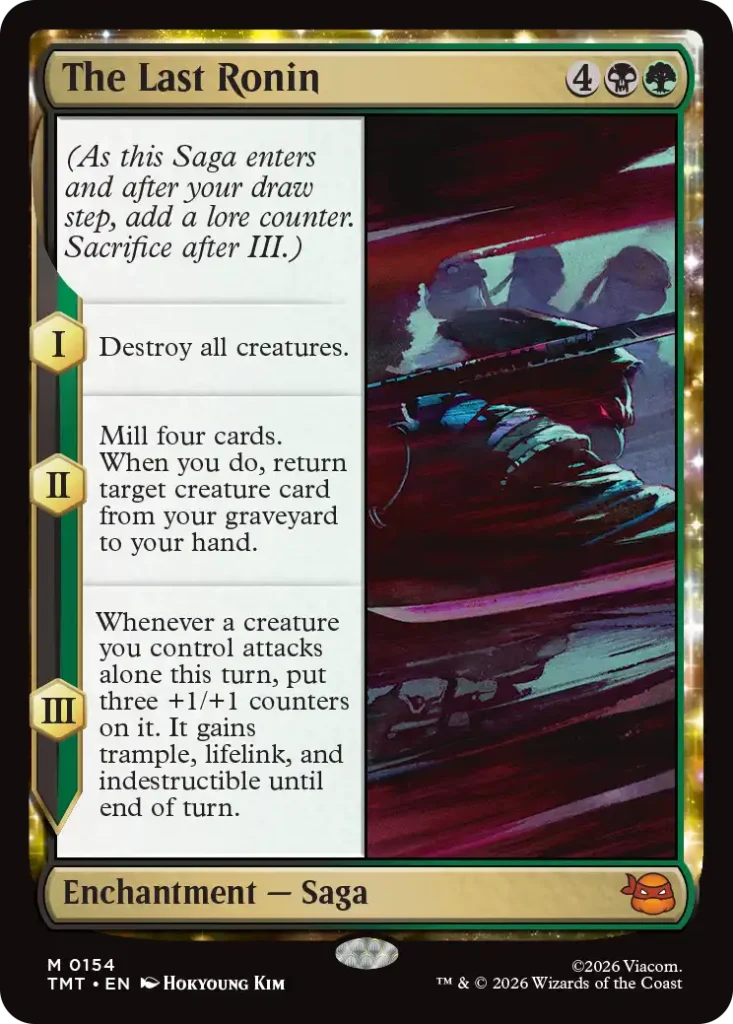
(If you see The Last Ronin just slam it, even if you need to splash for it.)
Happy Drafting!
In the upcoming weeks, you can expect an update to this article. After we get more data and see how the format actually plays out, we’ll probably need to make some adjustments to our educated guesses.

If you want to draft at home, you’ll need a Play booster box. You can buy it on Amazon to get your hands on it ASAP.
Additionally, if you’re a Commander fan and have been living under a rock (or under a manhole) — there’s a new 5-color precon being released with this set. You can find all about the Turtle Power! precon here.
Until next time, enjoy casting spells and may you win a lot of TMNT drafts!
The best common, nit just in blue, is the sewerveillance camera. There is no limit to the copies you can play and it is seriously powerful…