
After almost 20 years, we’re visiting Lorwyn once again! Besides iconic call-backs, new powerful cards, and old-school artwork, we’re also getting a fresh draft format. If you want a head start before you start picking cards, our Lorwyn Eclipsed Draft Guide is hear to help.
If you we been reading our guides for a while, you already know what to expect. If not here, what you’ll find below:
- overview of the mechanics and how they affect the format
- best commons
- archetype breakdown
- additional tips
- tier list with every card graded
There truly is a lot to talk about, so why don’t we jump right in?
Table of Contents
Lorwyn Eclipsed Mechanics
In Lorwyn Eclipsed there are multiple mechanics and themes. Some are very minor and appear only on a couple of cards, as a sort of callbacks to the original Lorwyn block. Below we’ll discuss the most prominent ones.
Five Creature Types Matter, Kindred & Changeling
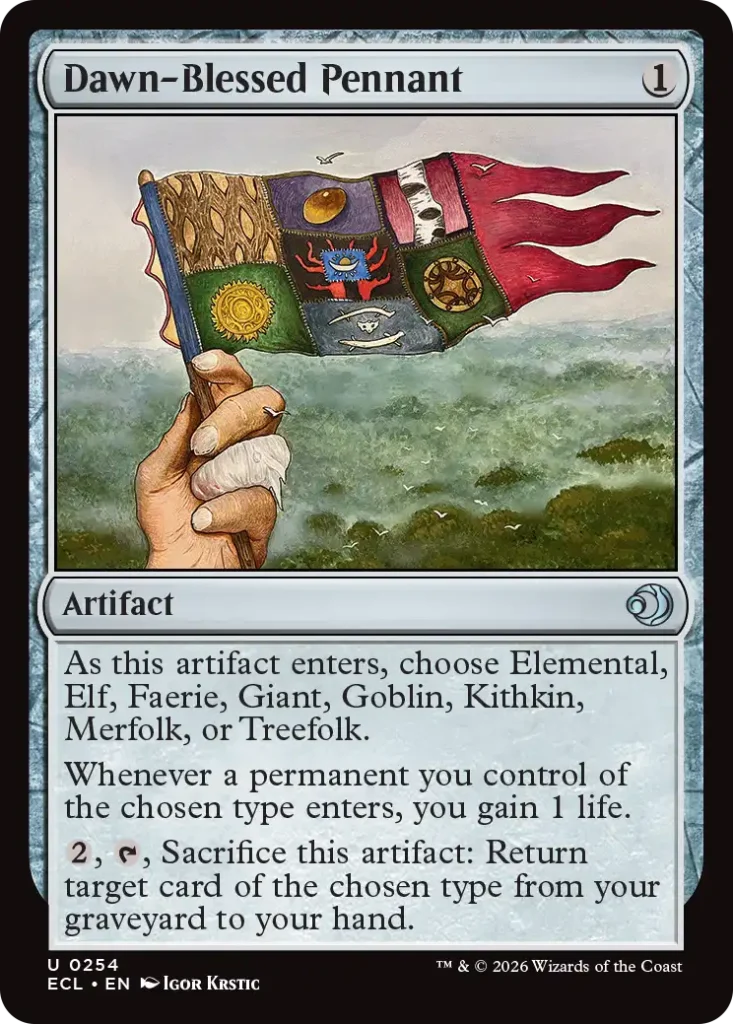
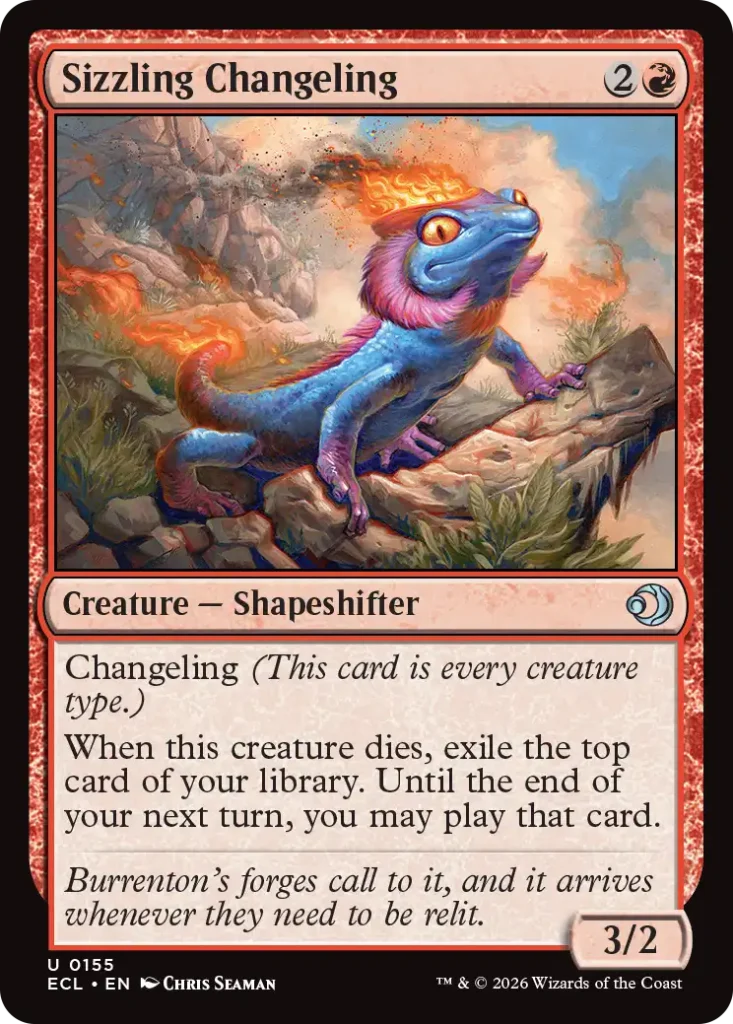
In Lorwyn Eclipsed draft, you’ll find the following five supported creature types:
- Merfolk (blue, white)
- Kithkin (white, green)
- Elf (green, black)
- Goblin (black, red)
- Elemental (red, blue)
Each of those has specific synergies, and a dedicated archetype. But more about that in the Archetypes section.
Changeling
Changeling is a keyword that essentially gives a card every creature type. There are 18 cards with changeling in this set, spread across all five colors. (Flock Impostor, Sizzling Changeling, etc.)
This cards are here to support the creature type synergies, as they can slot into various archetypes in a pinch.
Kindred
Kindred (used to be called tribal) is a card type that highlights non-creature spells with a creature subtype. For example, Clachan Festival is kindred enchantment with a Kithkin subtype.
It works with effects that care about Kithkin cards, but besides that, this doesn’t have additional impact on the game play.
-1/-1 Counters & Blight
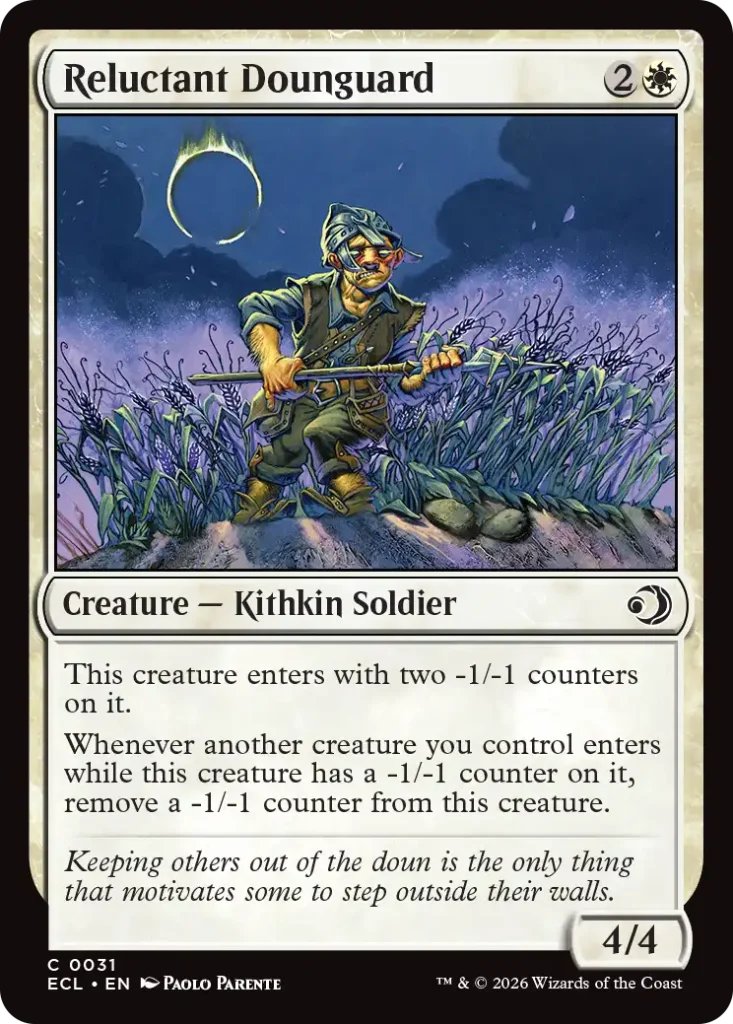
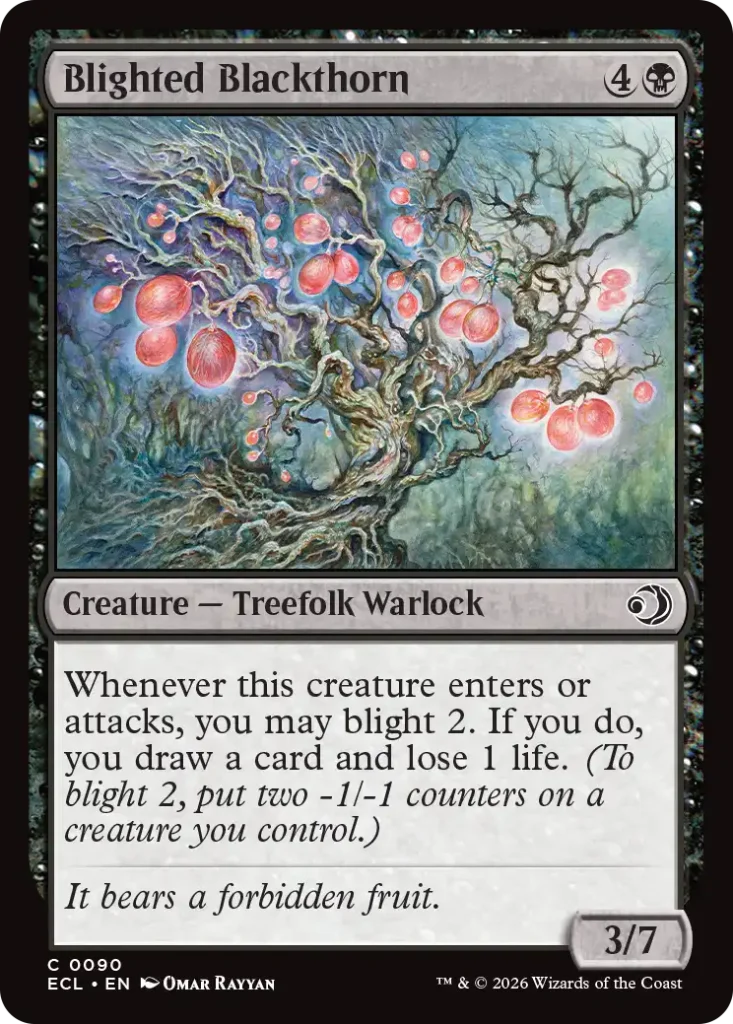
In most Magic sets, you’ll encounter +1/+1 counters. That’s not the case in Lorwyn Eclipsed, though. Instead many cards feature -1/-1 counters.
These work just as you would expect. Reluctant Dounguard enters with two, making it a 2/2. However, it has a built-in way to remove them (as most of these cards do), so it can eventually live up to its full potential of being a 4/4.
This plays well with the blight mechanic, which is a new cost. In order to blight X, you need to put X -1/-1 counters on one of your creatures. This is a meaningful cost, and not something to take lightly, as it negatively affects your board state.
You can mitigate the cost by using it with creatures that can remove those counters. (You’ll find additional synergies, when we discuss the black-white archetype.)
Vivid
Vivid counts the number of colors among permanents you control. The more colors there are, the better their effects will be.
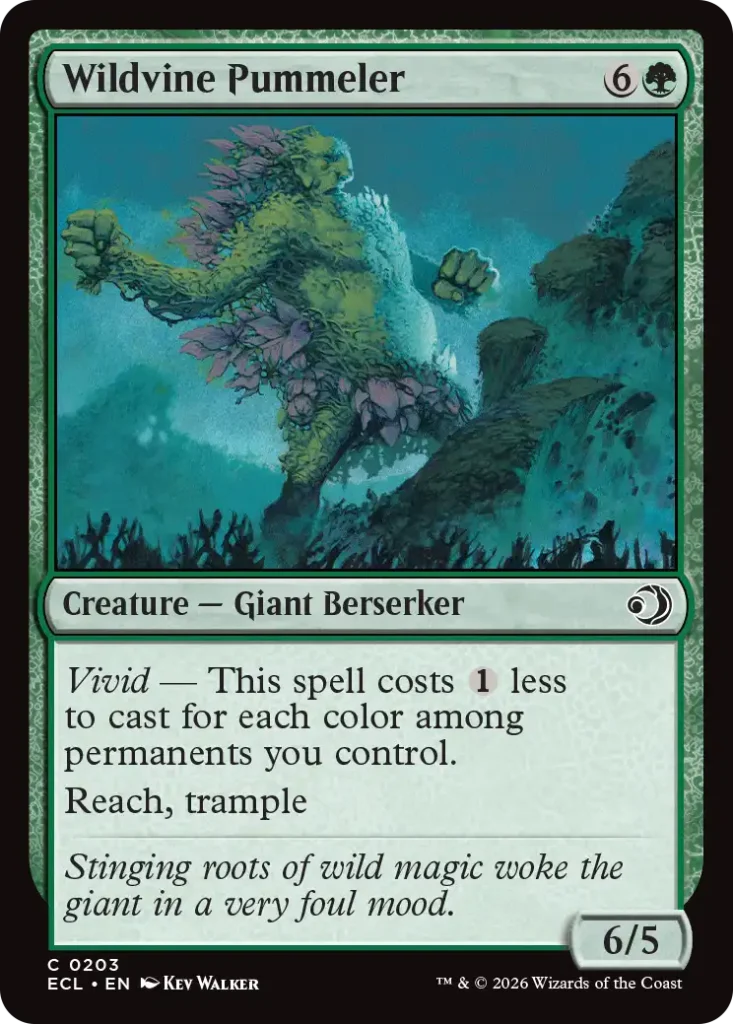
For example, Wildvine Pummeller is very clunky at seven mana. However, if you control let’s say a green, a blue, and a black permanent, it costs just four mana. At that point, it becomes a much better option.
A couple of things to note here:
- Lands are colorless by default, so they won’t count towards vivid.
- Hybrid cards count towards both colors. (Stoic Grove-Guide counts as green and black permanent.)
When you’re building heavily around this mechanic, you essentially becomes a base green deck, that’s splashing all other colors. After all, most of vivid cards are in blue and green, with a few sprinkled in other colors. We’ll talk more about this mechanic in the blue-green archetype section.
Convoke
You can reduce the cost of a convoke spell by tapping your untapped creatures. Each creature you tap this way, pays for one generic mana or one mana of that creature’s color.
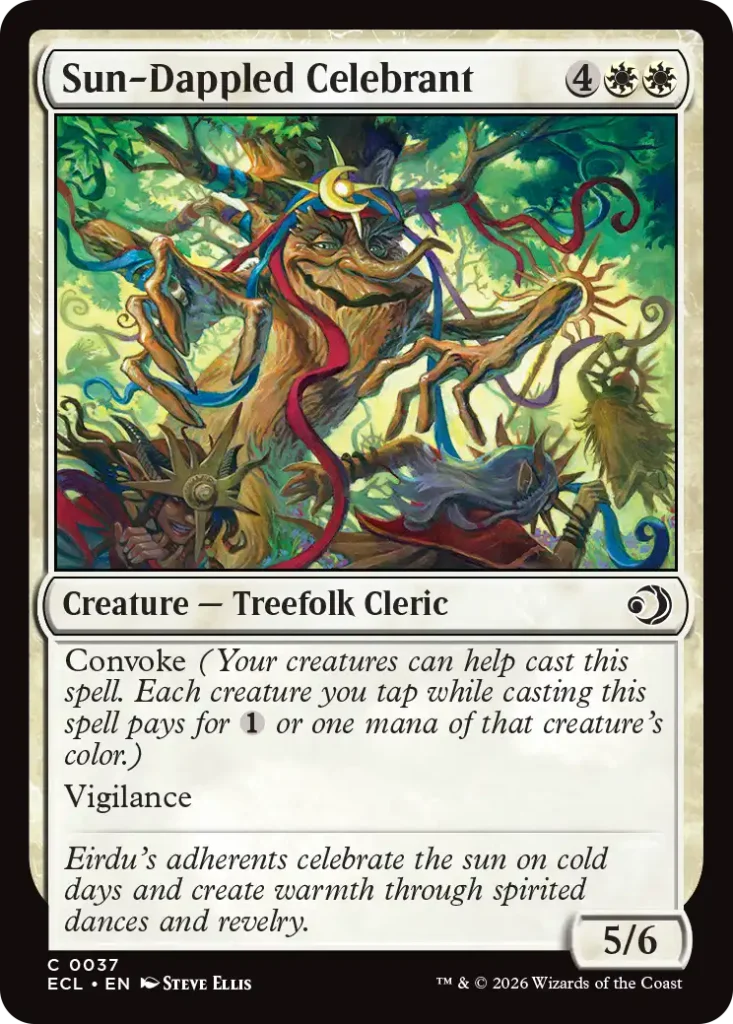
Sun-Dappled Celebrant is a weak card if you’re paying six mana for it. However, if you tap three creatures, and pay just three mana, it becomes a more reasonable play. (And yes, you can tap creatures with summoning sickness.)
This can be a powerful mechanic, if you build your deck right. The best way to do so is by playing cheap cards that can make multiple creatures, like Clachan Festival.
Those are the most prevalent mechanics you’ll encounter in this draft format. There are other, but they’re pretty niche.
Best Commons for Lorwyn Eclipsed Draft
Now it’s time to examine the best commons. These are the cards you’ll see most often , so it’s nice to recognize the best options at a glance.
White
1. Merrow Skyswimmer
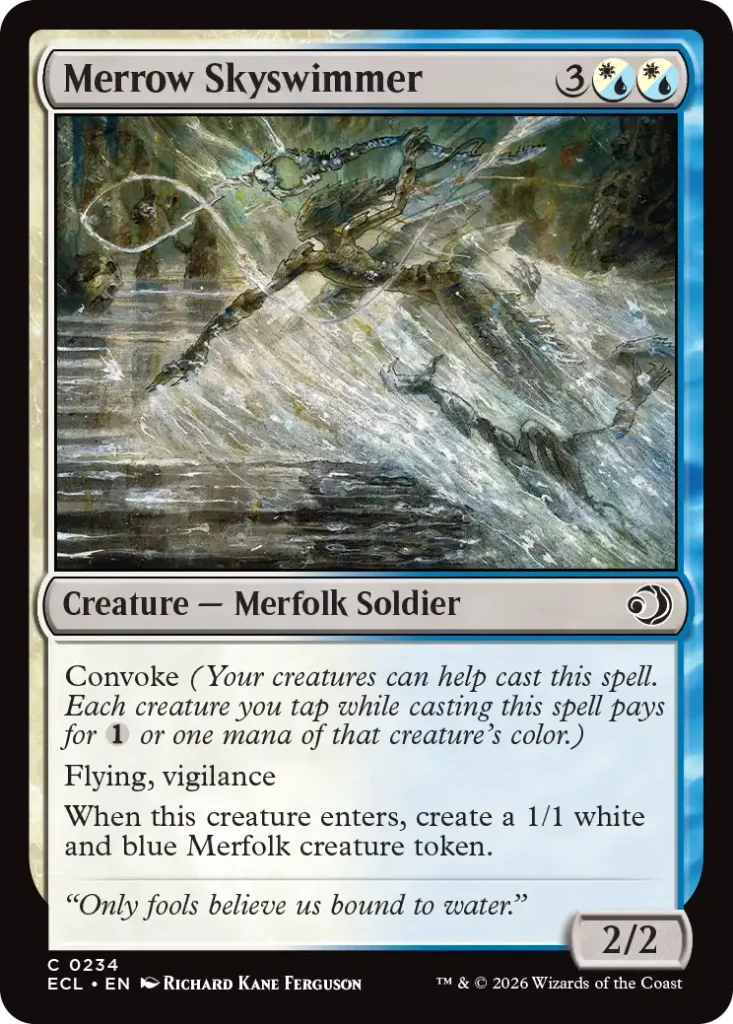
It feels like a bit of cheating to put a hybrid card as the best white common, but Skyswimmer really is extremely powerful and you can play it with only one of its colors. (While it could be put in the blue commons, there weren’t that many white commons we wanted to highlight.)
Sure, you can’t just jam this into any deck, but it ask so little of you, while bringing a lot of power for a common. All you need to do is to play lots of cheap creatures, preferably some that make multiple bodies. That’s just good deckbuilding on its own!
The reward are a couple of Merfolk (there are synergies with them), the bigger of which flies. Skyswimmer also excels in mutliples, as the first one gives you a bodies to cast the second one even faster and so on.
2. Spiral into Solitude
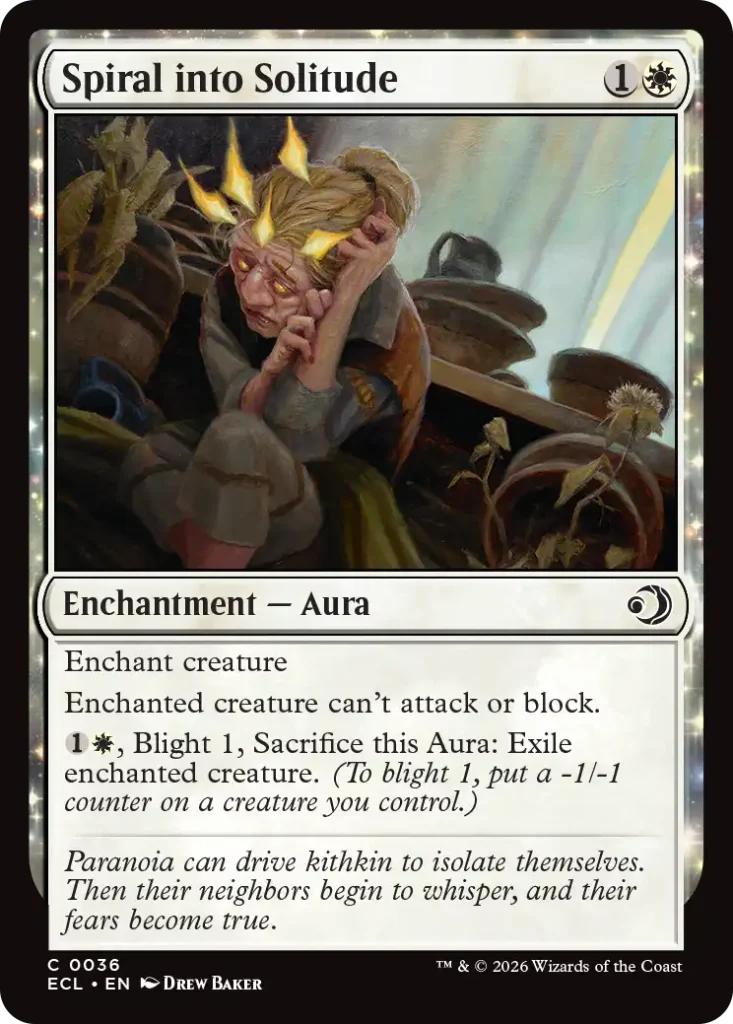
The problem with Pacifism variants is that the creature sticks around, so its controller can still use its abilities. Furthermore, in this set, they can put -1/-1 counters on it from blight, extracting even more value from it.
However, you have the option to get rid of the creature for good, albeit for a cost. Still, two mana to stop a creature from entering a combat is still a solid deal.
3. Liminal Hold
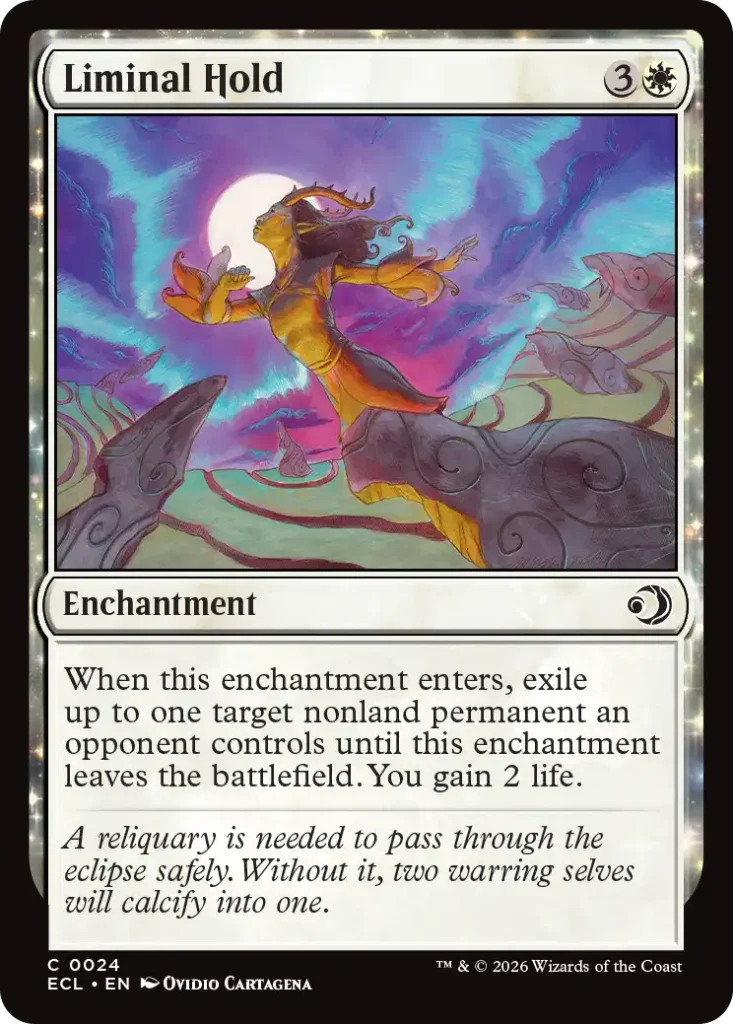
Depending on how the format plays out, this could be better than Spiral Into Solitude. Currently, both cards seem pretty close in power level.
This one can get rid of anything, but it costs two mana more upfront. You do get a couple of life for your troubles, which is relevant.
Blue
1. Temporal Cleansing
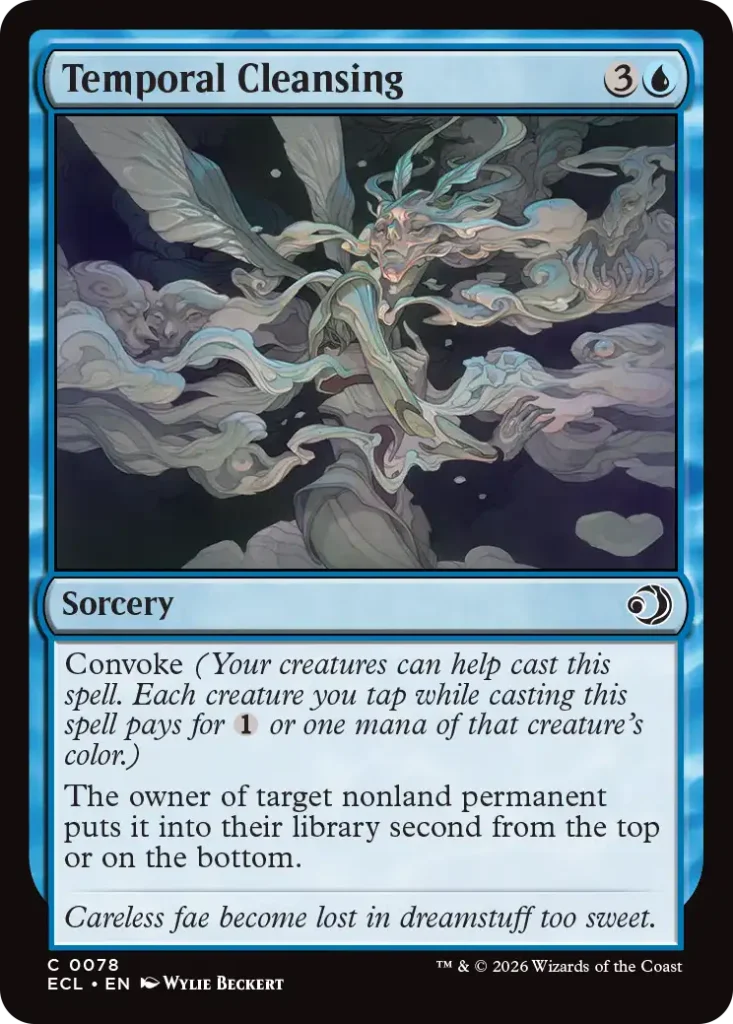
In most sets, this effect costs four mana and is an instant — a pretty solid card. Losing the instant speed obviously hurts, but that’s offset by the convoke ability, allowing you to cast this for cheaper.
Temporal Cleansing will be a great interactive spell for most blue decks.
2. Unexpected Assistance
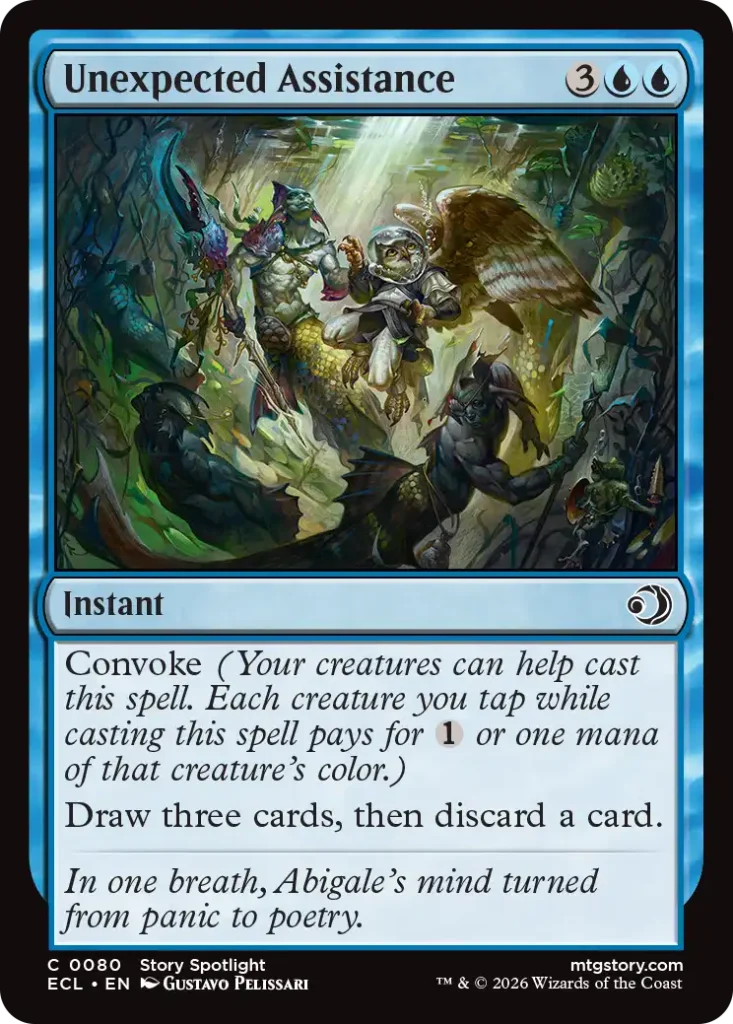
Here’s another great convoke card, which might play out even better, simply because its an instant. You can leave your creature untapped, so they can block and still pay for this on your opponent’s turn.
This will be an amazing way to refill your hand, and it plays well with other instants. You could leave up mana for either this and a removal spell — then pick the one that best suits you, depending on what your opponent does.
3. Summit Sentinel
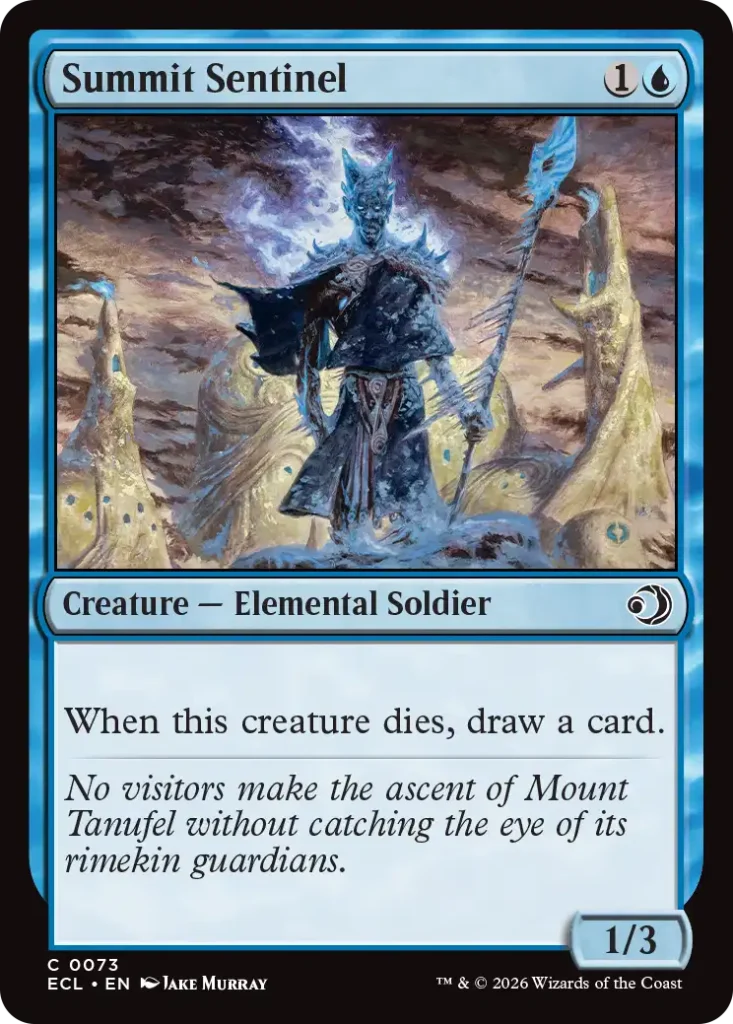
We’ve already seen a few good blue commons with convoke. These type of cards make cheap creatures better, as they can help you cast your spells.
Summit Sentinel fills that role nicely. It can block early, pay for convoke, supports Elemental synergies, and eventually trades for a new card. What’s not to like?
Honorable Mentions
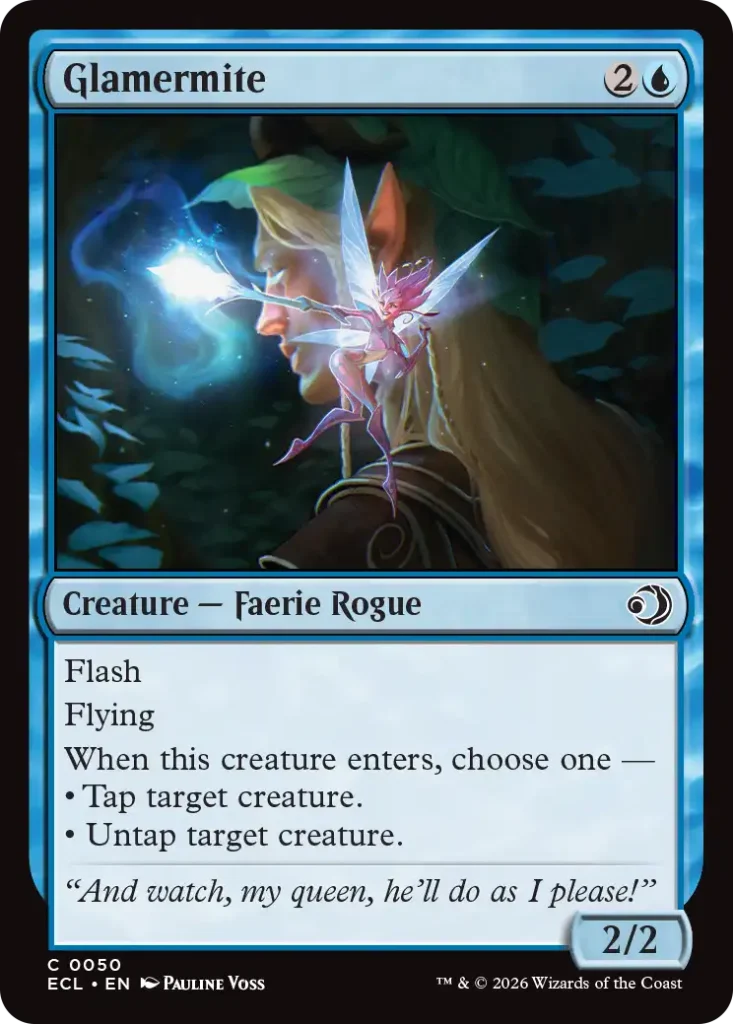
Glamermite plays pretty nicely with some of the instant-speed synergies, while also being a fine card on its own. Locking down the largest attacker or making a couple of blockers out of nowhere can really put your opponent in a bad spot.
Run Away Together is an unique bounce spell. If you can get some value from returning one of your creatures, it becomes a desirable effect. It’s also a nice tempo play in response to opponent’s removal spell.
Black
1. Bogslither’s Embrace
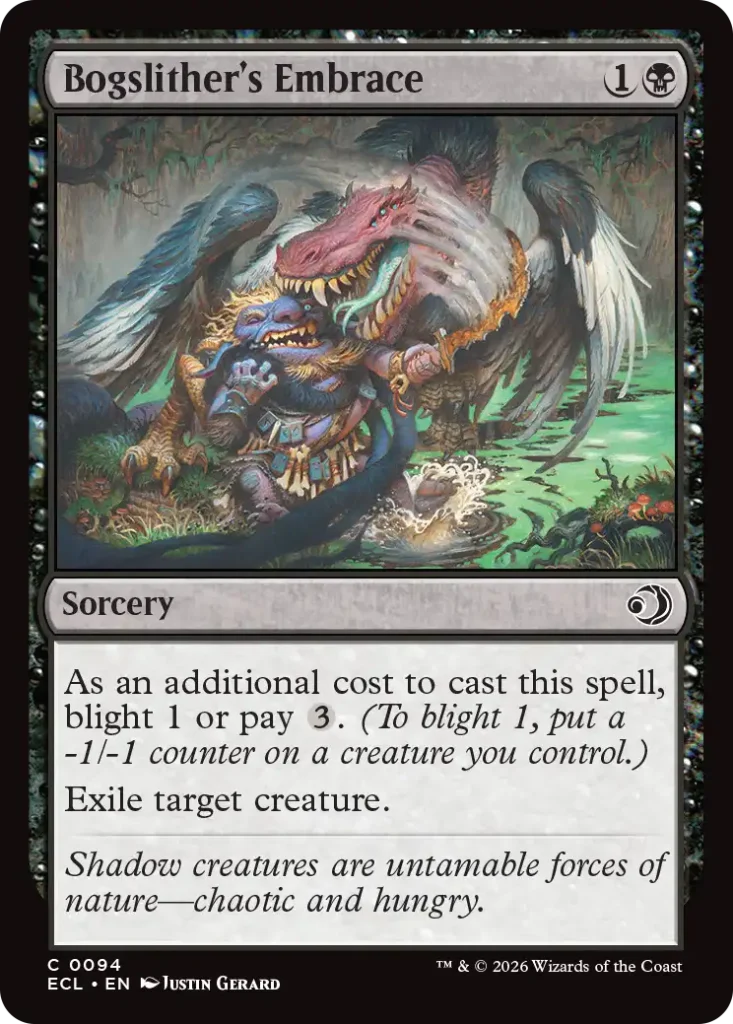
Blight 1 is a real cost, but what you’re getting in exchange is worth it. A two mana removal that cleanly deals with any creature. As far as removal goes, it doesn’t get much better than that.
On top of that, you can just pay 3 additional mana in the late game, and avoid the -1/-1 counter. Plus, you might have a use for the counter, which improves the card even further.
2. Blight Rot
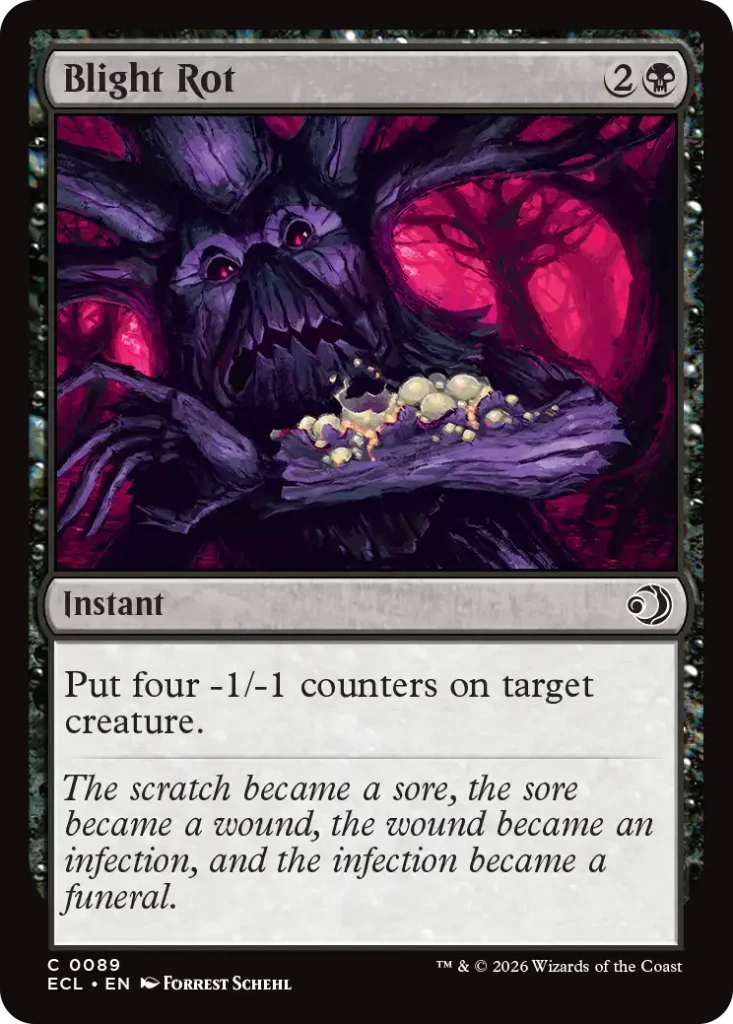
Now here’s a removal that doesn’t ask anything of you. You pay three mana and you get to put four -1/-1 counters on a creature at instant speed.
It deals with pretty much any creature, as it can downsize even the largest creatures into more manageable threats.
3. Scarblade Scout
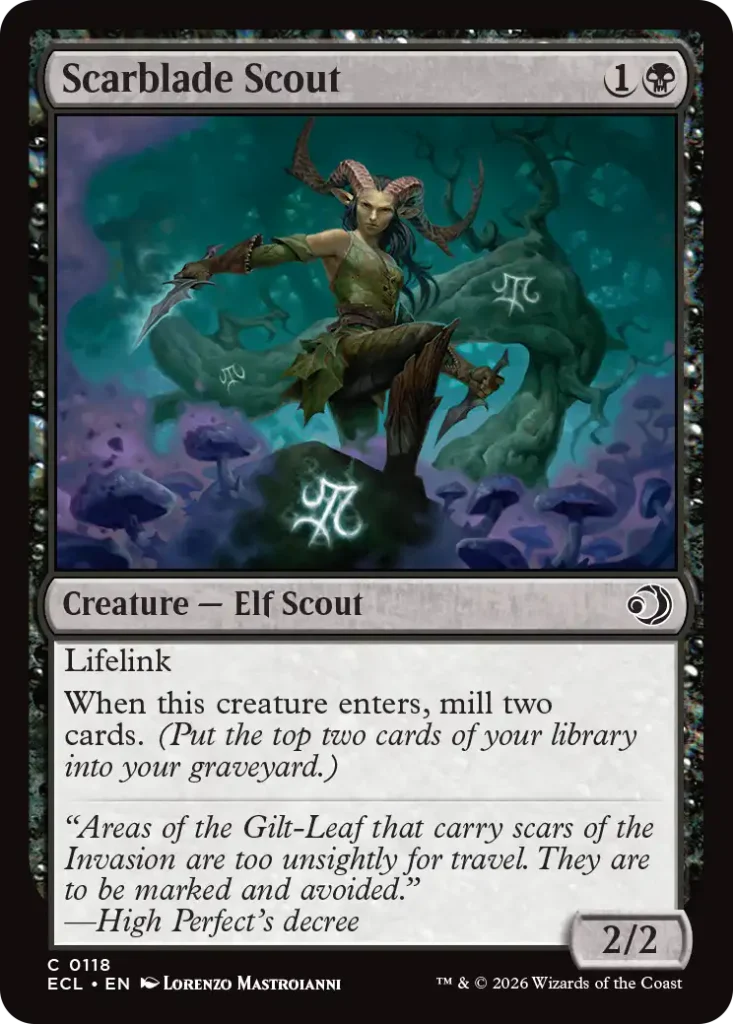
Two mana 2/2 lifelinkers often play out better then they look. They give you something to do on turn 2 and can easily gain you 2-4 life, which can actually turn a race around.
Plus, this also mills a couple of cards. That’s an upside as many black cards care about cards in the graveyard.
Honorable Mentions
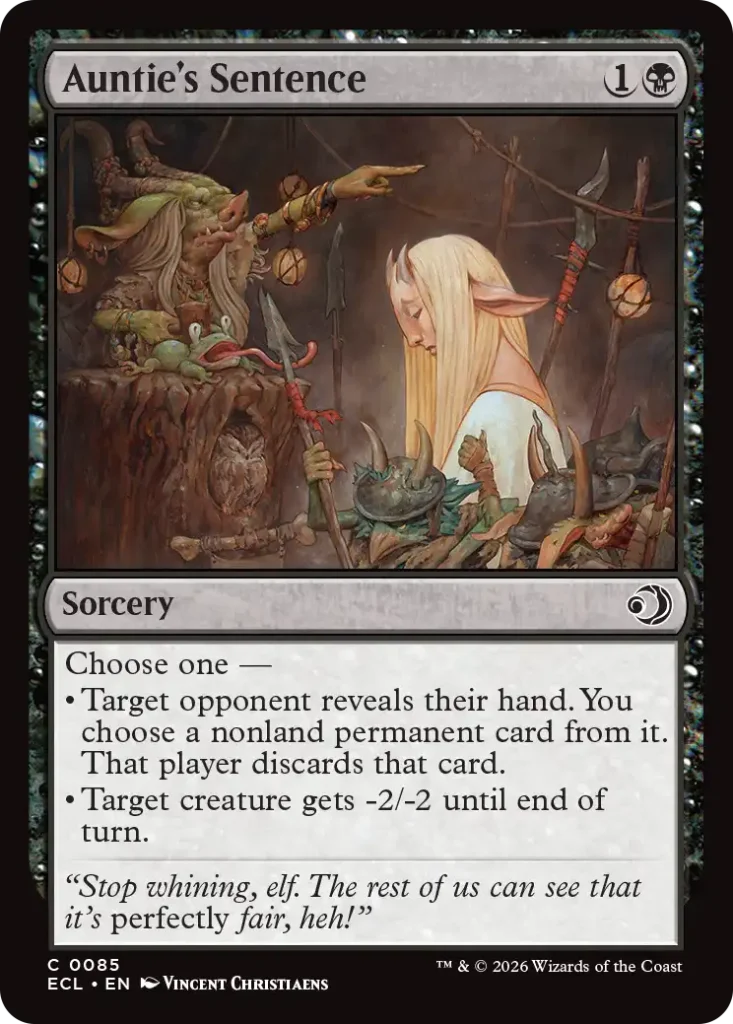
Auntie’s Sentence is a flexible card. It can deal with early threats or nab something from opponent’s hand. Relevant in pretty much all parts of the game.
Another card that messes with opponent’s hand is Dream Seizer. It’s at its best when the -1/-1 counter isn’t a big deal for you and you can put it on something else. Best time to cast it is when your opponent is down to just a single card.
Red
1. Cinder Strike
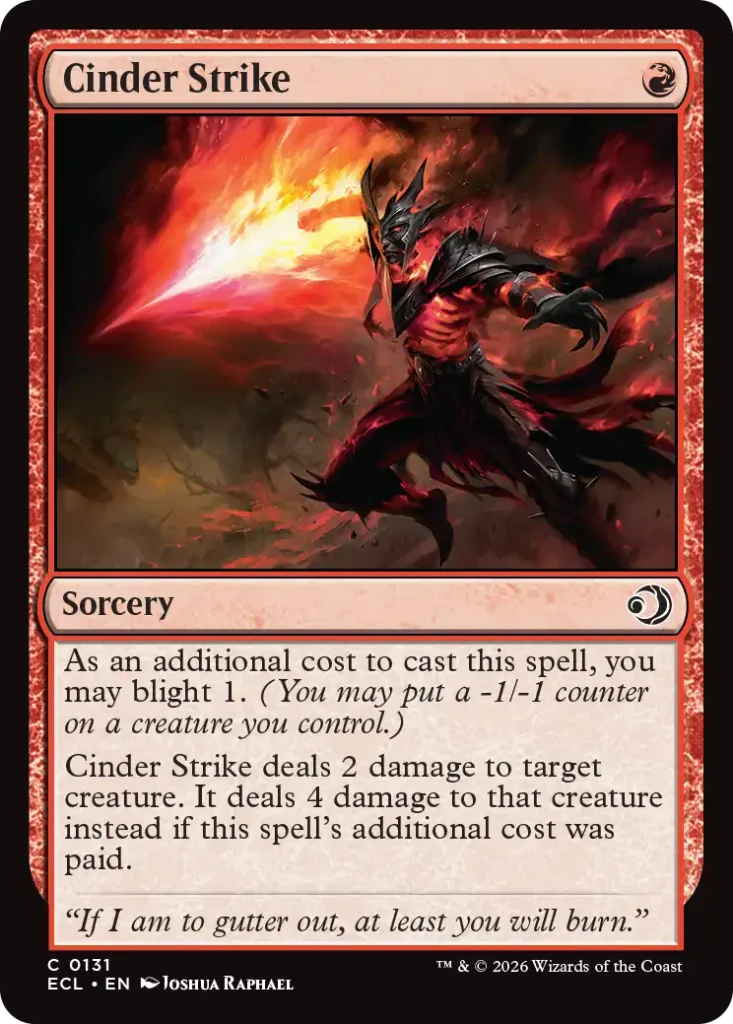
Cheap removal is always great. Even without the additional cost, this can deal with a lot of early creatures. While blight 1 is a real cost, it turns this into an extremely potent removal spell. For a single mana you get to deal with anything but the biggest creatures.
Very flexible and powerful common.
2. Tweeze
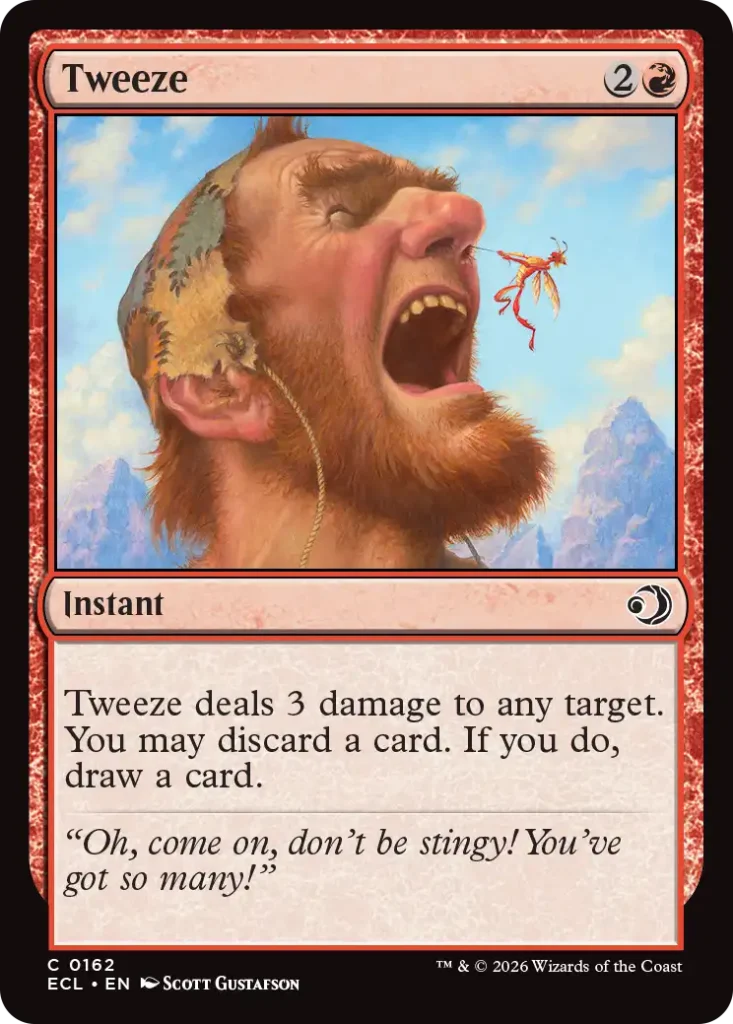
Three damage to any target is usually something drafters are happy to pay two mana for. What do you get for that extra mana? One time loot effect.
This might not seem like much, but when you tack that on a removal spell, it suddenly becomes a really strong card. And don’t forget that this can target players, so it might sometimes just win you the game on the spot.
3. Elder Auntie
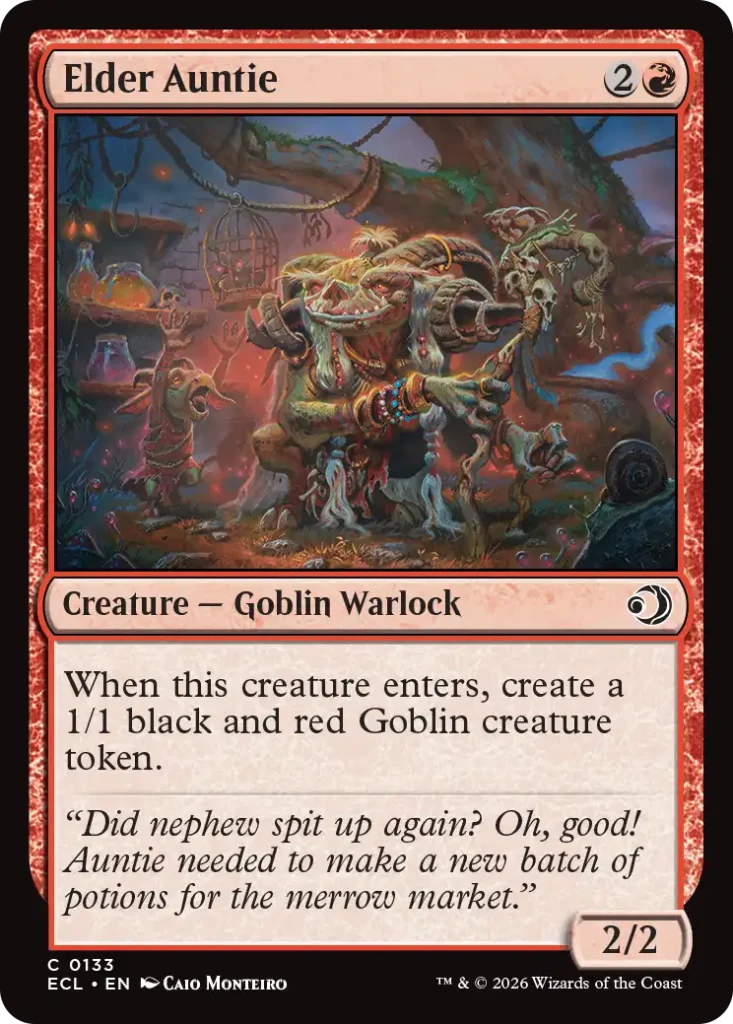
Getting 3/3 worth of stats split over two bodies for three mana is quite useful. But you are actually getting two Goblins. which is relevant for multiple cards in this format.
Thus, you can expect Elder Auntie to play out quite nicely.
Honorable Mentions
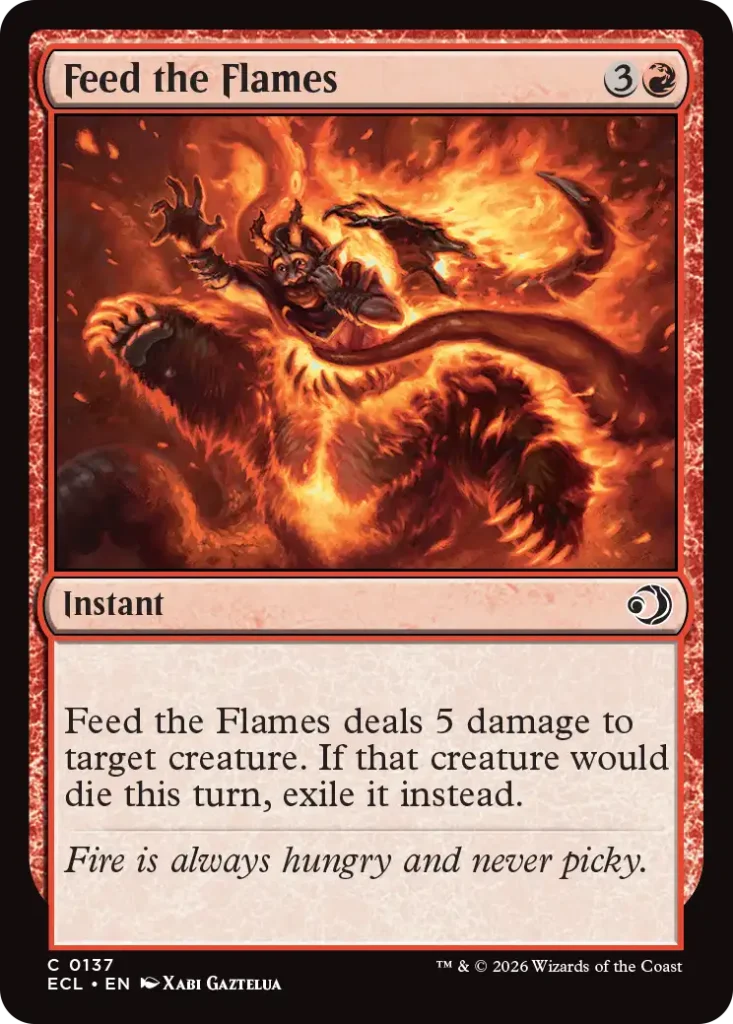
Feed the Flames is not the most efficient removal spell out there, but it deals with most creatures at instant speed. That effect shouldn’t be underrated.
Most red decks will want to be aggressive, which makes Brambleback Brute a real threat. If your opponent plans to block, your opponent needs to leave back multiple creatures. Otherwise, you’ll just make a couple unable to block, attack with your team, which now includes a 4/5. It’s possible that we’re underrating this card and it could find a spot in the Top 3 red commons in the future.
We’ve seen landcyclers in quite a few sets lately. But most of them weren’t as powerful as Kulrath Zealot, when you hardcast it. Your’e getting a large creature, which essentially draws you a card. Early in the game, you can exchange it for a basic land of your choice. Just make sure you’re playing at least 9 red mana sources, so you can do so consistently.
Green
1. Assert Perfection
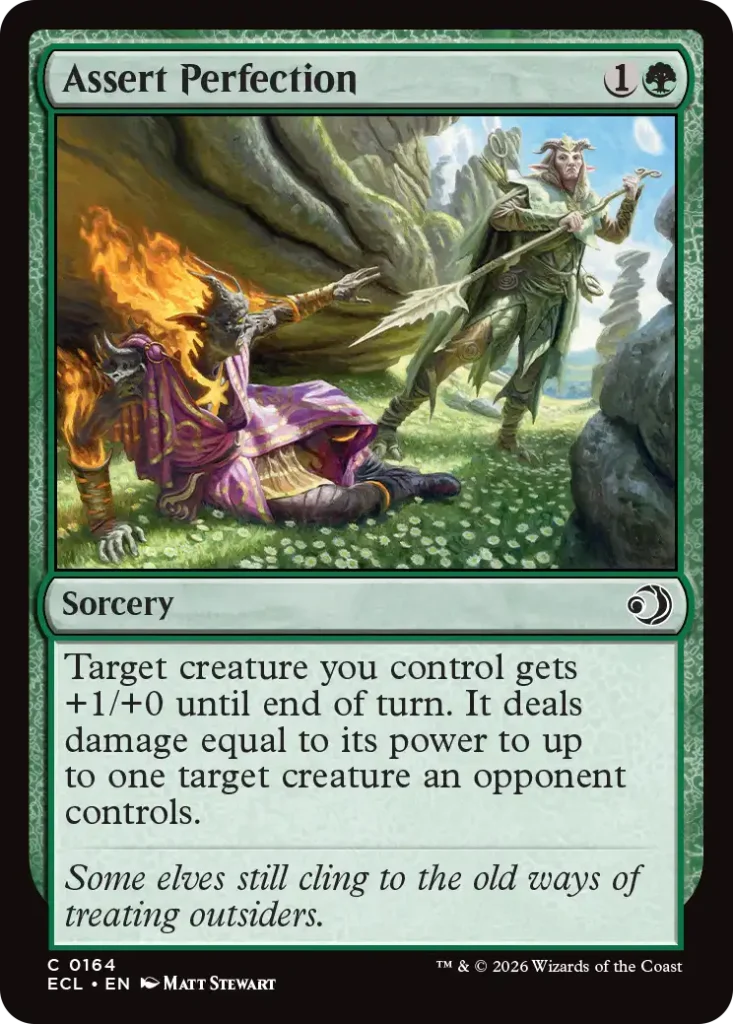
This is going to be a premium green removal spell. It provides a power buff, which if often relevant. It allows you to take out a slightly larger creature, and is relevant for combat afterwards.
Your creature doesn’t take damage in the process, which isn’t always the case with cards like this. Therefore, this card will be excellent in every green deck with lots of creatures. (And pretty much every green deck has lots of them.)
2. Surly Farrier
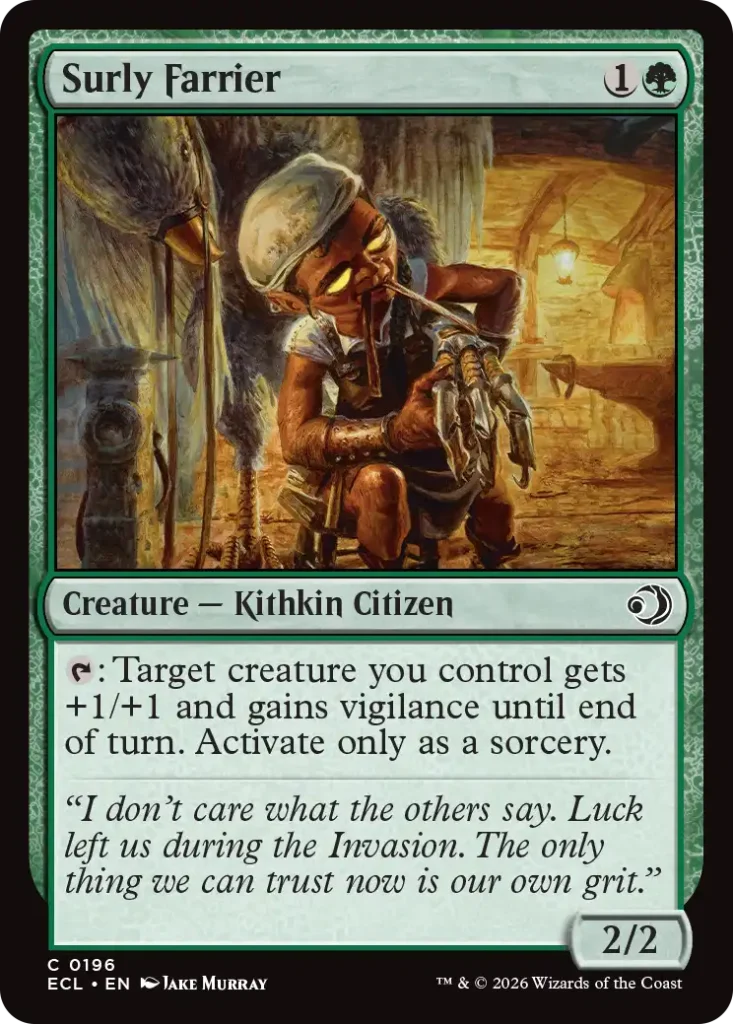
Farrier might seem like a random two drop, but it’s ability is surprisingly relevant. It enables attacks you wouldn’t be able to make otherwise. Vigilance means you aren’t leaving yourself completely open for a counterattack.
You need creatures to play on turn 2, and this one is a great choice. Plus it also plays well in multiples, which is always a plus.
3. Great Forest Druid
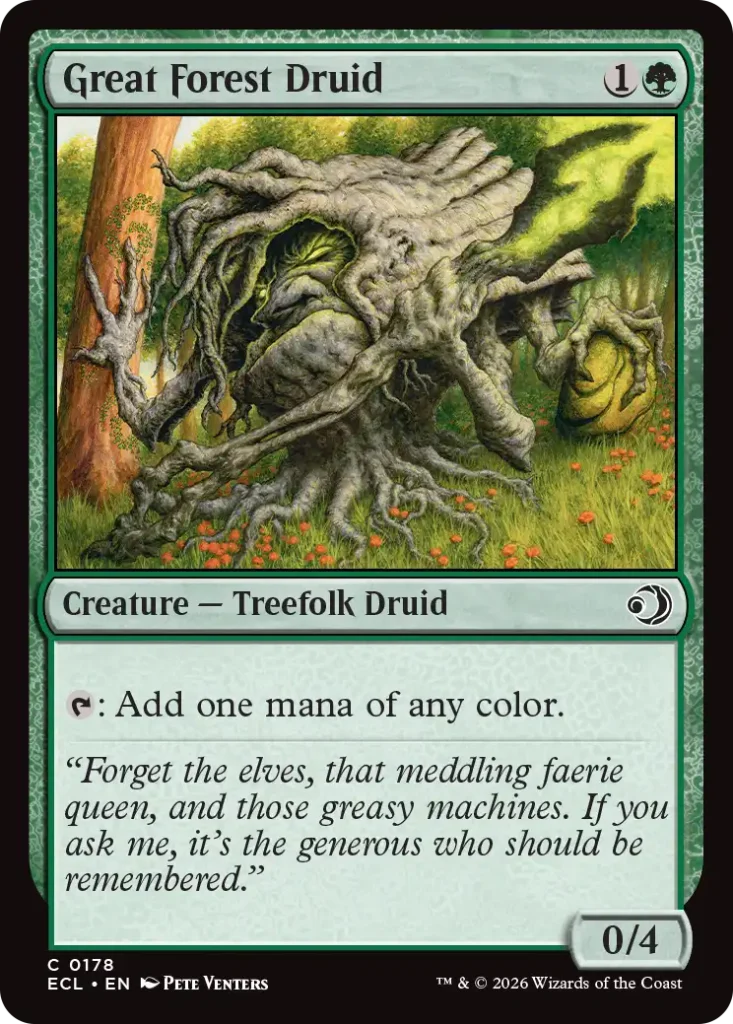
Speaking of two drops, here’s another useful one, although it slots better in slower decks, that have a lot to do with their mana.
Ramping and fixing your mana is already good, but this Treefolk also blocks well. Making opponent’s early attacker irrelevant pushes this card into the top commons. Given how the format plays out, it might even move higher up in the rankings.
Honorable Mentions
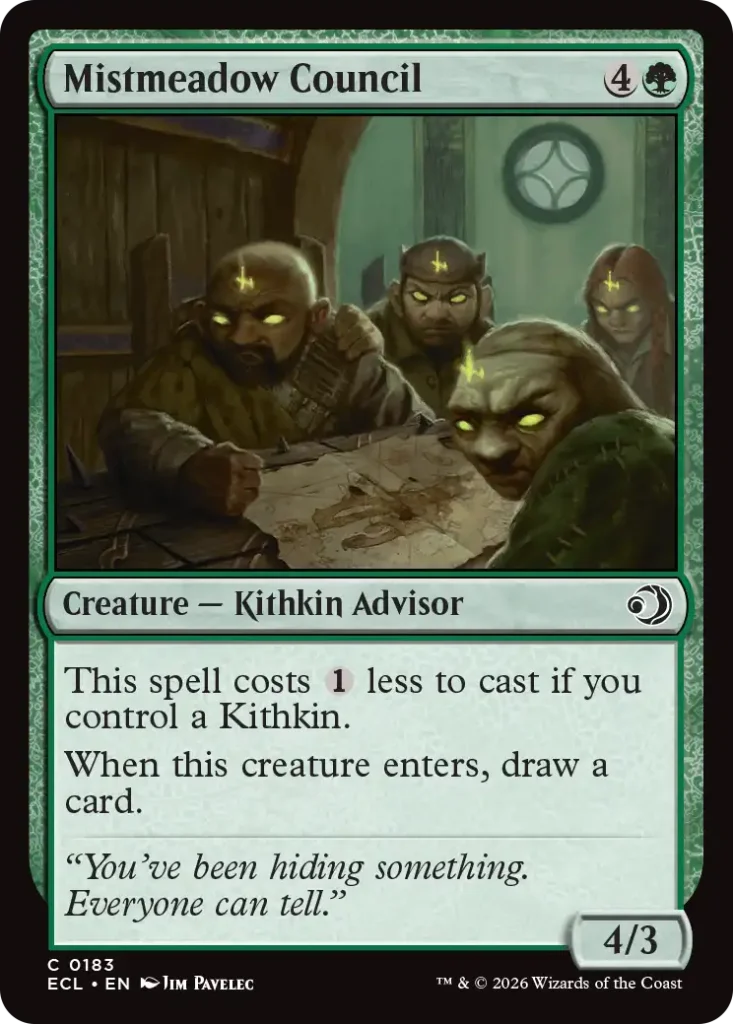
Creatures that draw cards with their enters effect often end up overperforming. Mistmeadow Council requires some Kithkin support to be good, but it’s also not the end of the world if you sometimes need to pay five mana for it.
Colorless
Usually, we don’t talk about colorless commons, but this time around there’s one worth mentioning.
Changeling Wayfinder
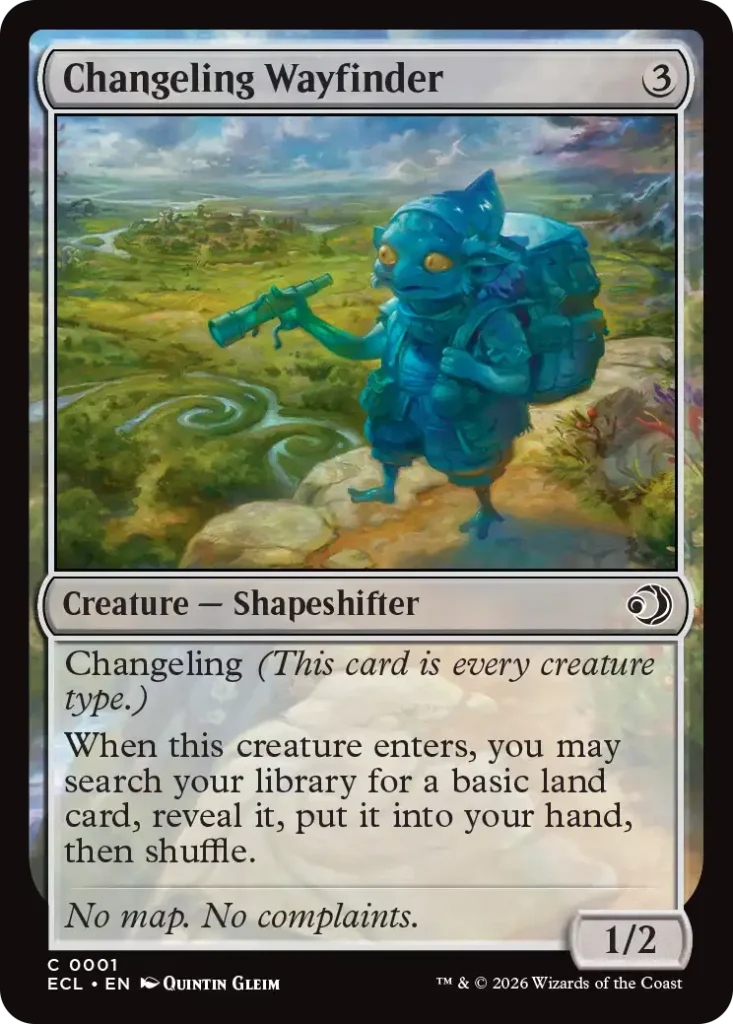
Drawing you the exact basic you need is useful, particularly if you’re splashing. (Or if you want to ensure you hit your 4th+ land drops.)
Even with just that effect, this card would be borderline playable. But the fact it’s a changeling, which supports multiple creature type synergies makes it into a desirable common.
Lorwyn Eclipsed Draft Archetypes
In most sets, there are ten different archetypes, on for each color pair. The same is true in Lorwyn Eclipsed, though the archetypes are divided into two separate groups of five.
Archetypes in the first group reward you for drafting a specific creature type and doing its own shtick. That includes the following color pairs:
- Blue-White: Merfolk Convoke
- Green-White: Kithkin Go-Wide
- Blue-Red: Elementals 4+ Mana
- Black-Red: Goblins Aggro
- Black-Green: Elves Graveyard
These archetypes are slightly more supported than the other five. This doesn’t mean that you can’t the other five, just that it’s a bit less likely you end up drafting those.
Speaking of which, here’s the second group of Lorwyn Eclipsed archetypes:
- Black-White: -1/-1 Counters Midrange
- Red-White: -1/-1 Counters Aggro
- Red-Green: Midrange
- Blue-Green: Vivid Ramp
- Blue-Black: Flash Control
As you can see, the themes here are more loose. When drafting these, you’ll mostly end up with generic strong cards in their colors, as opposed to heavily synergistic decks.
The archetype can blend into on another. For example, you could use a ton of green Elf cards in your red-green deck.
So, with that said, let’s explore the archetypes into more details.
Blue-White: Merfolk Convoke
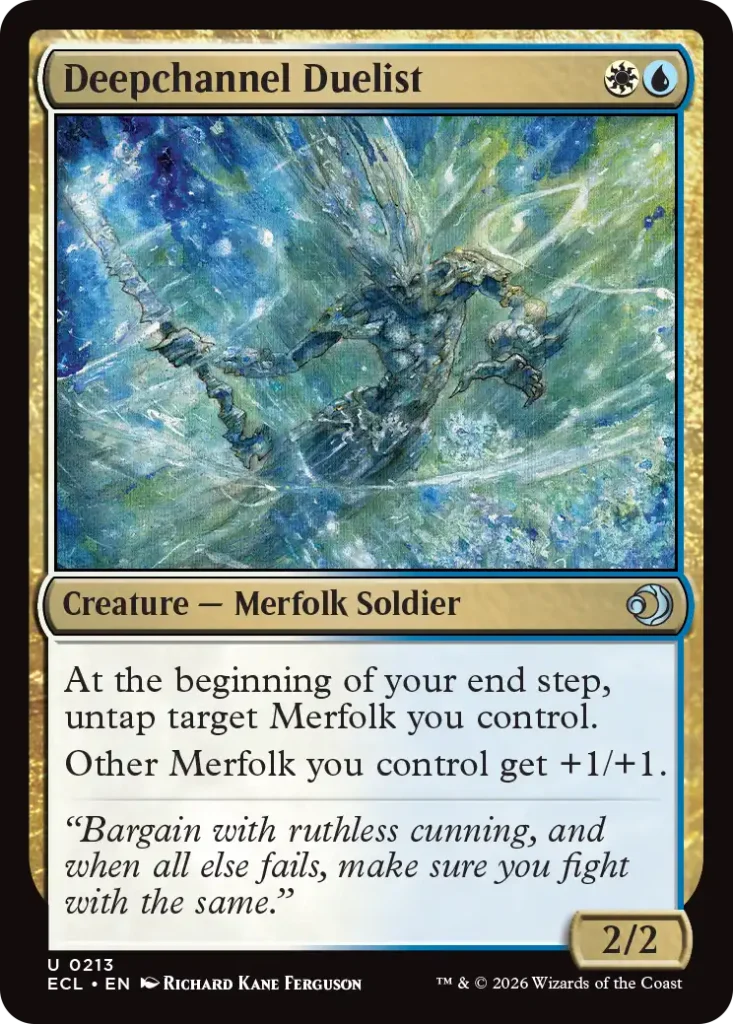
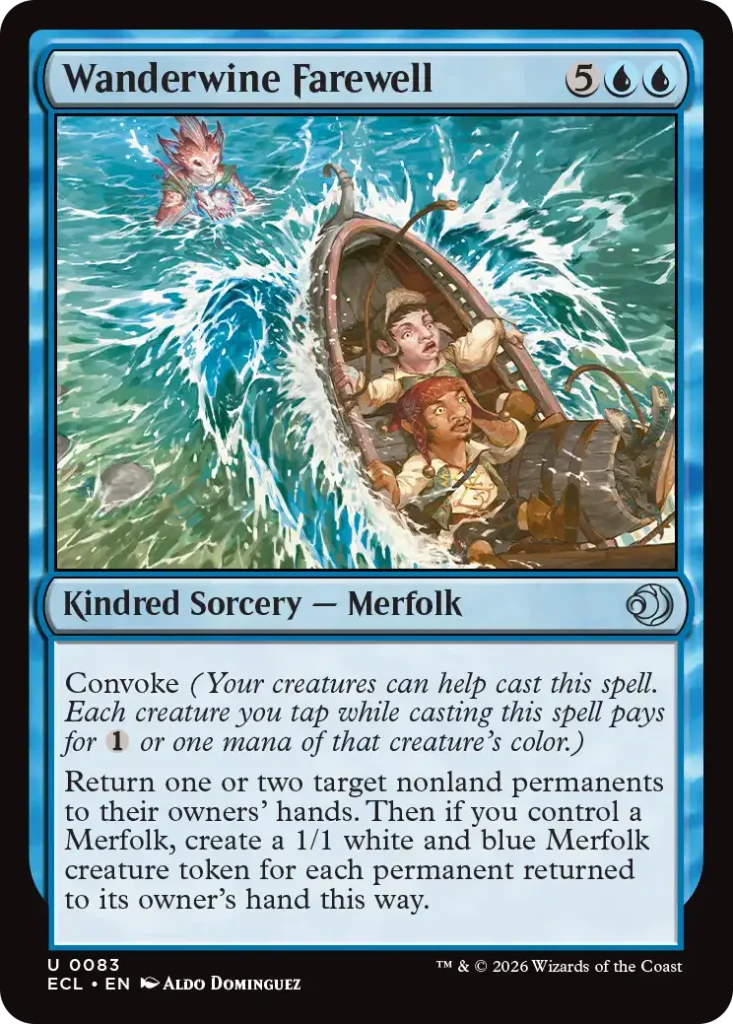
We’re starting with a really exciting archetype. When you’re drafting blue-white, you want to pick lots of Merfolk creatures (preferably cheap ones), which you’ll use to pay from convoke.
Merfolk Payoffs
So, what art the rewards for drafting Merfolk, as opposed to other creature types?
Deepchannel Duelist is a great one, and becomes even better in multiples. Pumping your whole team is a powerful effect, particularity at just two mana.
Furthermore, the odds of drawing a creature with Eclipsed Merrow or playing Silvergill Mentor on curve are increased.
Besides, there are quite a few additional payoffs, including cards like Meanders Guide, Tributary Vaulter, or even the rare Champions of the Shoal.
Convoke
The second half of this deck is convoking. As mentioned in the Mechanics section, you’ll want cards that make multiple bodies, so you can really take advantage of it. Best non-rare options in these colors include Silvergill Mentor, Clachan Festival, and Merrow Skyswimmer. The latter is also a great convoke card by itself.
Most convoke cards are at least playable, but some particularly potent ones would be Lofty Dreams and Wanderwine Farwell.
An important thing to keep in mind is that you really want lots of cheap creatures. This way, you can start casting convoking earlier, and casting multiple spells in a single turn earlier. That’s a great way to get ahead in a game of Magic.
Green-White: Kithkin Go-Wide
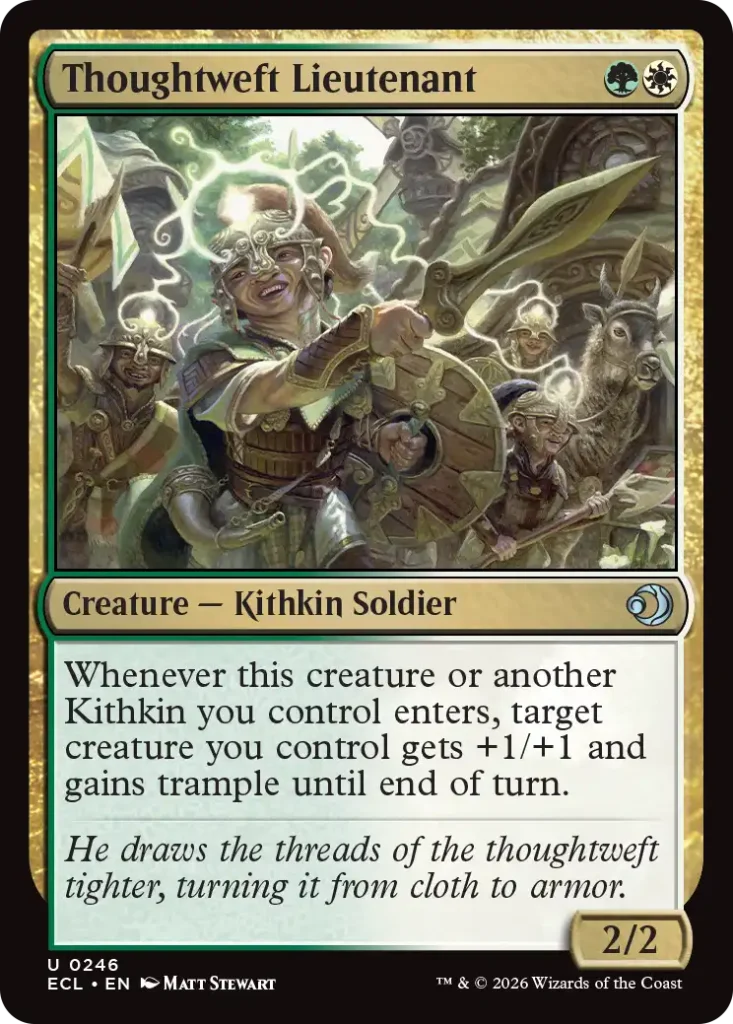
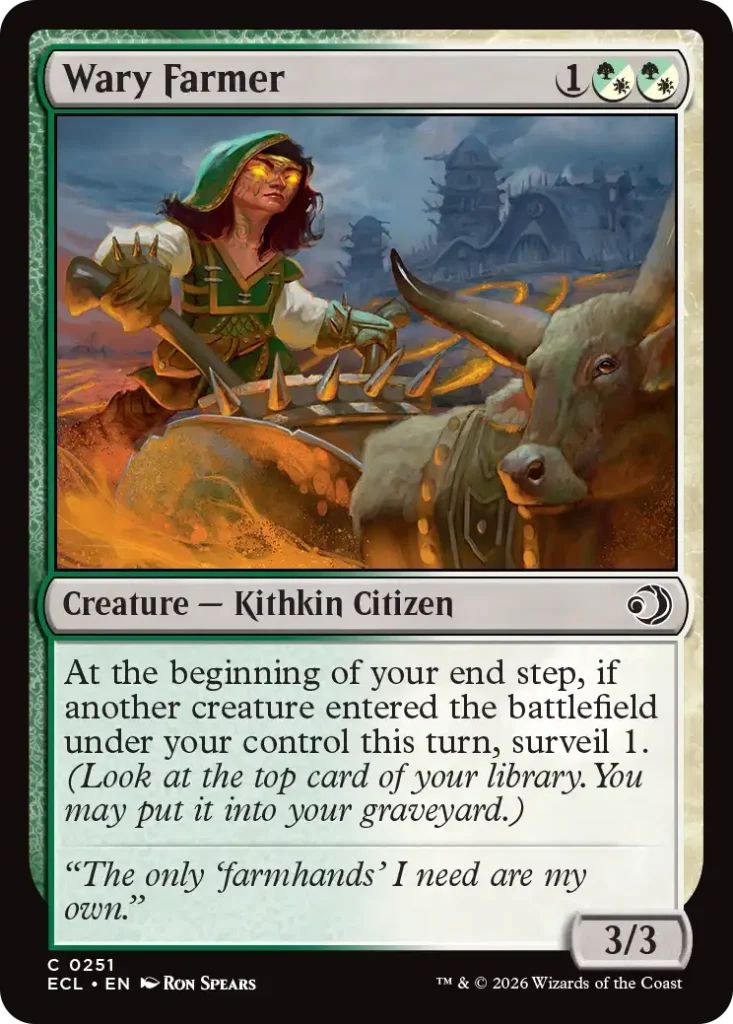
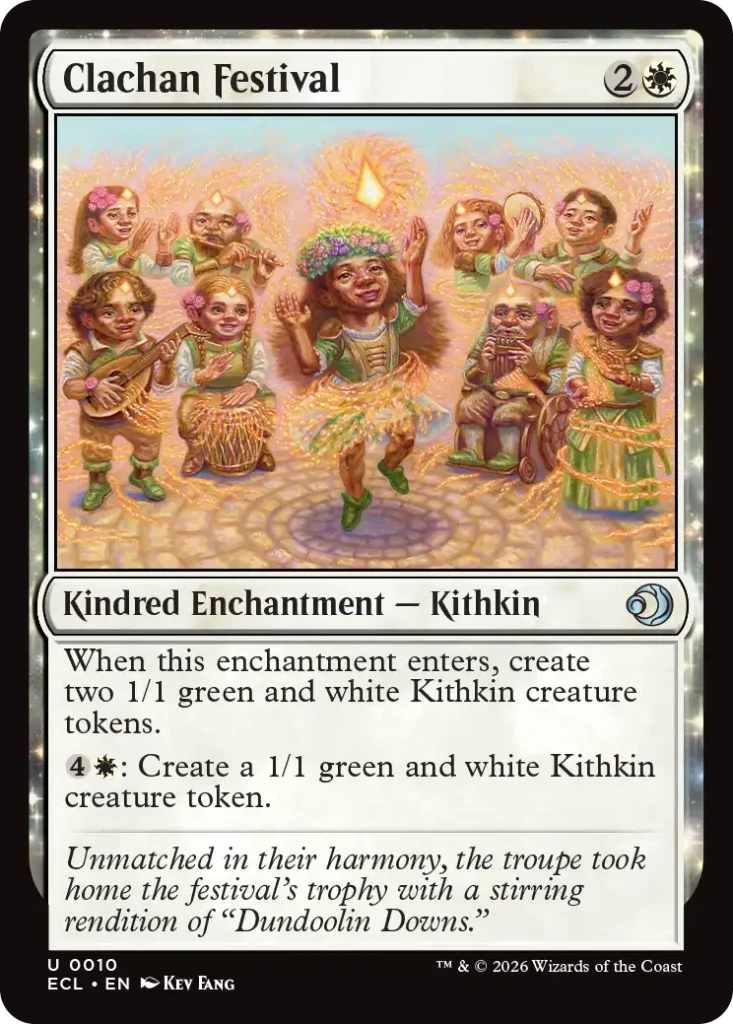
Green-white can feel kinda similar to the previous archetype. Instead of Merfolk, you’re now trying to amass a lot of Kithkin, but you’re still putting lots of creatures in play. There’s some overlap with the white cards. The stuff that rewards you for controlling lots of creatures will work in both shells.
While you could use a few convoke cards here also, you’re be more interested in attacking. After all, stuff like Thoughtweft Lieutenant and Gallant Fowlknight will mostly work on your turn.
With cards like that you can really get some explosive starts, and that’s exactly what a Kithkin deck wants you to do. Just imagine a curve of:
- Turn 1:Kinsbaile Aspirant
- Turn 2:Thoughtweft Lieutenant
- Turn 3:Clachan Festival
- Turn 4:Gallant Fowlknight
An opponent will require a couple of removal spells, or they could be in a losing position as early as turn four.
At the start of the format, this looks like a front-runner for one of the best decks in the format, plus it isn’t that hard to draft. So, if you don’t know where to start, this can be a solid option. (Provided your neighbors aren’t also drafting it.)
Black-Green: Elves Graveyard
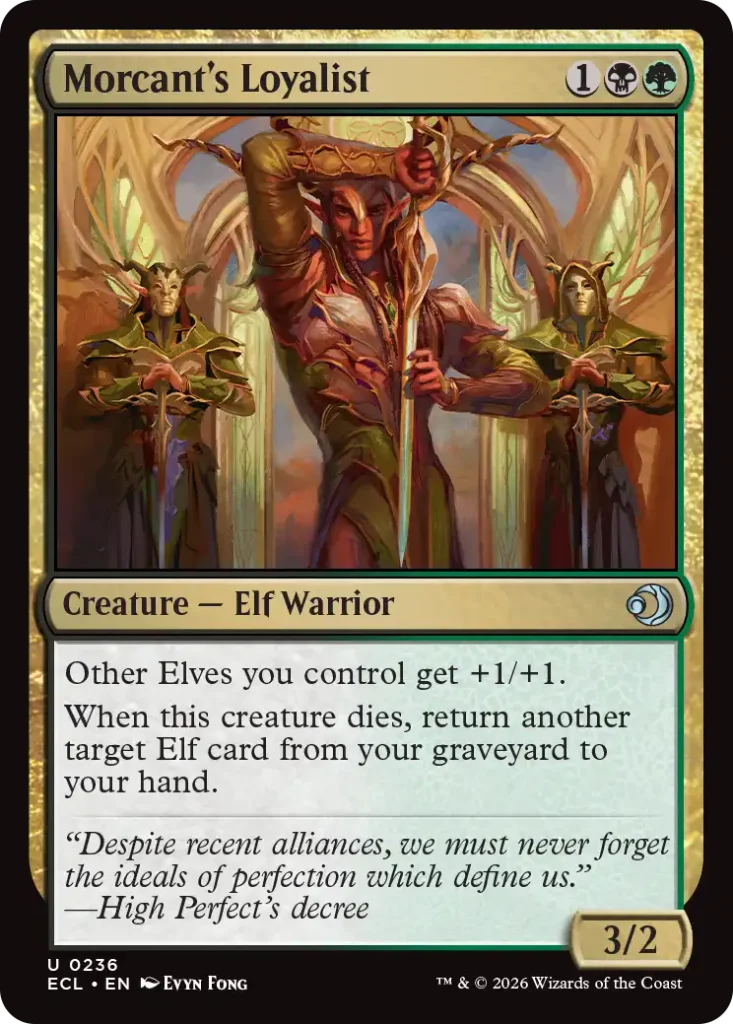
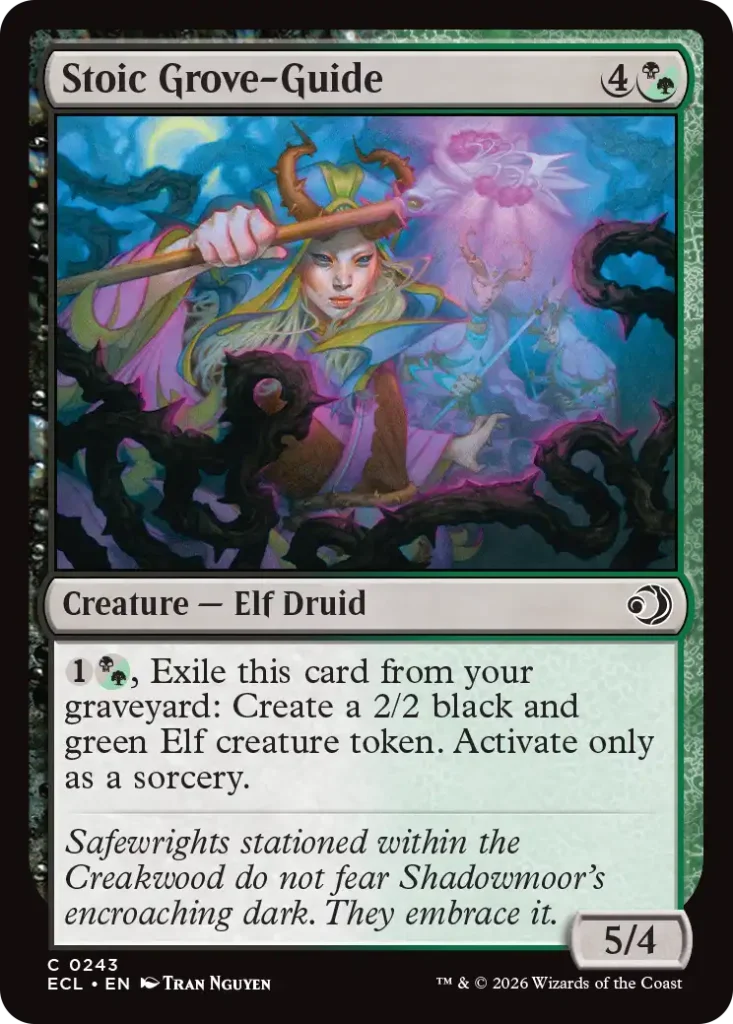
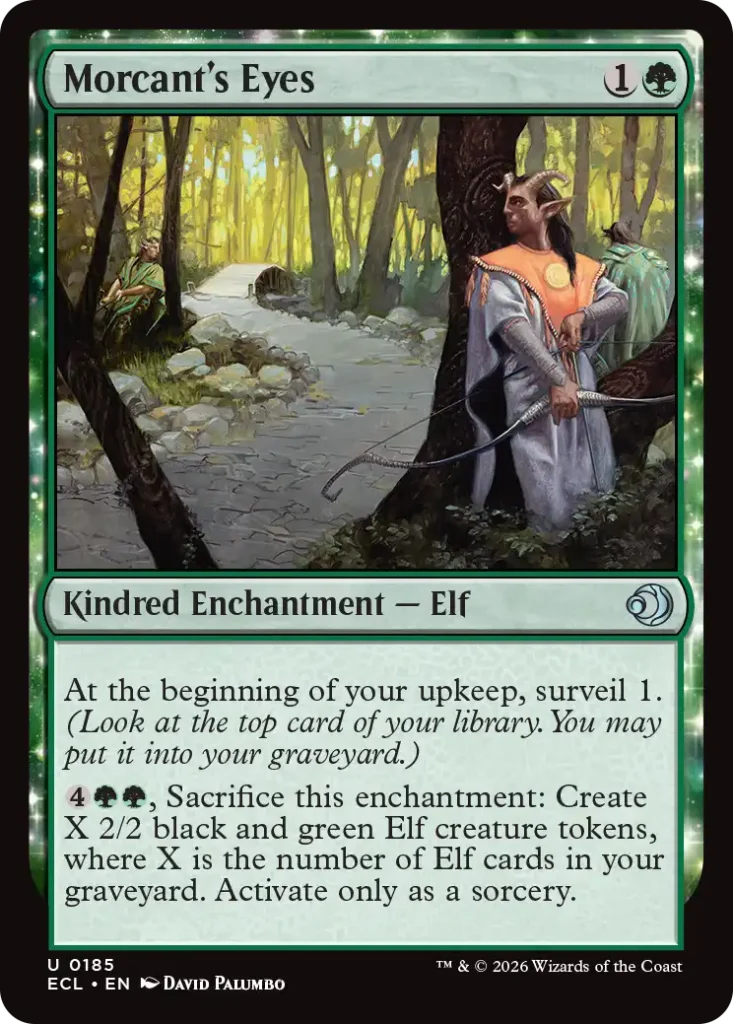
Next up, we’ve got Elves. Once again you’ll want to play lots of them. You’ll also don’t care that much if they die, as there are payoffs for having Elves in the graveyard.
A few examples of that would be (ordered approximately from best to worst):
- Morcant’s Loyalist, which doesn’t just buff your Elves, but also returns one back when it dies
- Lys Alana Dignitary provides a significant mana boost.
- Creakwood Safewright becomes a very large two drop.
- Morcant’s Eyes can create a large army of Elf tokens.
- Stoic Grove-Guide can be exiled to give you a token.
Besides, you’ll also find cards that don’t specifically care about Elves, but still work with this theme, such as Moon-Vigil Adherents and Graveshifter. They both count as Elves themselves, which is a big plus.
For this deck, you should really try to get as many Elves in there as possible. Of course, if you pick up a powerful creature that isn’t an Elf, you’ll still play it. But if a power level between two cards is close, you’ll want the one that has the Elf subtype.
Self Mill
The simplest way to get Elves in the graveyard is to play them, and trade them in combat. That’s going to be your main plan, but you should probably try and speed that up a little by self milling. (That’s when you put cards from your library directly into the graveyard.)
Besides the aforementioned Morcant’s Eyes, you can also use Dawnhand Eulogist, Scarblade Scout, or Midnight Tilling to do so.
But don’t go too far into supporting the graveyard synergies. You still need a functional deck with enough removal and good mana curve. Don’t just jam every card that mentions Elves or graveyard and ignore everything else.
Black-Red: Goblins Aggro
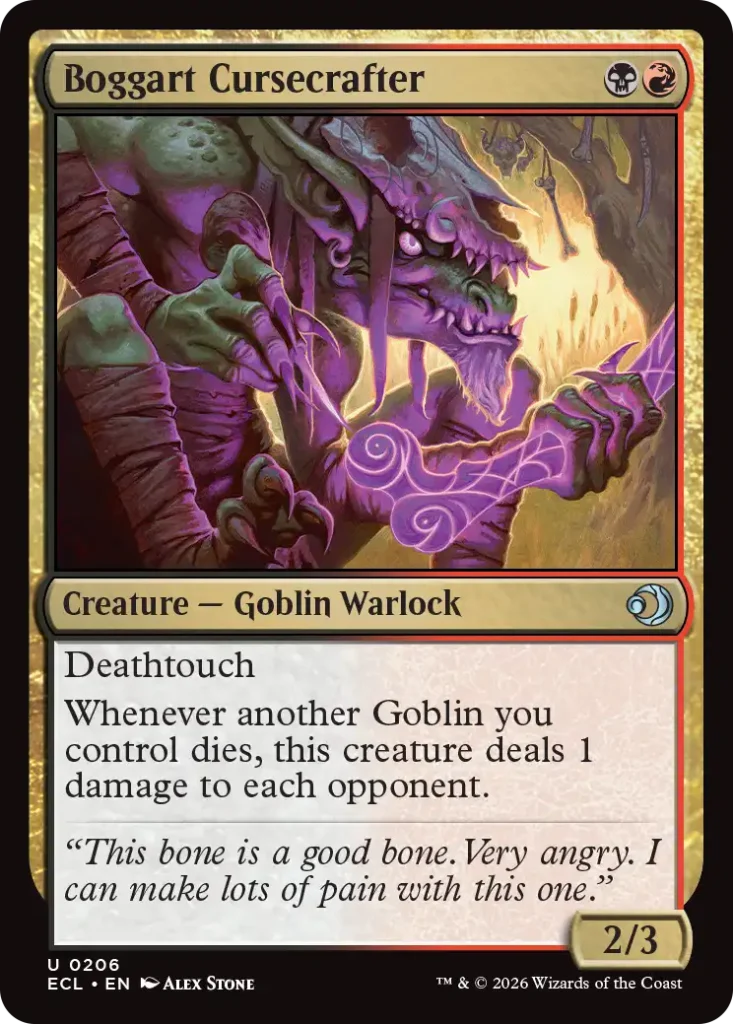
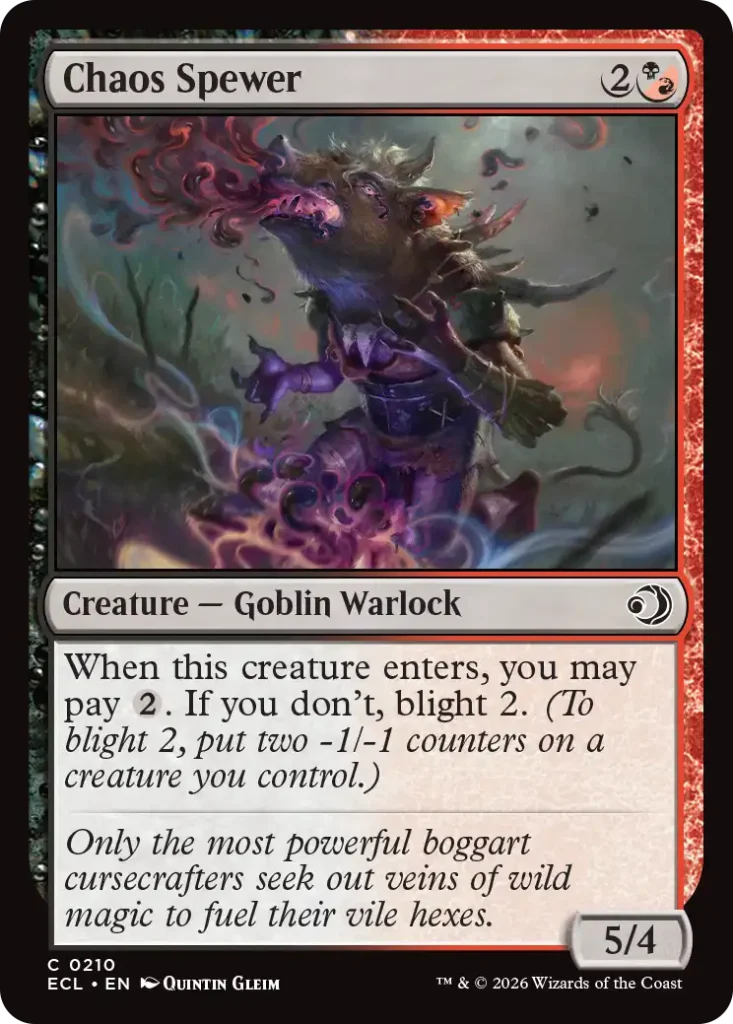
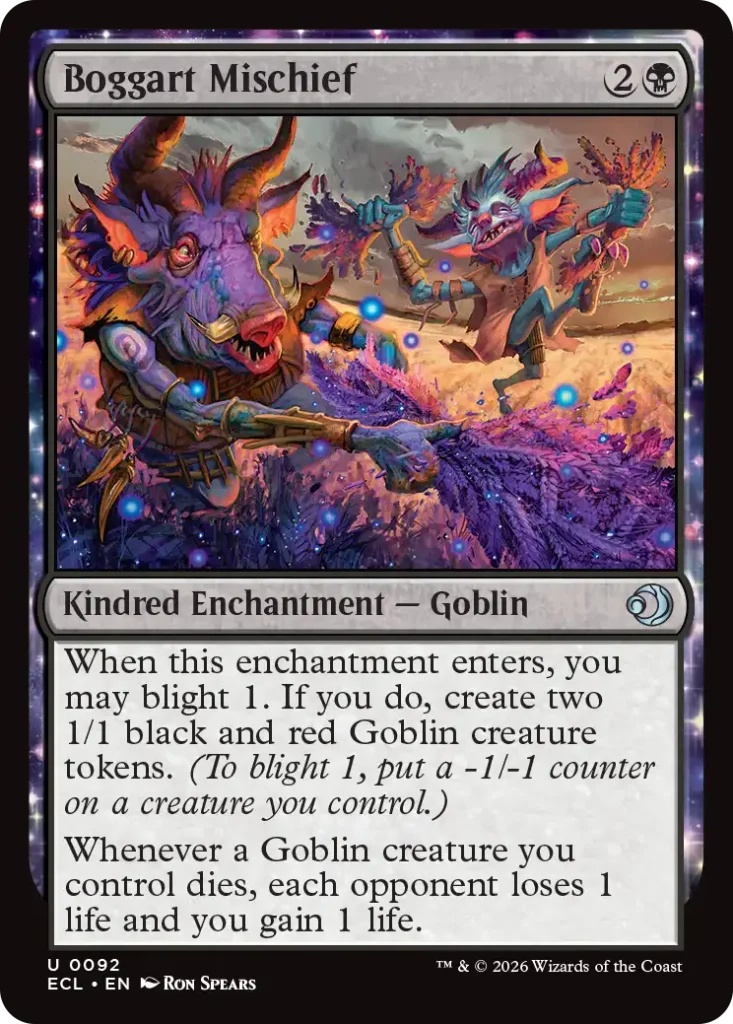
From Elves we’re moving to their iconic enemies Goblins. And as you’d expect from them, they don’t offer particularly fancy tactics, expect — ATTACK!
That’s not a joke, though. In order to maximize this deck, you’ll want to get on board quickly and start attacking right away. Many cards draw you into this strategy anyhow.
Boggart Prankster only works on attacks, Mudbutton Cursetosser can’t block, Warren Torchmaster grants haste, and so on.
Even if your opponent manage to stabilize after that early onslaught, this deck provides a lot of ways to finish the game. Both Boggart Cursecrafter and Boggart Mischief will damage your opponent whenever a Goblin dies. You can pair those with Sting-Slinger for even more direct damage.
So, try to get your opponent low on life in the early game, even if you waste some resources. As long as you have the tools to finish the game, you should be in good shape.
One more thing to note — given that the two key uncommons care about Goblins dying, this deck also utilizes various blight cards nicely. Furthermore, cards that can make multiple Goblins will also excel here. (Think Sourbread Auntie and Elder Auntie.)
Blue-Red: Elementals 4+ Mana
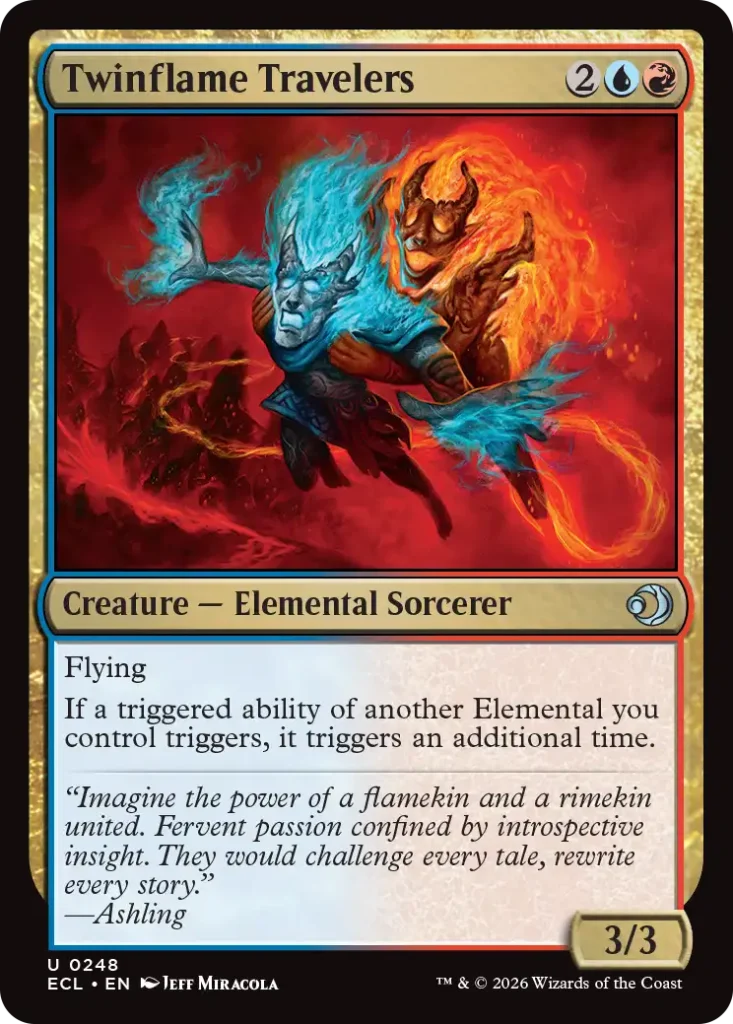
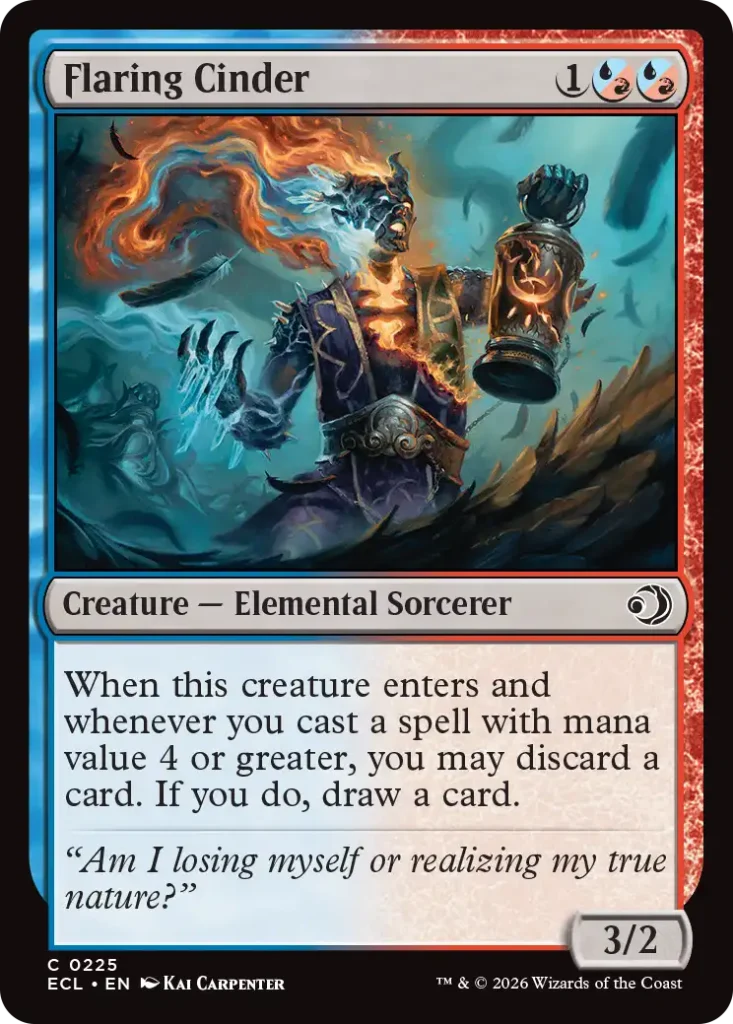
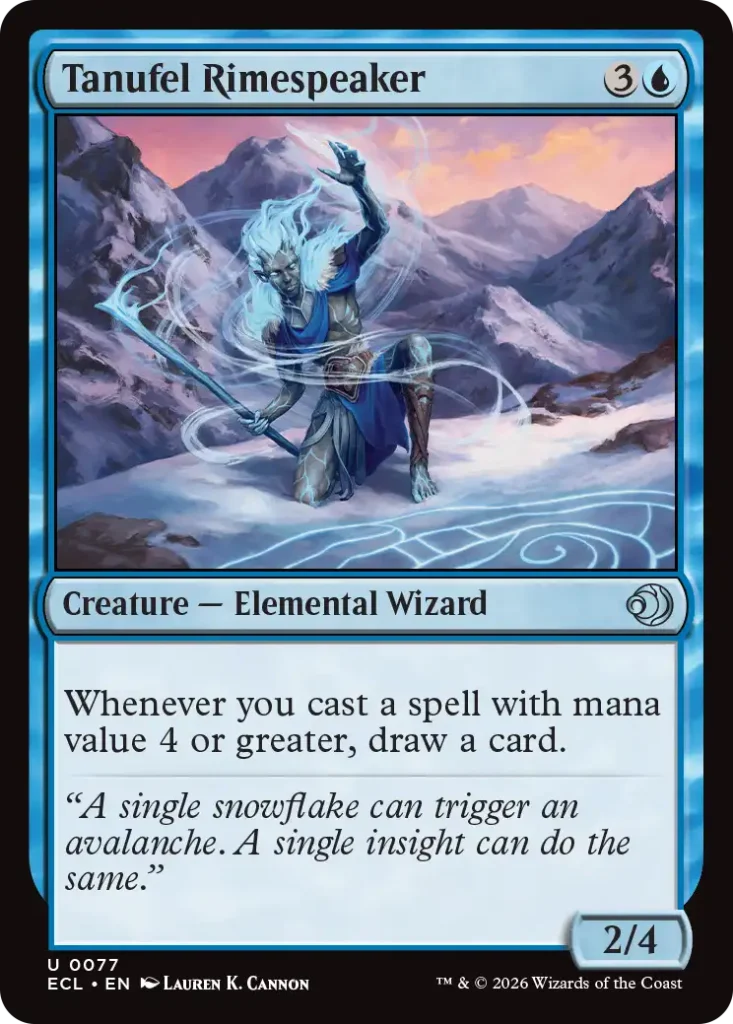
The fifth and final last creature based archetype cares about Elementals and spells that cost four or more mana.
Here are some key cards for this archetype, which paint a nice picture of what’s going on:
- Flamebraider is spectacular. A cheap Elemental that kinda gets you two turns ahead if you’re casting Elementals.
- Twinflame Travelers can double your Elemental triggers, particularly good with something like;
- Rimekin Recluse, which is just a very powerful card on its own.
- Tanufel Rimespeaker can provide card advantage, if you can cast expensive spells.
- On the other hand, Flaring Cinder also improves the quality of your cards, but doesn’t actually put you up a card.
As you can see, there are quite a few payoffs, but what about expensive spells? You want enough of them to get your triggers, but you don’t want too many and mess up your mana curve.
Thankfully, there are cards that count as 4+ mana spells, but won’t always cost as much. Convoke cards, such as Temporal Cleansing fit the bill, as do a few other ones — Swat Away for example.
Figuring out the right mix of payoffs, enablers, and cheap interaction will be the key to unlocking the full power of blue-red.
Black-White: -1/-1 Counters Midrange
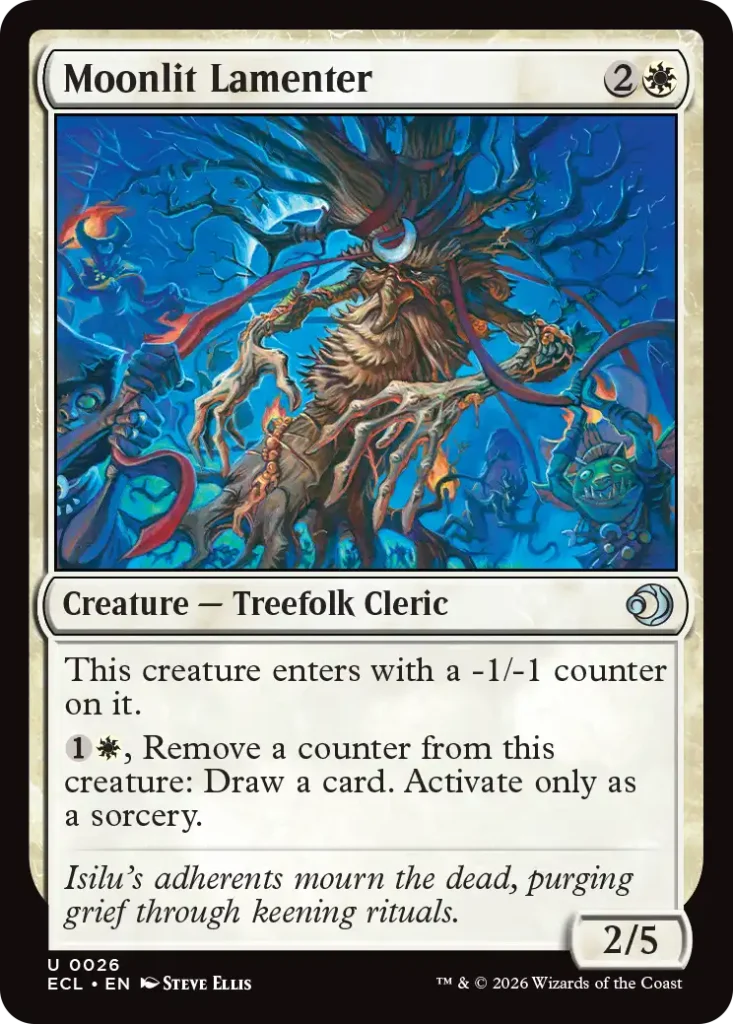
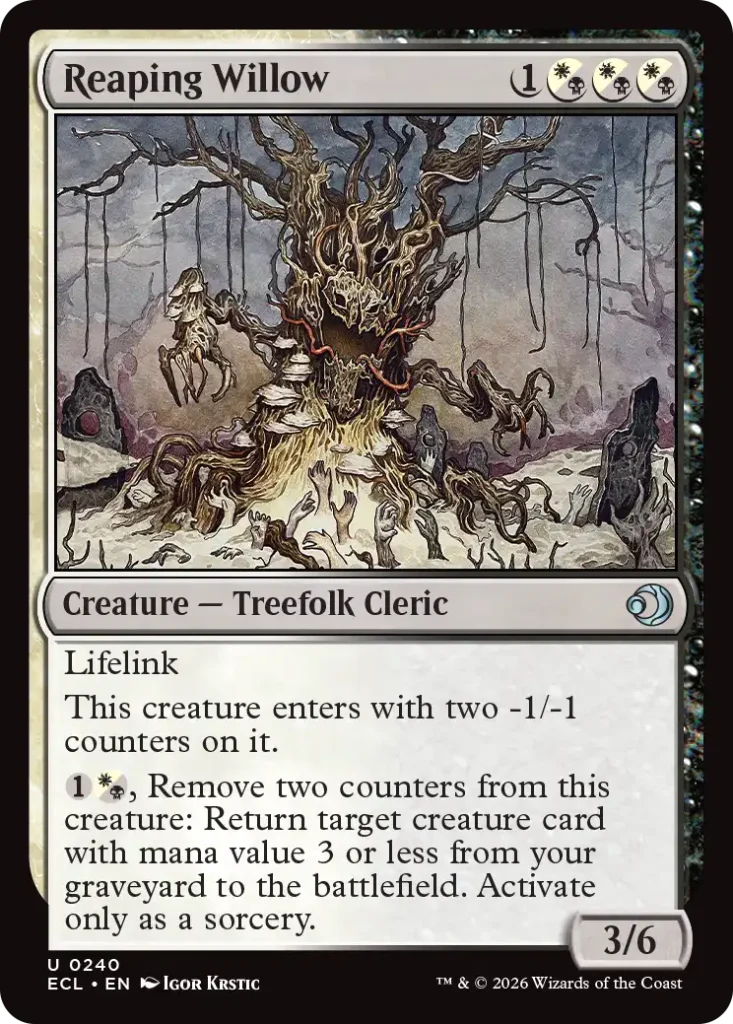
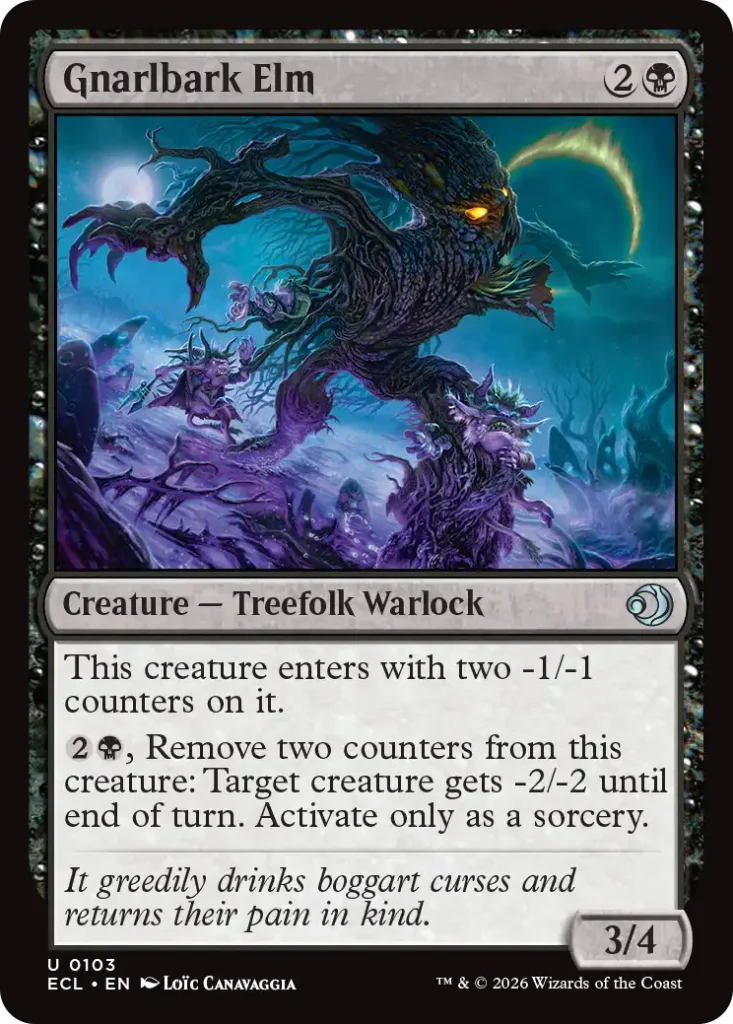
This is the first of the other five archetypes. For the most part, these will be less focused on their themes as opposed to the previous five decks.
For example, the black-white’s shtick are -1/-1 counters. However, you could easily draft this deck with only a few cards that care about -1/-1 counters and without particular synergies. Instead the deck would consist of white and black cards that are simply good on their own, and don’t need additional support.
Furthermore, you could “borrow” from previously mentioned archetypes. Perhaps, you’ll draft a bunch of white Kithkin, so you’ll be able to utilize Kinsbaile Aspirant or a powerful rare like Champion of the Clachan.
This applies to the other four decks we’ll talk about, so keep that in mind.
-1/-1 Counters Synergies
If we move to synergies specific to this archetype, here are a few cards that care about -1/-1 counters:
Most of these are pretty good, and will also get picked up by players, who’re only playing one of these two colors. The only exception is Reaping Willow, which has a very specific casting cost. If you’re the only black-white drafter at the table, you’re probably getting every copy that gets opened.
If you end up with a lot of creatures that can remove counters from themselves, you’ll also be happier with playing blight cards. (Bogslither’s Embrace, Dose of Dawnglow, Gutsplitter Gang, and similar.) Combination of the two will allow you to turn a downside into an upside.
Despite all that, you don’t need to pursue those synergies. You could just draft a deck with good white and black cards and still do fine. Especially, if you open a powerful bomb, such as Emptiness.
Red-White: -1/-1 Counters Aggro
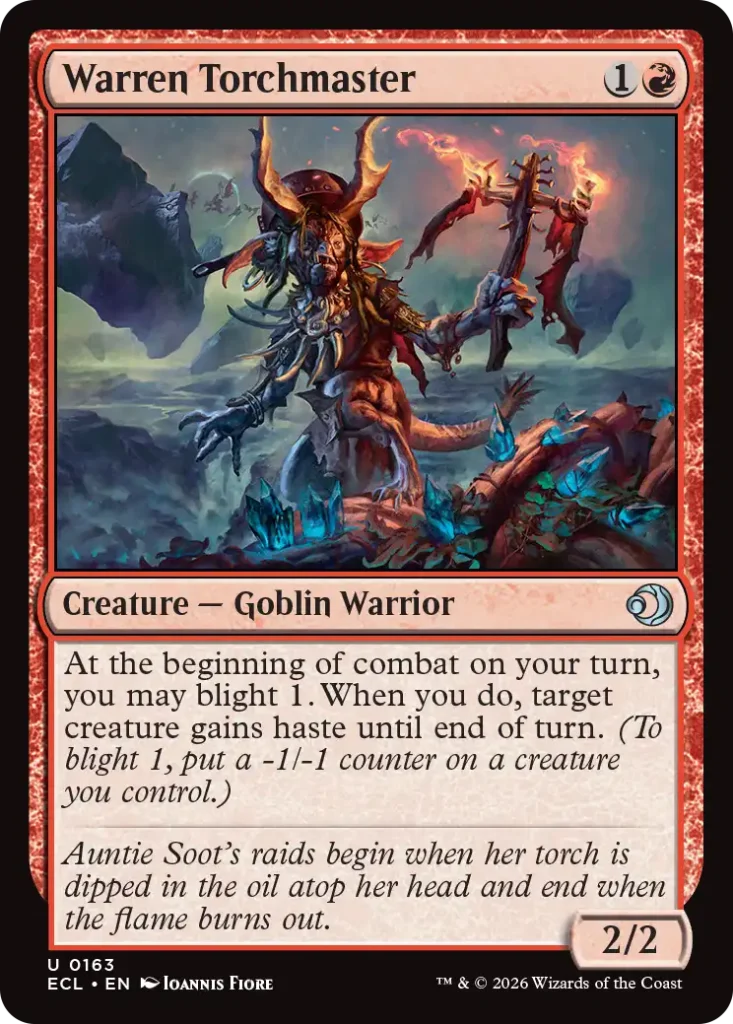
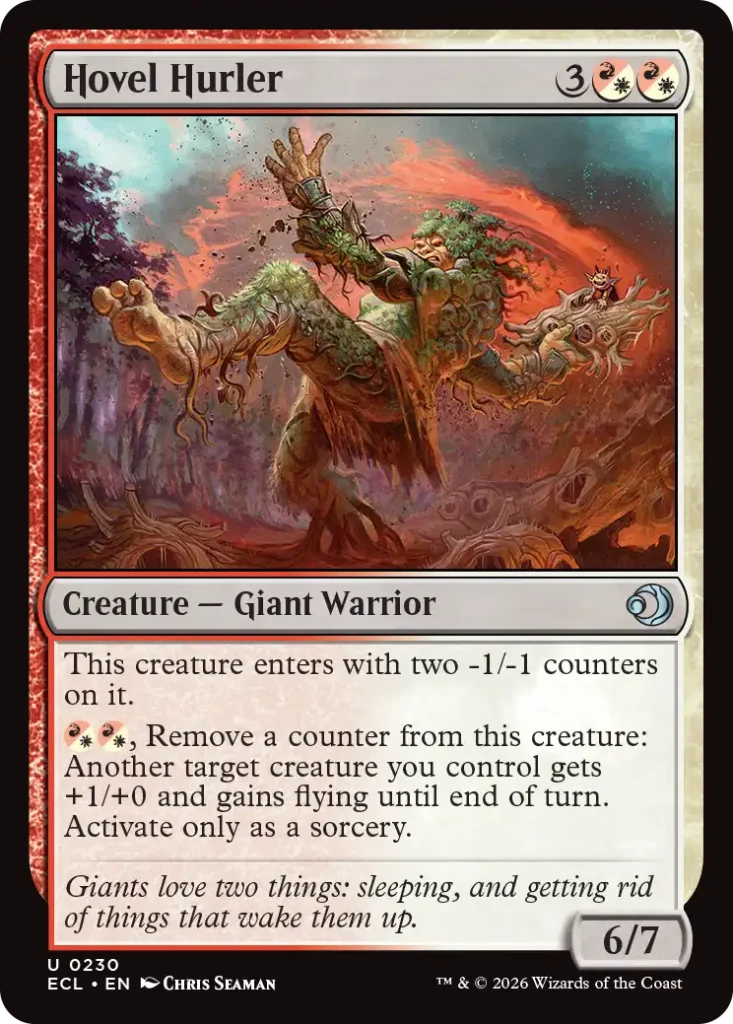
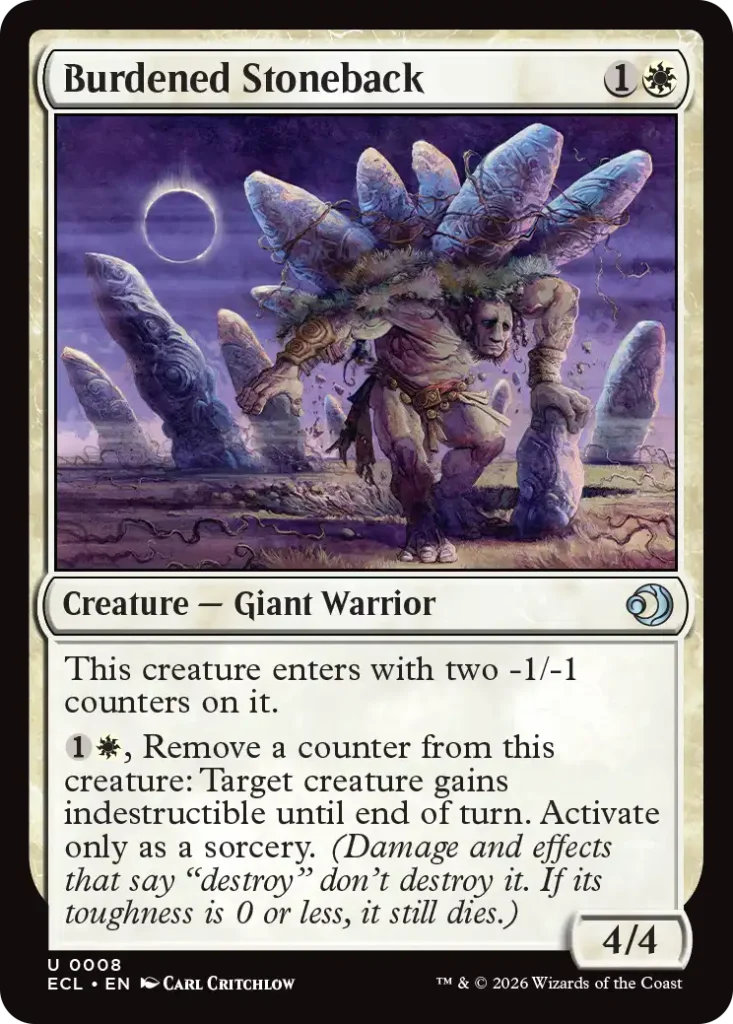
Red-white also uses -1/-1 counters, but whereas black-white was a bit slower and grindy, this archetype is significantly more aggressive. You’ll have access to Kithkin and Goblins, both of which fit well into the aggressive shell.
As far as the negative counters go, you’ll still keep the white cards mentioned before, but instead of black ones, you unlock:
- Brambleback Brute, which makes creatures unable to block, while it grows into a large threat.
- Warren Torchmaster to enable explosive starts.
- Sting-Slinger to get those final points of damage in.
- You’ll want most of your cards to be cheap, but Hovel Hurler is the perfect top end. Giving you evasion paired with a huge body.
Being aggressive and putting -1/-1 counters on your creatures can be counterproductive, so don’t go too crazy with blight cards. (Unless you have a bunch of ways to remove counters too.)
You really want most of your cards to be cheap, so you can overwhelm your opponent quickly. While you have some tools to compete in the late game, you’ll have a hard time winning if your opponent is still at a relatively high life total on turn 5.
Red-Green: Midrange
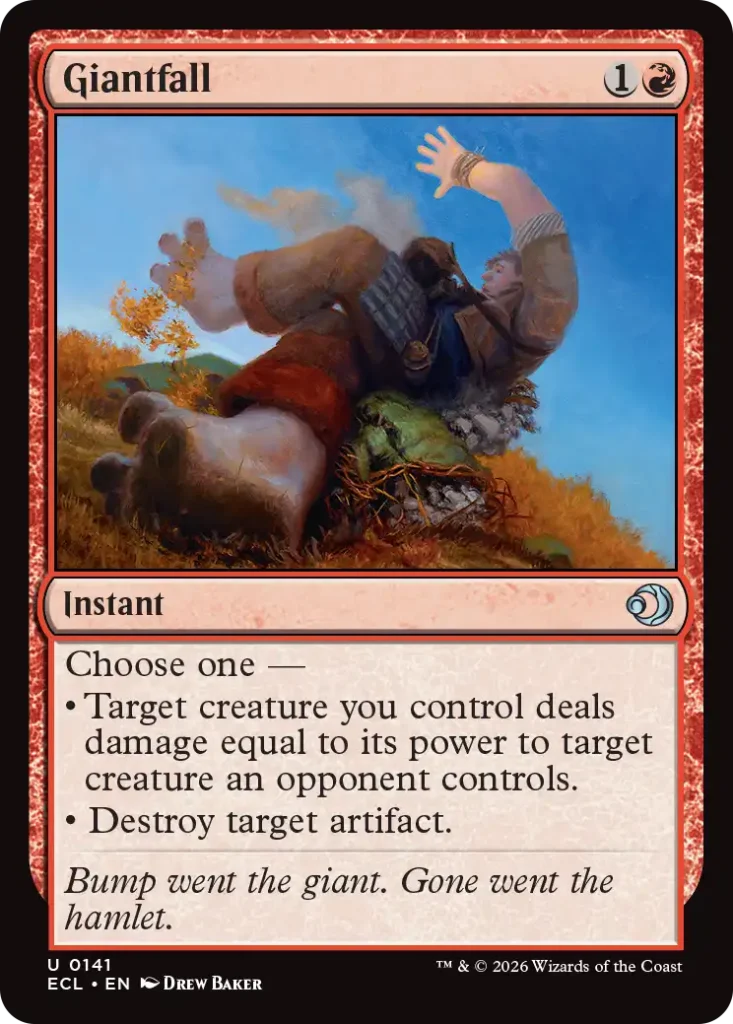
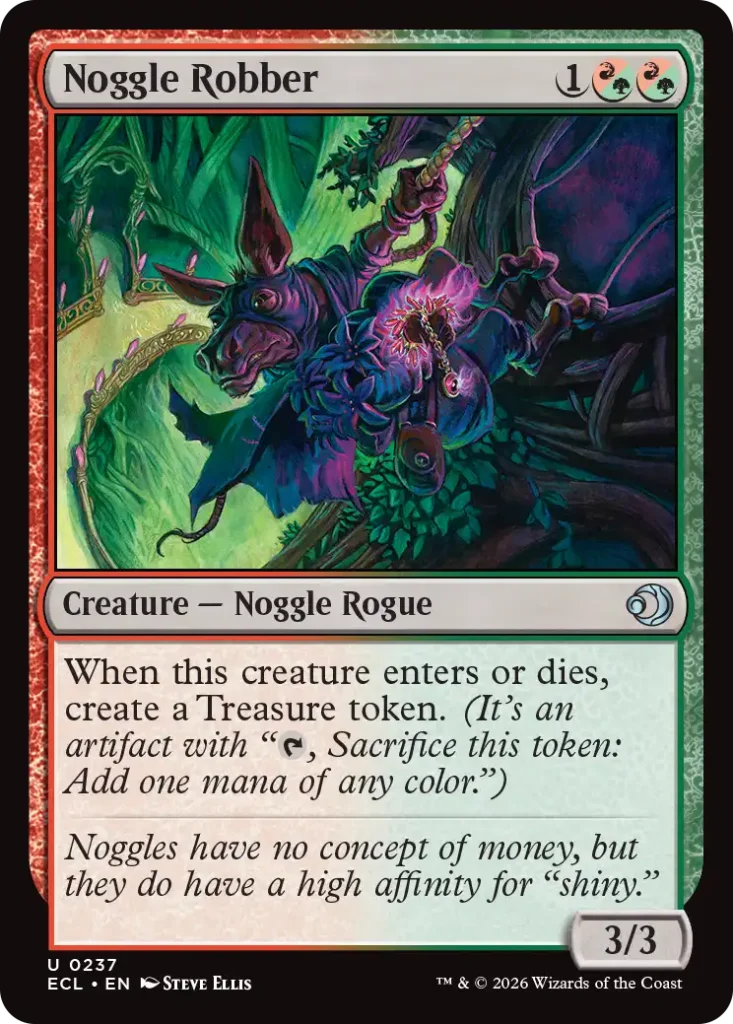
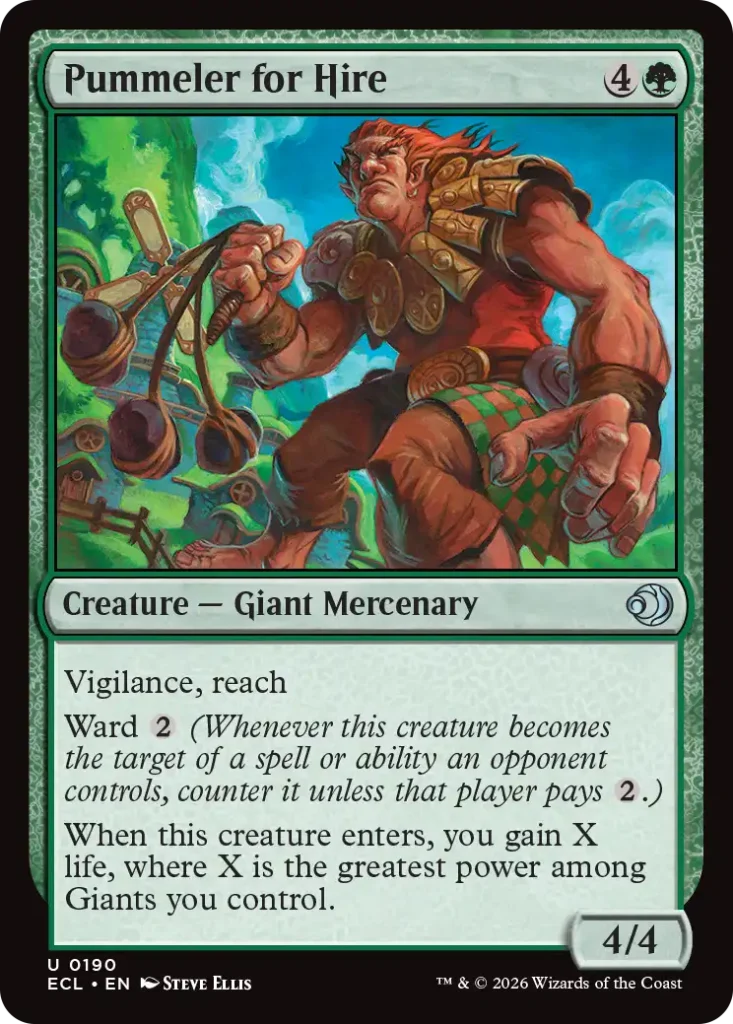
Now this is perhaps the least focused archetype in Lorwyn Eclipsed draft. That doesn’t necessarily mean it’s bad, though. Just that it isn’t trying to do any specific thing, apart from playing good cards, and perhaps doing some vivid synergies.
Even the dedicated uncommon, Noggle Robber, doesn’t do anything specific, apart from being a solid three drop, which kinda supports vivid.
Thus, this deck will mostly be a pile of strong red and green cards, with perhaps some minor synergies from other archetypes sprinkled in the mix. It can blend into a more aggressively-slanted version of this next deck.
Blue-Green: Vivid Ramp
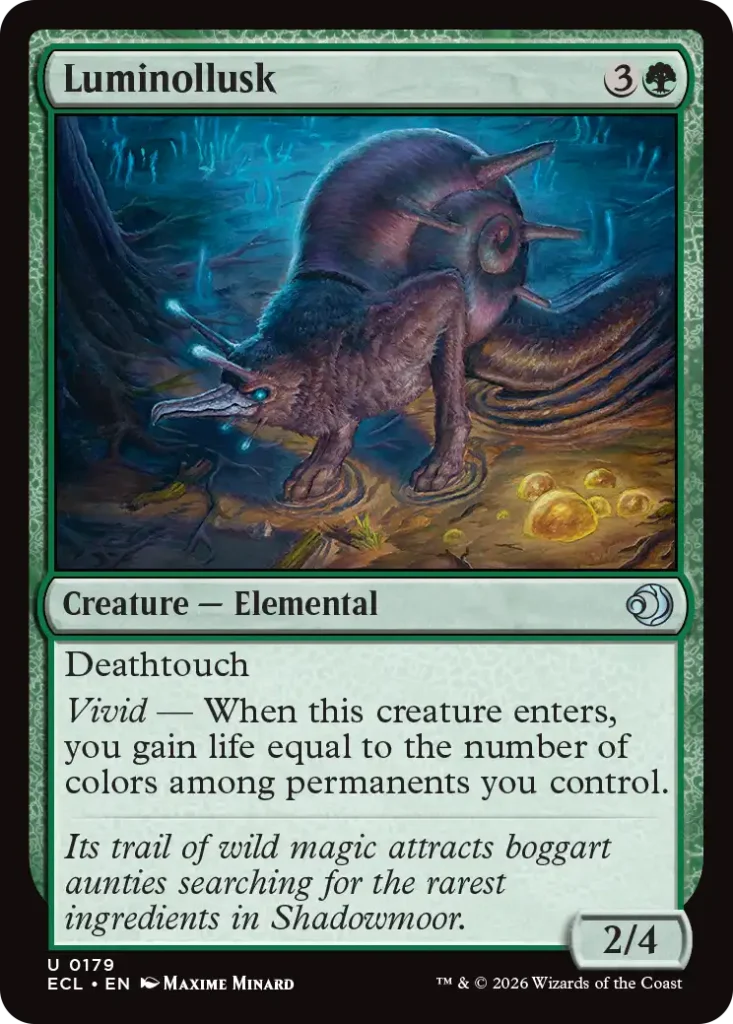

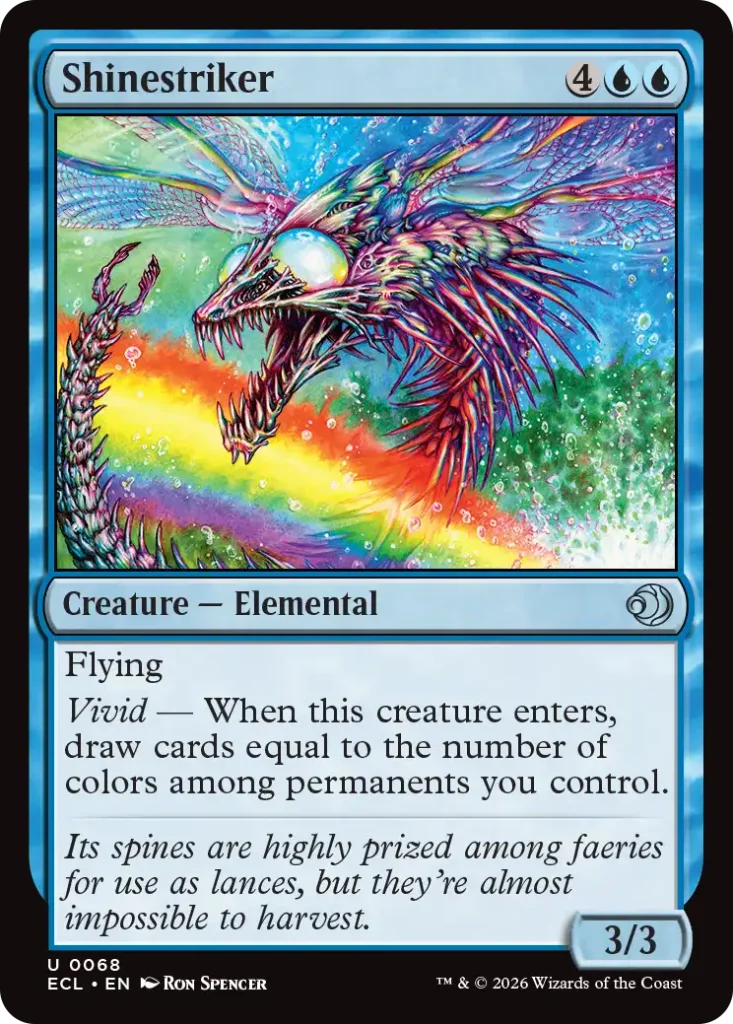
Blue-green is completely opposite from the previous archetype — it really tries to do something gimmicky, as is often the case with this color pair. It’s centered around the vivid mechanic. The latter rewards you for controlling permanents of different colors, so this deck will often end up being a 5-color monstrosity.
Enablers
The first problem this deck needs to tackle is the access to all colors of mana. This time around, there are no dual lands at common or uncommon, which makes it harder. Still, there are a few cards that can help you, including:
You’ll probably want a mix of these, but the first two seem particularly important, as they actually get you ahead in mana. Druid is also a neat blocker, which is key in decks like this.
Payoffs
One payoff you get here is that you get to splash powerful cards of other colors. This further rewards you in a turn, by upping your vivid count. Speaking of which, some of the best vivid cards in these two colors would be:
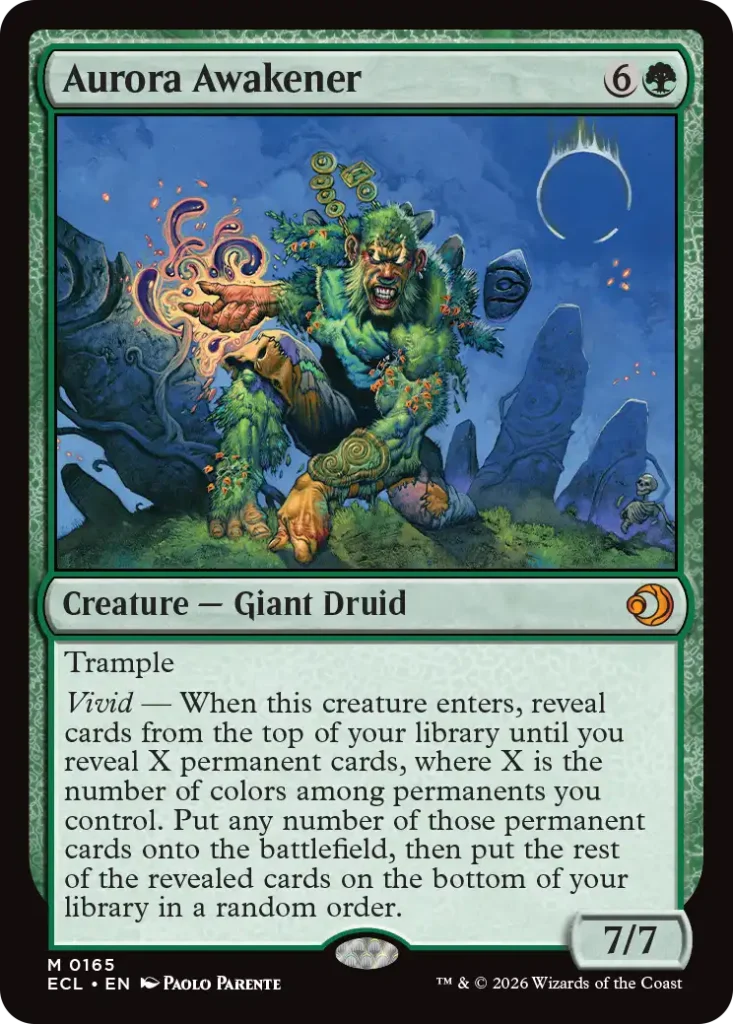
Of course, there’s eve better ones at higher rarities. Bloom Tender can ramp you insanely quickly, while Aurora Awakener might just be the best card in the set and the reason to draft this color pair.
By splashing you also unlock the full potential of Explosive Prodigy, Kithkeeper, and Shimmercreep.
Without some powerful payoffs, this deck probably won’t be worth drafting. You’re kinda spinning the wheels in the early game without affecting the board that much and your mana is worse that that of a regular 2-color deck. That’s why you really need to be payed off for those early troubles with a powerful late game.
Blue-Black: Flash Control
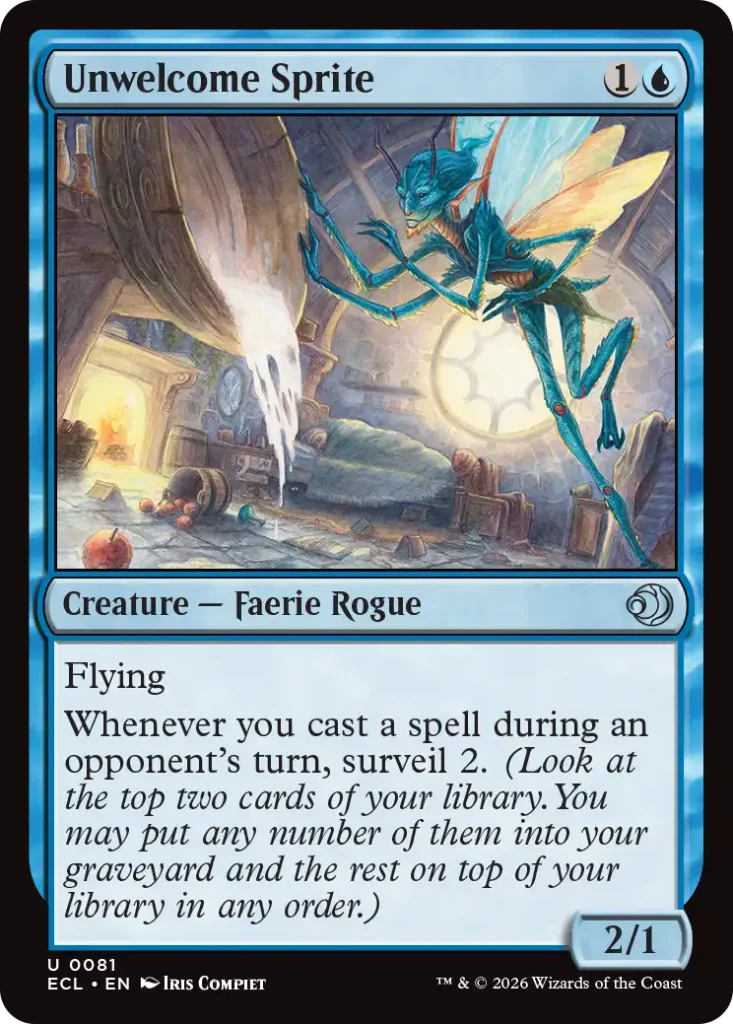
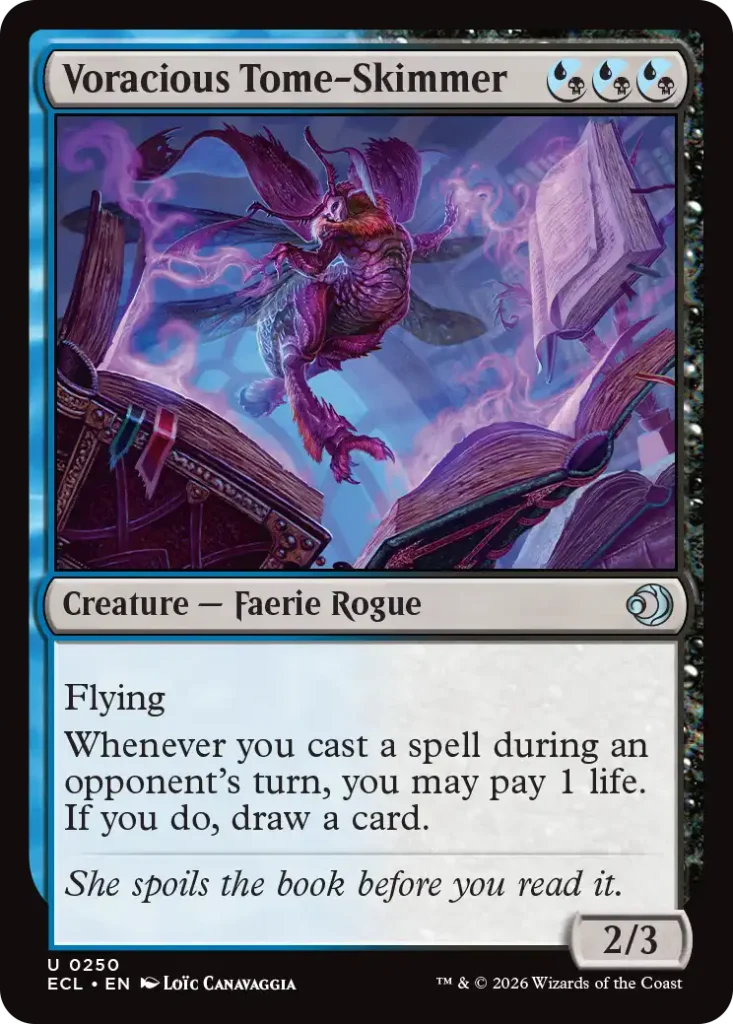
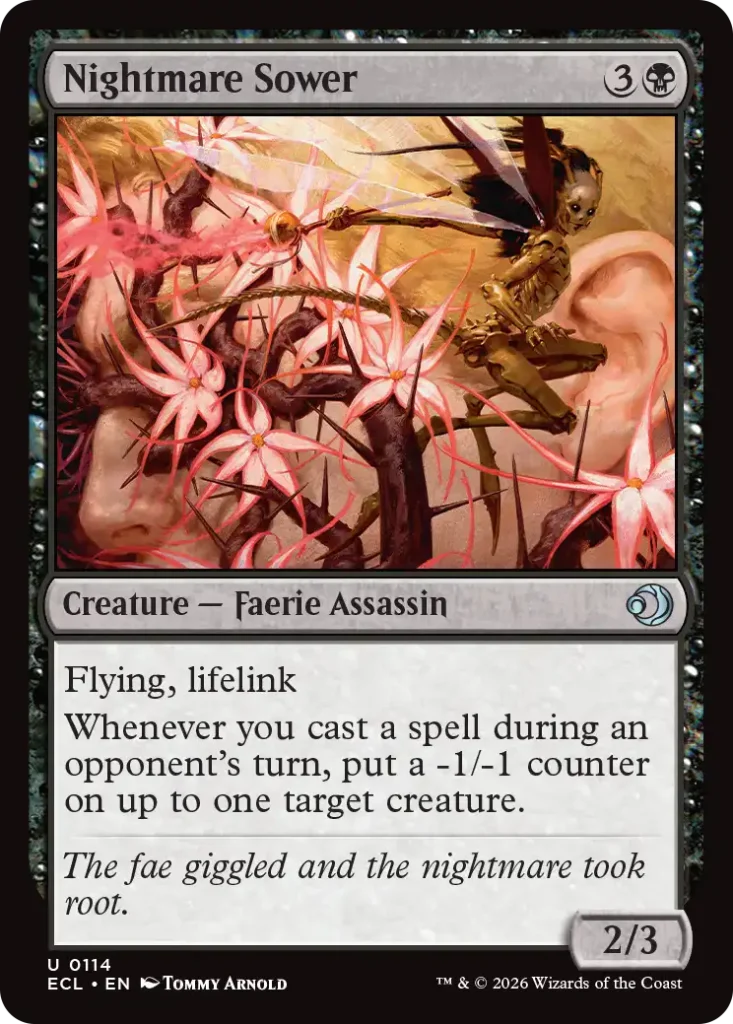
Last bu not least, here’s blue-black, which is once again a more controlling archetype. The twist this time around is that you want to be casting spells on your opponent’s turn.
Usually the reward for doing so is flexibility and information. You can see what your opponent does, and then make a decision on which card to play. But in Lorwyn Eclipsed, there are a three additional rewards.
The best one is Voracious Tome-Skimmer, which draws you cards — just make sure your life total is high enough. Nightmare Sower can help with that by shrinking opponent’s creatures or straight up removing them. Furthermore, there’s one more welcome addition with Unwelcome Sprite. A solid two drop that can set up your future draws.
Although there are just these three specific payoffs, this theme doesn’t need much to push it over the top. A properly built draw-go deck can be really powerful.
(For newer players: draw-go refers to the old school control decks. They draw a card for the turn and pass, hence the name. Most of their spells are played on the opponent’s turns.)
Instants & Flash Cards
Some of the best non-rare cards to play on opponent’s turns would be:
- Aquitect’s Defenses to protect your payoffs.
- Removal such as Noggle the Mind, Swat Away, and Blight Rot.
- Wild Unraveling is at its best in this archetype.
- Card draw spells, including Thirst for Identity and Unexpected Assistance.
- Mischievous Sneakling can also work in a pinch.
So, there are plenty of enablers. Therefore, you should value payoffs higher, as they will be the bottleneck for this archetype.
Lorwyn Eclipsed Draft Guide: Power Rankings
So, now you know about all ten archetypes. The question is — which are the best ones? Early on in the format, it’s pretty hard to tell, so these are mostly educated guesses. So, take this with a grain of salt and not as something set in stone.
In the upcoming days, these rankings will get an update.
Best Archetypes in Lorwyn Eclipsed Draft
- Blue-White: Mefolk Convoke
- Green-White: Kithkin Go-Wide
- Red-White: -1/-1 Counters Aggro
- Black-Green: Elves Graveyard
- Black-Red: Goblins Aggro
- Blue-Black: Flash Control
- Blue-Red: Elementals 4+ Mana
- Black-White: -1/-1 Counters Midrange
- Red-Green: Vivid Midrange
- Blue-Green: Vivid Ramp
Additional Tips for Lorwyn Eclipsed Draft
In this section you’ll find some additional tips for this draft format. More will be added in the upcoming days, as we play more games.
Wraths
Knowing which mass removal spells (wraths) are in the format, can give you an extra edge. You don’t want to play around four mana Wrath of God, if such effect doesn’t exist.
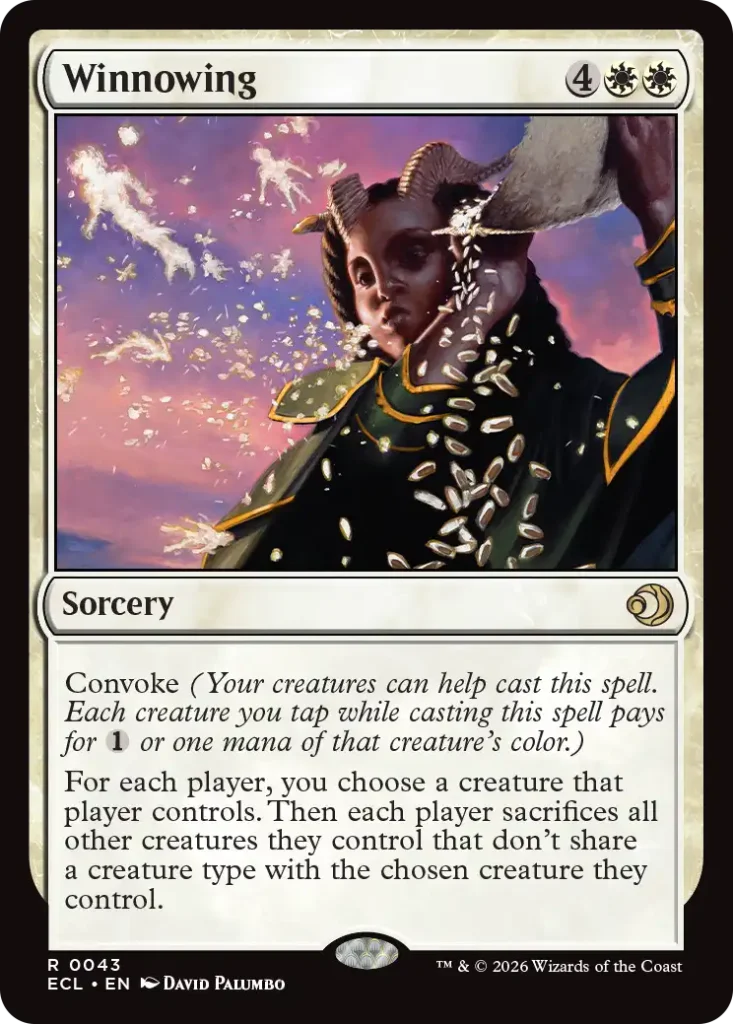
While there isn’t a regular wrath effect, there are three variations. Both Soul Immolation and Winnowing can be devastating. One way to play around them is to not cast one of your better creatures, if you can afford to do so. (Immolation can kinda be interacted with by removing opponent’s large creatures on your turn.)
Finally, there’s also Darkness Descends, which is a bit situational. You can play around it by not overcommitting, and/or playing some larger creatures.
Lorwyn Eclipsed Draft Tier List
You’ve probably noticed that we didn’t talk about every card in the set. That’s pretty hard to do while keeping the article at a reasonable length.
But if you have a hard time evaluating cards, our Lorwyn Eclipsed Draft Tier List is here to help. It contains grades for each card you can open in a Lorwyn Eclipsed Play booster. That should provide a pretty good idea of what are the best bombs and which cards you want to prioritize.
Combined with what you’ve learned here, this will give you a great starting point for your first Lorwyn drafts.
Explore More Lorwyn Eclipsed!
And that’s it! You’ve reached the end of our Lorwyn Eclipsed Draft Guide. But there’s more to explore about this pristine Magic set. Here are some articles that might interest you:
- Lorwyn Eclipsed Japan Showcase Cards
- Odds for Opening Serialized Bitterbloom Bearer
- Special Guests From Lorwyn Eclipsed: The Best Ones Yet?
- Lorwyn Eclipsed Commander Precons: Full Decklists
Also, do you by any chance plan to draft with your friends? In that case, you’re going to need a Play booster box. You can buy one on Amazon to lock-in that preorder price.

Until next time, enjoy your Lorwyn Eclipsed drafts, may you play lots of exciting matches, where you emerge victorious!
You mean after almost 20 years? Lorwyn was released in 2007. That block (Lorwyn, morningtide, eventide) was the first block I ever attended a prerelease for as a teen. Im 33 now and still have my prerelease promo figure of destinys to this day
Oh, yes. My bad, thanks for pointing it out. It sounds like this will be a pretty nostalgic set for you then.